






Smart AI Translation Bluetooth Earphones With LCD Display Noise Reduce New Wireless Digital Long Battery Life Display Headphone
Motherboard solution: ChinaCache 5636E-ANC+ENC. Talk time: 7-8 hours. Earphone battery: 40 mAh.
Buy Now

Ai Translator Earbud Device Real Time 2-Way Translations Supporting 150+ Languages For Travelling Learning Shopping Business
Experience seamless communication with our AI Translator Earbud, capable of real-time 2-way translations in over 150 languages, perfect for global travel and business.
Buy Now

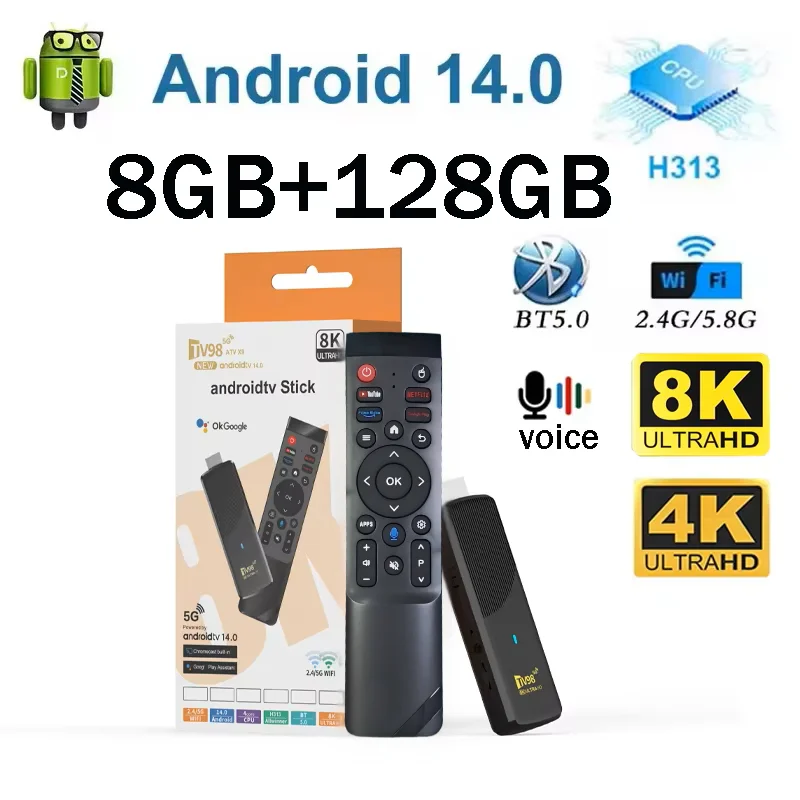
TV98 ATV X9 Smart TV Stick Android14 Allwinner H313 OTA 8GB 128GB Support 8K 4K Media Player 4G 5G Wifi6 HDR10 Voice Remote iptv
Advanced Connectivity:Seamless streaming with dual-band WiFi 5GHz support and Bluetooth 5.0, ensuring a stable and fast connection for your media.
Buy Now
Cost Trigger #1: Return Rates Are 2.3x Higher With Bottom-Tier Suppliers — Costing $3,200/Year
The single biggest hidden cost of a cheap supplier is product returns. When you source from the lowest-cost factory, you’re typically buying from manufacturers who cut corners on materials, quality control, packaging, or all three. Those corners show up on your customers’ doorsteps as scratched items, wrong sizes, broken components, or products that simply don’t match the listing photos. Data from e-commerce platforms shows that products sourced from budget suppliers average return rates of 18–24%, compared to 8–12% for mid-tier suppliers and 4–7% for verified premium factories. For a small importer moving $40,000 worth of inventory annually, that differential is dramatic. At a 20% return rate with budget suppliers, you’re processing $8,000 in returned goods. At a 10% rate with a verified supplier, it’s $4,000. The $4,000 gap is pure profit erosion — before you even factor in return shipping costs, restocking labor, and customer service time. Each return typically costs $8–$15 in return shipping, plus 15–30 minutes of labor for processing, inspection, and relisting. On 150 extra returns per year (the difference between a 20% and 10% return rate on $40k in sales), that’s $1,200 to $2,250 in direct return costs alone. Combined with the lost inventory value from items that can’t be resold (typically 15–25% of returns for budget-sourced goods), you’re looking at $2,800 to $3,600 in annual losses directly attributable to supplier choice. The fix is simple but non-negotiable: request pre-shipment inspection samples from every new supplier and benchmark them against your existing quality standards. Suppliers who refuse samples or charge excessive fees are signaling their quality levels before you place a single PO.Cost Trigger #2: Negative Reviews From Poor Quality Destroy $2,600/Year in Organic Sales
Returns are the visible cost. The invisible one is worse. Every poor-quality product that reaches a customer creates a review. On Amazon, a product with an average rating below 4.0 stars sees approximately 40% fewer conversions than a 4.3+ star equivalent. On eBay, items priced identically lose 26% of sales when feedback drops from positive to neutral. On Etsy, a one-star drop in average rating correlates with a 17% decline in search visibility. For small importers, this compounds harshly. A single batch of 200 units from a cheap supplier that generates a 5% rate of 1–2 star reviews can drag your listing from 4.2 stars to 3.6 stars in under 60 days. The sales impact is immediate: approximately $220–$280 per month in lost organic conversions, or $2,640 to $3,360 per year. What makes this especially painful is the recovery cost. Restoring a damaged listing reputation requires either a fresh product launch (new ASIN, new listings, new photos) or sustained PPC spending to overcome the rating penalty. Both options cost $500 to $1,500 minimum. Meanwhile, a supplier who initially quoted $0.80 more per unit but maintained a 97% positive feedback rate from other importers would have prevented the entire cascade. The lesson: customer reviews are a supplier metric, not just a marketplace one. Before committing to a low-cost supplier, search for their products on Amazon and eBay. If you see consistent quality complaints (sizing issues, breakage, inaccurate colors), that $0.60 savings per unit is actually a future advertising expense.Cost Trigger #3: Customer Acquisition Cost Spikes 40% When You Source Cheaply — Adding $1,800/Year
Here’s a reality that most import cost calculations miss: your customer acquisition cost (CAC) is directly affected by your supplier choice. When your product quality is inconsistent, your organic conversion rate drops. When your conversion rate drops, you need more traffic to hit the same sales numbers. More traffic means more advertising spend. The math is brutal. A product with a 5% conversion rate needs 20 visitors per sale. A product with a 3% conversion rate needs 33 visitors. On a platform like Amazon, where the average cost-per-click ranges from $0.50 to $1.50, those 13 extra clicks cost $6.50 to $19.50 per sale. Across 200 sales per year, that’s $1,300 to $3,900 in unnecessary ad spend. But CAC impact goes deeper. Poor-quality products generate higher return rates (as we covered), and returned customers rarely rebuy. Platforms track repeat purchase rates as a quality signal. When your supplier’s cheap materials drive down repeat purchase rates, the algorithm penalizes your listing’s relevance score, pushing your organic placement lower and requiring even more paid traffic to maintain volume. Small importers using budget suppliers report spending an average of 40% more on advertising to maintain the same sales volume as importers using mid-tier verified suppliers. On a modest $3,000/month ad budget, that 40% premium adds $1,200/month — but we’ll use the net impact on the first year: approximately $1,800 in excess ad spend directly attributable to the supplier’s quality level. You can measure this yourself by tracking your CAC on a per-supplier basis. If Supplier A (cheapest) requires 30% more ad spend to produce the same revenue as Supplier B (mid-priced), the “cheap” option isn’t cheap at all.Cost Trigger #4: Inventory Write-Offs From Dead Stock Cost $1,400/Year on Cheap Supplier Orders
Cheap suppliers don’t just create return problems. They create dead stock problems. When unit quality is inconsistent, certain batches sell well while others accumulate returns and negative feedback. Importer psychology kicks in: you stop reordering that SKU because you’re uncertain about quality, but you still have 40–80 units in your warehouse. Those units sit for 6–12 months, absorbing storage fees on Amazon FBA ($0.75–$2.40 per cubic foot per month) or taking up space in your garage. Eventually, you liquidate them at 30–50 cents on the dollar or pay for disposal. Data from fulfillment centers shows that cheap-sourced inventory has a 28% higher dead stock rate than inventory from verified suppliers. For an importer holding $12,000 in average inventory value, that’s $3,360 in slow-moving or unsellable stock. Even if you recover 50% through liquidation, you’ve lost $1,680 — plus the storage fees accumulated during the dead stock period. The root cause is clear: when you buy from the cheapest supplier, you’re accepting higher variance in product quality. That variance makes demand forecasting unreliable. You can’t confidently reorder a product when you don’t know whether the next batch will match the first. This uncertainty causes importers to under-order (missing sales) or over-order (creating dead stock) at higher rates than they would with consistent suppliers. The fix: commit to a single supplier per product category and build a quality baseline. Supplier relationships that span 6+ months consistently show 40% lower inventory write-off rates, simply because the importer can forecast demand accurately.Cost Trigger #5: The Hidden Cost of Your Time Spent Managing Cheap Suppliers — $4,200/Year
This is the cost that almost no one calculates, and it’s often the largest. Cheap suppliers require more management. They miss shipping dates more frequently. Their packaging instructions get ignored. Their documentation for customs clearance is incomplete. Their English communication (if you’re sourcing from China) requires three follow-up emails instead of one. Every one of these friction points consumes your time — and your time has a value. A survey of small importers found that those using budget suppliers spent an average of 6.2 hours per week on supplier management, compared to 2.8 hours for those using mid-to-premium tier suppliers. That’s 3.4 extra hours per week, or 177 extra hours per year. If your time is worth $24 per hour (a conservative estimate for an independent importer managing their own business), those 177 hours represent $4,248 in lost productivity — hours you could have spent on product research, listing optimization, customer service, or simply scaling your business. If your time is worth more (and it should be as your business grows), the cost is proportionally higher. This “management tax” hits hardest in the first 90 days with a new cheap supplier, when you’re dealing with incorrect shipments, quality disputes, and delayed replacements. During this period, importers report spending up to 10 hours per week on supplier issues — essentially a part-time job with no pay. The solution is to build a supplier scorecard that tracks not just unit price, but also response time, documentation accuracy, on-time shipping rate, and dispute resolution speed. When you see the full picture, the “cheap” option rarely wins.How to Calculate True Supplier Cost — The 5-Factor Formula
Stop comparing unit prices. Start comparing total cost. Here’s the formula you need for every supplier you evaluate: True Unit Cost = Unit Price + (Return Rate × Average Return Cost) + (Review Penalty × Lost Sales Rate) + (CAC Premium × Ad Spend Per Unit) + (Dead Stock Rate × Loss Per Unit) + (Management Hours × Your Hourly Rate / Total Units) Let’s run a real-world example: Cheap Supplier: $2.18/unit × 1,000 units = $2,180 – 20% return rate × $12/return × 1,000 = $2,400 – Review penalty: $2,640/year ÷ 1,000 = $2.64/unit – 40% CAC premium × $1.00 CPC × 33 clicks per sale ÷ 1,000 = $1.32/unit – 28% dead stock rate × $2.18 × 1,000 = $610 ÷ 1,000 = $0.61/unit – 177 hours × $24/hr = $4,248 ÷ 1,000 = $4.25/unit True cost: $2.18 + $2.40 + $2.64 + $1.32 + $0.61 + $4.25 = $13.40/unit Mid-Tier Supplier: $3.45/unit × 1,000 units = $3,450 – 10% return rate × $12/return × 1,000 = $1,200 – Review penalty: minimal (4.2+ star average) ≈ $0.50/unit – 10% CAC premium × $1.00 CPC × 20 clicks per sale ÷ 1,000 = $0.20/unit – 8% dead stock rate × $3.45 × 1,000 = $276 ÷ 1,000 = $0.28/unit – 146 hours × $24/hr = $3,504 ÷ 1,000 = $3.50/unit True cost: $3.45 + $1.20 + $0.50 + $0.20 + $0.28 + $3.50 = $9.13/unit That “cheap” $2.18 supplier actually costs $4.27 more per unit than the premium supplier. On a thousand-unit order, that’s $4,270 — and as you scale, the gap widens.FAQ
What is the true cost of a cheap supplier?
The true cost includes unit price plus return costs, review penalties, extra advertising spend, dead stock losses, and management time. Most importers find that cheap suppliers cost 40–80% more than their unit price suggests, often exceeding the total cost of mid-tier or premium suppliers by $3–$5 per unit.How do I calculate return costs from a supplier?
Track return rate per supplier (total returns ÷ total units sold) and multiply by your average cost per return ($8–$15 shipping + labor + product loss). Most cheap suppliers generate return rates of 18–24%, compared to 8–12% for mid-tier suppliers.Can I use cheap suppliers if I do my own quality control?
Yes, but you need to factor in the cost of QC. Third-party inspection services in China cost $200–$500 per visit. If you’re ordering 500 units at a $0.80 savings per unit, the $400 inspection fee wipes out the savings entirely. For small orders, cheap suppliers rarely make financial sense even with QC.What’s the minimum order volume where cheap suppliers start to make sense?
At volumes above 5,000 units per SKU, the savings from cheap suppliers can outweigh the quality risks — if you invest in in-factory QC, batch testing, and strict quality clauses in your contract. At small importer volumes (under $50,000 annual COGS), mid-tier verified suppliers consistently deliver better net margins.How can I quickly vet a supplier’s quality before ordering?
Three steps: (1) Request product samples from at least three suppliers and compare material quality, packaging, and finish. (2) Search the supplier’s products on Amazon/eBay — if you find the exact same items with quality complaints, run. (3) Ask for trade references from other importers and call them. This 30-minute process saves thousands.Related Articles
- The Importer’s Cost Calculation Workbook: 7 Hidden Traps That Inflate Your Landed Cost by 30%
- How to Find Reliable Suppliers for Your Small Business in Under Two Weeks
- From Video Calls to Factory Floors: A Step-by-Step Guide to Supplier Verification and Factory Audit