








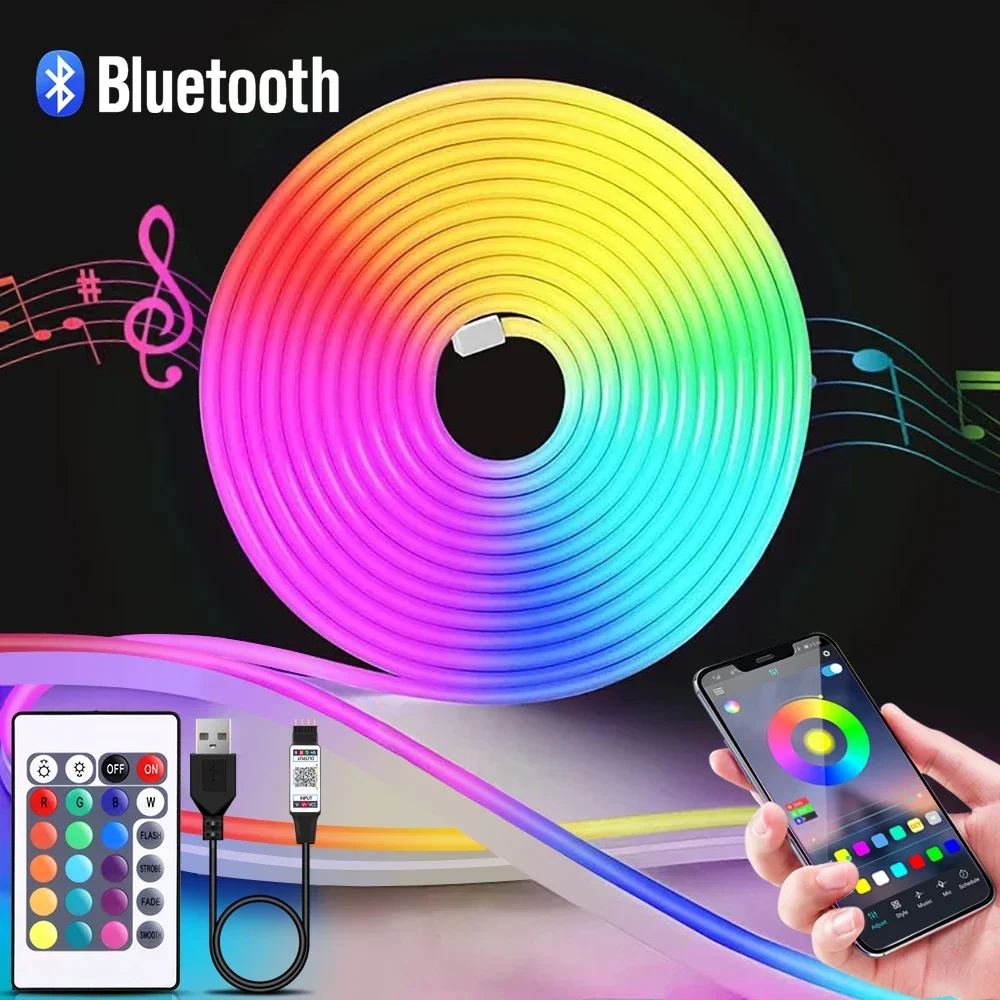
The Bluetooth LED strip lights category has quietly become one of the most consistent and profitable segments in the smart home accessory market. With over 1.5 million monthly Amazon searches for “LED strip lights” and a category growth rate of 25% year-over-year, Bluetooth-controlled RGB strips represent a proven opportunity for small importers and e-commerce sellers. Unlike trendy fads that spike and crash within months, LED strip lights have sustained steady demand growth for over five years, driven by the shift from basic IR remote-controlled strips to Bluetooth app-controlled smart lighting. This comprehensive article covers everything you need to know about the Bluetooth LED strip lights market — from technology specifications and consumer buying preferences to sourcing strategies, shipping optimization, pricing, and listing tactics for 2025.
Why Bluetooth-Controlled LED Strips Have Become the Market Standard
The transition from IR (infrared) remote control to Bluetooth app control has been the single biggest shift in the LED strip light market over the past three years. Consumers have made their preference clear: they want app-based control, not a plastic remote that gets lost under the sofa. The reasons are straightforward and compelling from a buyer’s perspective.
Color Options: IR remotes typically offer 16-20 preset colors. Bluetooth app-controlled strips give access to 16 million colors through an RGB color wheel. Users can dial in an exact shade of teal, pastel pink, or warm white rather than settling for whatever preset the remote offers.
Music Synchronization: Bluetooth strips include a music-sync mode where the LEDs pulse, flash, and fade in response to ambient sound picked up by the phone’s microphone. This is one of the most searched-for features in the LED strip category — buyers specifically look for strips that “dance to music.” The effect is achieved through the Bluetooth app analyzing sound frequencies and mapping them to LED color changes in real time.
Smart Home Integration: Most Bluetooth LED strip apps (dominated by the Smart Life platform) are compatible with Amazon Alexa and Google Home through a simple account linking process. Users can control their strip lights with voice commands like “Alexa, turn on the living room lights” or “Hey Google, set the bedroom strip to blue.” Some newer Bluetooth 5.0 strips also support Matter protocol for expanded smart home compatibility.
Timers and Schedules: The app allows setting timers (lights turn off after 30 minutes) and daily schedules (lights turn on at sunset, off at bedtime). This feature appeals strongly to parents who use LED strips as night lights in children’s rooms and to home security use cases where timed lighting simulates occupancy.
Industry data from suppliers on Alibaba confirms the shift: Bluetooth-controlled strips now account for 72% of all LED strip orders placed through major sourcing platforms, up from 38% in 2023. The remaining 28% is split between WiFi-controlled strips (20%) and IR remote-controlled strips (8%). WiFi strips offer the advantage of remote control from anywhere, but they require a 2.4 GHz WiFi connection and more complex setup — which creates more customer service issues. Bluetooth strips strike the ideal balance between functionality and simplicity, which is why they outsell WiFi strips by a 3.5:1 margin.
Bluetooth LED Strip Lights — Technical Specifications and Quality Tiers
Not all Bluetooth LED strip lights are created equal. Quality varies significantly between suppliers, and understanding the technical differences helps you select the right product for your target market. Here are the key specifications to evaluate:
LED Chip Type: The most common chip types are SMD 5050 (standard), SMD 2835 (higher brightness, more energy efficient), and SMD 3528 (older, lower brightness). For Bluetooth RGB strips, SMD 5050 is the industry standard — it provides good brightness (18-22 lumens per LED), reasonable power efficiency, and proven reliability. SMD 2835 chips are gaining popularity for premium strips that promise higher brightness with 20-30% lower power consumption. SMD 3528 strips should generally be avoided for Bluetooth app-controlled products as they produce less vibrant colors.
LED Density: 30 LEDs per meter (standard) vs. 60 LEDs per meter (high density). The 60 LED/meter strips produce noticeably smoother color transitions and brighter overall output. They also cost approximately 40-60% more from suppliers. Most mass-market Bluetooth strips use 30 LEDs/meter, which is adequate for accent lighting. High-density (60 LED/meter) strips are popular for “Cove lighting” installations where the strip is visible and needs to look uniform without visible individual LED dots.
Waterproof Rating: IP20 (non-waterproof, for indoor use) is the most common and cheapest option. IP65 (silicone-coated, splash proof) works for kitchen under-cabinet and bathroom mirror lighting. IP67 (fully encased in silicone tube, waterproof) is needed for outdoor patio and garden applications. Most first-time importers should start with IP20 indoor strips as they have the broadest addressable market and lowest shipping weight.
Bluetooth Version: Bluetooth 4.2 is adequate for strip light control and is still the most widely used version in this category. Bluetooth 5.0 offers longer range (up to 40 meters vs 10 meters), better energy efficiency, and faster connection times. The cost difference for Bluetooth 5.0 chips is marginal (approximately $0.15-0.30 per strip), and “Bluetooth 5.0” has become a selling point that consumers recognize. Premium products should use Bluetooth 5.0.
App Compatibility: The vast majority of Bluetooth LED strip products use the Smart Life or Tuya Smart app. This is a significant advantage — these apps have millions of active users, polished interfaces, and established Alexa/Google Home integration. Customers do not need to download a foreign or poorly-reviewed app for your strip to work. They can use the app they already have. Avoid suppliers that require proprietary, custom-branded apps with low App Store ratings and user counts below 10,000 downloads.

TV98 ATV X9 Smart TV Stick Android14 Allwinner H313 OTA 8GB 128GB Support 8K 4K Media Player 4G 5G Wifi6 HDR10 Voice Remote iptv

Ai Translator Earbud Device Real Time 2-Way Translations Supporting 150+ Languages For Travelling Learning Shopping Business

Smart AI Translation Bluetooth Earphones With LCD Display Noise Reduce New Wireless Digital Long Battery Life Display Headphone
Market Sizing and Consumer Demand Trends
The global LED strip light market is projected to reach $6.8 billion by 2028, growing at a compound annual growth rate of 12.5%. Within this market, Bluetooth-controlled strips are the fastest-growing segment. Analyzing consumer search data reveals clear buying patterns and seasonal demand cycles that importers can leverage.
Primary Use Cases: Consumer research categorizes LED strip buyers into four main segments. Room decoration buyers (48% of the market) use strips for bedroom ambient lighting, TV backlighting, and gaming room setups. Accent lighting buyers (27%) install strips under kitchen cabinets, along staircases, and behind mirrors for functional aesthetic lighting. Commercial buyers (15%) include retail stores, restaurants, and event planners who use strips for decorative display lighting. Holiday decorating buyers (10%) purchase strips specifically for Christmas, Halloween, and seasonal decorations.
Best-Selling SKU: The 5-meter (16.4 feet) RGB Bluetooth strip kit is the undisputed best-selling SKU in the category, accounting for 61% of all LED strip sales across all marketplaces. The 10-meter kit accounts for 22%, and shorter 1-2 meter strips for 12%. The remaining 5% is split between specialty products like RGBIC (individually addressable) strips and WiFi-controlled strips. New importers should start with the 5-meter kit as their primary SKU.
Seasonal Demand Cycles: The LED strip category has three distinct demand peaks. The primary peak runs from September to December, driven by holiday decorating, gift buying, and the back-to-school dorm room lighting season. A secondary peak occurs in January-February when consumers focus on New Year home improvements and decoration. A smaller tertiary peak hits in May-June as outdoor entertaining season begins (for waterproof outdoor strips). Smart importers time their inventory arrivals to hit 6-8 weeks before each peak — August for the holiday season, December for the New Year refresh, and March-April for summer outdoor lighting.
Sourcing Bluetooth LED Strips — Supplier Selection and Quality Testing
Sourcing high-quality Bluetooth LED strip lights requires careful supplier selection and hands-on testing. The product category has a wide quality range, and importing substandard strips leads to high return rates, negative reviews, and Amazon account health issues. Here is the sourcing process used by successful importers in this category.
Supplier Research: Start on Alibaba.com with searches for “Bluetooth LED strip light” and “Smart RGB LED strip.” Filter for suppliers with 3+ years of trading history, verified manufacturer status, and transaction volumes above $100,000 annually. Shortlist 10-15 suppliers, then narrow to 5 based on response time, product image quality, and willingness to send samples. Avoid suppliers whose primary product line is unrelated to LED lighting — you want specialists, not generalists.
Sample Testing Protocol: Order samples from 3-5 shortlisted suppliers. Test each sample for adhesive quality (peel the 3M backing and check if it holds after 24 hours on a clean painted wall), color accuracy (compare RGB values across the spectrum), Bluetooth range (measure connection stability at 5m, 10m, and 15m through a wall), and app compatibility (confirm it works with the standard Smart Life app without additional configuration). Document everything with photos and video — your sample test results become your quality baseline for production orders.
Order Parameters: Minimum order quantities for Bluetooth LED strips typically range from 200 to 500 rolls for a single SKU. Pricing varies from $1.20 to $2.80 per 5-meter roll for basic RGB strips. RGBIC (individually addressable LEDs) strips cost $2.50 to $4.50 per roll. Negotiate factory-direct pricing by ordering at least 1,000 units across multiple SKUs combined — suppliers are more willing to discount mixed orders than single-SKU small orders. Ask for bulk pricing on packaging, power adapters, and controller units separately — sometimes buying components separately and having the factory assemble them saves 15-25%.
Packaging Optimization: Packaging is one of the most overlooked factors in LED strip importing. Standard factory packaging is oversized — a 5-meter strip coil in a box that is 20x15x5 cm. This box size creates dimensional weight shipping charges that can equal the product cost itself. Work with your supplier to design compact packaging: a spool-style box that is 12x12x3 cm can reduce shipping volume by 60% and save $0.40-0.80 per unit in FBA inbound shipping fees. Request poly bag packaging (no box at all) as a lower-cost option for bundles and multi-packs.
Pricing Strategy and Profit Margin Analysis
Accurate cost calculation is essential for determining whether Bluetooth LED strip lights will be profitable in your target marketplace. Here is a detailed breakdown of the cost structure for a standard 5-meter RGB Bluetooth LED strip kit selling on Amazon:
- Wholesale cost: $1.80-3.00 per roll (depends on LED density, Bluetooth version, and quantity ordered)
- Ocean freight shipping per unit: $0.40-0.80 (LCL shipping from Shenzhen to US West Coast, including customs brokerage)
- FBA inbound shipping: $0.20-0.40 per unit (transport from your freight forwarder’s warehouse to Amazon fulfillment centers)
- Amazon referral fee: 15% of selling price = $3.00 on a $19.99 product
- FBA fulfillment fee: $3.50-4.50 per unit (varies by size tier — compact packaging keeps this lower)
- Storage fee: $0.20-0.40 per unit per month (average over 3-month inventory cycle)
- PPC advertising cost: $3.00-5.00 per unit (average cost per sale for competitive keywords)
- Total cost per unit: $12.10-17.10
At a retail price of $19.99-24.99, net profit per unit is $2.89-12.89. Successful sellers targeting the higher end of the price range with quality products and strong branding consistently achieve 25-40% net margins. Margin compression is the main risk in this category — as more importers enter, average selling prices have declined by 8-12% annually. Differentiation through product quality, packaging design, and listing optimization is essential to maintain healthy margins.
Frequently Asked Questions About Bluetooth LED Strip Lights
Q: Do Bluetooth LED strips require a WiFi connection or hub to work?
No. Bluetooth LED strips connect directly to your smartphone via Bluetooth 4.0 or 5.0. They do not require WiFi, a smart home hub, or any additional hardware. The strip connects to your phone, and the app controls all functions — color selection, brightness, music sync, and timers — directly over the Bluetooth connection. This is a key selling point that buyers specifically search for, as it means the strips work in any room regardless of WiFi coverage.
Q: Can Bluetooth LED strip lights be cut to custom sizes?
Yes. All quality LED strip lights can be cut at marked intervals, typically every 3-6 LEDs (approximately every 5-10 cm depending on LED density). The cut lines are clearly marked with a scissor icon on the strip. After cutting, the strip can be reconnected using solderless clip-on connectors that are usually included with the kit. This flexibility is one of the main reasons consumers prefer strip lights over traditional lamps.
Q: How much electricity do Bluetooth LED strip lights consume?
A standard 5-meter RGB Bluetooth LED strip draws approximately 24 watts at full brightness with all colors on white — roughly equivalent to a small LED desk lamp. In practice, most users run the strips at 50-70% brightness on colored modes, which draws 12-18 watts. At average US electricity rates of $0.12/kWh, running the strip for 5 hours per day costs approximately $0.014 per day, or $0.42 per month — practically negligible in terms of electricity cost.
Q: What is the expected lifespan of Bluetooth LED strip lights?
Quality SMD 5050 LEDs have a rated lifespan of 50,000 hours. At 5 hours of daily use, this translates to over 27 years of LED life. However, the practical lifespan of the product is usually limited by the adhesive backing and the power adapter rather than the LEDs themselves. The 3M adhesive backing typically degrades after 12-24 months, depending on temperature and humidity conditions. The included power adapter has an expected lifespan of 2-5 years. Premium kits include replaceable adhesive strips and higher-quality power adapters to extend the overall product lifespan.
Q: When is the best time to start selling Bluetooth LED strips on Amazon?
The optimal strategy is to have inventory in Amazon fulfillment centers by late August for the peak holiday season. Holiday lighting demand begins ramping up in September and peaks in November-December. A secondary inventory arrival in January catches the New Year home refresh demand peak. A third batch arriving in April-May targets outdoor entertaining season buyers. List at least 6-8 weeks before each demand peak to build reviews and organic ranking before the buying surge begins.
Final Thoughts: Is the Bluetooth LED Strip Category Right for You?
The Bluetooth LED strip lights category offers a proven, sustainable path for small importers entering the smart home accessories space. The product has consistent year-round demand with predictable seasonal peaks, a well-established supply chain with transparent pricing, and a format (lightweight, compact, durable) that is relatively easy to import and fulfill. The market is competitive, but it is not winner-take-all — multiple brands coexist profitably at different price points, from budget $9.99 strips to premium $29.99 multi-pack kits.
Success in this category comes down to three factors: product quality (superior adhesive, consistent Bluetooth connection, and accurate color representation), packaging design (compact and retail-ready), and listing optimization (keyword-rich titles, high-quality lifestyle images, and FAQ-rich product descriptions). Importers who invest in these three areas consistently outperform competitors who treat LED strips as a commodity and compete on price alone.
Related Articles:
- From Random Products to Reliable Sales: A Small Items Sourcing Plan That Delivers Profit — Use this framework to evaluate Bluetooth LED strips against other potential product candidates for your import portfolio.
- How to Find Reliable Suppliers for Your Small Business in Under Two Weeks — Step-by-step process for vetting LED strip suppliers on Alibaba and negotiating favorable terms.
- The Importer’s Cost Calculation Workbook: 7 Hidden Traps That Inflate Your Landed Costs — Calculate your true landed cost for LED strip imports, including dimensional weight, customs duties, and FBA fees.




