








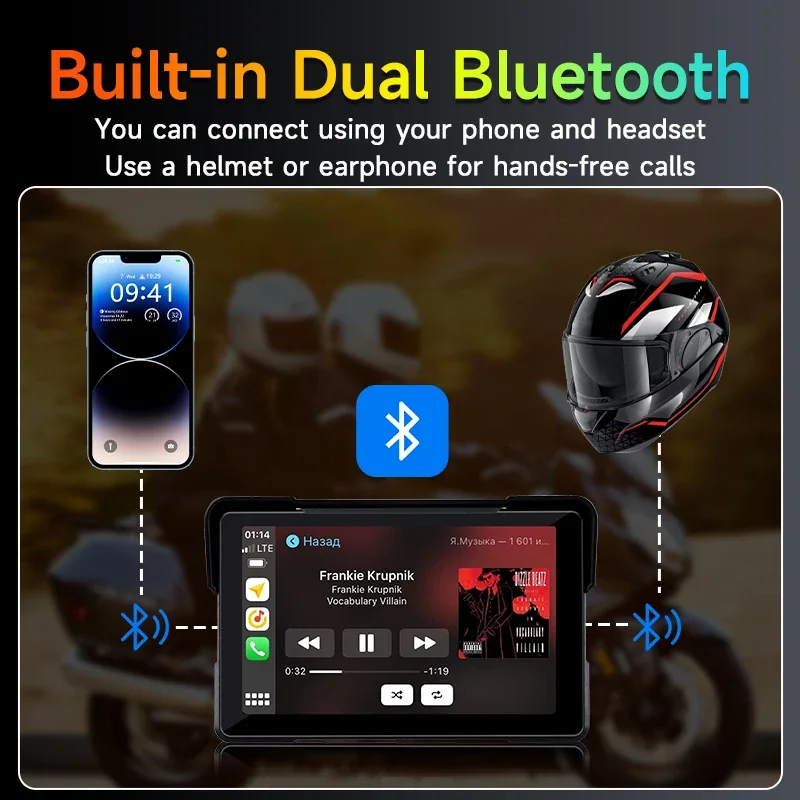
The global motorcycle GPS navigation and safety electronics market is projected to reach $3.8 billion by 2027, driven by the increasing adoption of smart connectivity in two-wheelers. For small importers, this niche category offers excellent profit margins and growing demand — especially for products like motorcycle DVR systems, wireless CarPlay displays, and GPS navigation units designed specifically for riders.
Unlike car electronics, motorcycle-specific devices must withstand vibration, weather exposure, and limited mounting space. This creates a barrier to entry that protects margins: motorcycle riders are willing to pay a premium for purpose-built gear that automotive electronics simply cannot replace. The Jansite Motorcycle DVR is a prime example of a product that captures this market opportunity, combining wireless CarPlay, Android Auto, GPS navigation, and DVR recording in one IPX7 waterproof unit.
Why Motorcycle Electronics Is a Growing Import Niche
The motorcycle electronics aftermarket is expanding for several structural reasons. First, smartphone navigation apps have trained riders to expect on-screen directions, but mounting a phone to handlebars exposes it to rain, vibration, and direct sunlight. Purpose-built motorcycle displays solve these problems with IPX7+ waterproofing, anti-glare screens, and vibration-dampened mounts.
Second, the rise of electric motorcycles and scooters — especially in Southeast Asia and Europe — has created a new generation of tech-savvy riders who expect digital dashboards and smartphone integration. Third, delivery riders and gig economy workers are increasingly using motorcycles for last-mile logistics, and they need navigation and communication tools that work reliably in all weather conditions.
According to recent market data, the global motorcycle GPS market grows at 8.2% CAGR, with the Asia-Pacific region accounting for 45% of global demand. The aftermarket segment — including DVR systems, CarPlay adapters, and GPS units — represents approximately 60% of total market value.
Understanding the Motorcycle DVR and Navigation Product Category
Motorcycle-specific electronics fall into several sub-categories worth understanding for sourcing decisions:
- All-in-one DVR/Navigation units (like Jansite) — Combine GPS navigation, wireless CarPlay/Android Auto, and dashcam recording in a single waterproof display. Retail: $40-120. These are the fastest-growing segment.
- Wireless CarPlay adapters — Add smartphone mirroring to existing motorcycle displays. Lower cost ($15-40) but require a compatible screen.
- GPS trackers — Theft prevention devices with real-time location tracking. Strong demand in urban markets. Retail: $20-80.
- Motorcycle dashcams — Front/rear recording cameras without navigation features. Popular for insurance and safety documentation. Retail: $30-100.
- Handlebar phone mounts with charging — Simple, high-volume products. Lower margin but steady demand.
The all-in-one segment (Jansite-style products) offers the best margin structure because competitors cannot easily unbundle the features or match the price point. A unit retailing for $50-80 costs approximately $12-20 landed, leaving 60-75% gross margins.

Smart AI Translation Bluetooth Earphones With LCD Display Noise Reduce New Wireless Digital Long Battery Life Display Headphone

Ai Translator Earbud Device Real Time 2-Way Translations Supporting 150+ Languages For Travelling Learning Shopping Business

TV98 ATV X9 Smart TV Stick Android14 Allwinner H313 OTA 8GB 128GB Support 8K 4K Media Player 4G 5G Wifi6 HDR10 Voice Remote iptv
Key Specifications to Look for When Sourcing Motorcycle Electronics
When evaluating suppliers for motorcycle navigation and DVR products, these specifications determine product quality and customer satisfaction:
Display Quality
The display is the most important component. Look for: IPS LCD panels with 800×480 minimum resolution for 5-inch screens and 1024×600 for 7-inch. Brightness should exceed 800 nits — motorcycle screens compete with direct sunlight. Anti-glare coating is non-negotiable. Touch responsiveness must work with gloves (capacitive touch with sensitivity adjustment is standard on quality units).
Waterproof Rating and Build Quality
IPX7 is the minimum acceptable waterproof rating. This means the device can be submerged in 1 meter of water for 30 minutes. Verify this claim: request a video of the unit being tested under running water. The charging port cover is typically the weakest point — check that it has a rubber gasket and snaps securely. Examine the mounting bracket: metal brackets with rubber vibration dampeners significantly outlast all-plastic designs.
Connectivity and Software
Wireless CarPlay and Android Auto require specific software licensing. Ensure the supplier uses official or licensed firmware. Bluetooth 5.0+ for phone calls and music streaming. The GPS chipset should support both GPS and GLONASS for faster satellite lock (typically MTK or U-blox chips). DVR recording at 1080p 30fps is standard; 4K recording exists but adds $5-8 to cost. Loop recording and G-sensor (impact detection) are expected features.
Supplier Sourcing Strategy for Motorcycle Electronics
Motorcycle electronics suppliers are concentrated in Shenzhen and Guangzhou, China. The major sourcing hubs for this category are:
- Shenzhen Huaqiangbei — The world’s largest electronics market. Hundreds of suppliers for GPS modules, displays, and assembled units. Best for prototype and small-batch orders (50-200 units).
- Alibaba/1688.com — Verified suppliers with trade assurance. Search terms: “motorcycle CarPlay display,” “waterproof motorcycle GPS,” “motorcycle DVR.” MOQs typically 100-500 units.
- Canton Fair — The April and October sessions are excellent for meeting established manufacturers. The electronics halls at Phase 1 feature dozens of motorcycle-specific suppliers.
When evaluating suppliers, request these specific documents: CE/RoHS certification (EU markets), FCC certification (US markets), IPX7 test report from a certified lab, battery UN 38.3 certification (for units with internal batteries), and a sample unit for 72-hour burn-in testing. Suppliers who hesitate to provide any of these should be deprioritized.
Cost Analysis and Profit Structure for Motorcycle DVR Imports
For a typical 5-inch motorcycle DVR/navigation unit with wireless CarPlay, GPS, and DVR (similar to Jansite):
- Unit cost (MOQ 200): $14-18 per unit
- Shipping (air freight, 200 units): $2-3 per unit
- Customs duty (varies by country): 2-5% of declared value
- Warehousing and fulfillment: $3-5 per unit (Amazon FBA fees)
- Total landed cost: $21-28 per unit
- Retail price: $49.99-79.99
- Gross profit per unit: $21.99-58.99
- Net margin: 40-55% after all costs including advertising
Compared to consumer electronics categories like Bluetooth headphones (25-35% margins) or phone cases (30-40% margins), motorcycle electronics offer meaningfully better profitability because the audience is more niche and price-sensitive in different ways — riders prioritize reliability and features over the absolute lowest price.
Motorcycle DVR vs. Automotive Dashcams: Key Differences Importers Must Know
One of the most common mistakes new importers make is assuming that automotive dashcams can be sold to motorcycle riders with minimal modification. This misunderstanding leads to returns, negative reviews, and lost money. Motorcycle-specific DVR and navigation units differ from automotive dashcams in fundamental engineering aspects that affect every component.
Automotive dashcams are designed for enclosed, climate-controlled cabins with stable mounting surfaces. Motorcycle DVR units must survive direct sun exposure, rain, extreme temperature swings (from -20°C to 70°C inside a black casing), and constant vibration from the engine and road surface. These environmental demands require completely different engineering specifications.
The table below highlights the critical differences:
- Waterproof rating: Motorcycle DVRs require IPX7+ (submersible in 1m water for 30 minutes). Automotive dashcams are typically IP54 (splash-resistant only).
- Screen brightness: Motorcycle units need 800+ nits for direct sunlight visibility. Automotive screens operate at 300-500 nits.
- Vibration tolerance: Motorcycle mounts must include rubber vibration dampeners and secure handlebar clamps. Automotive suction cup mounts fail under continuous vibration.
- Power system: Motorcycle units run on direct 12V/24V DC with battery drain protection circuits. Automotive units use 5V USB or 12V cigarette lighter adapters.
- Operating temperature: Motorcycle electronics rated -20°C to 65°C vs. automotive 0°C to 45°C.
- Touch sensitivity: Motorcycle screens need glove-compatible capacitive touch. Automotive touch screens assume bare-finger operation.
These differences mean that an automotive dashcam costing $15-25 in bulk will cost $25-50 in a properly engineered motorcycle version. The price gap is fully justified by component quality. Importers who recognize this can confidently sell at premium prices — and customers who have tried using automotive products on motorcycles quickly understand why the motorcycle-specific version is worth the investment.
Market Demand Drivers and Seasonal Trends
Motorcycle electronics demand follows clear seasonal patterns that importers should plan around:
- Spring (March-May) — Peak ordering season as riders prepare for summer. Best time to launch new products. Demand increases 40-60% over winter months.
- Summer (June-August) — Highest search volume for motorcycle GPS and accessories. Long-distance touring season drives demand for navigation units.
- Fall (September-November) — Solid demand continues, especially for waterproof devices as weather changes. Good time for clearance sales.
- Winter (December-February) — Lowest demand period. Use this time for sourcing, supplier qualification, and inventory planning for spring launch.
Geographic demand also varies significantly. North America and Europe account for 70% of premium motorcycle electronics purchases. Australia and New Zealand are growing markets with limited competition. Southeast Asia (Thailand, Vietnam, Indonesia) represents high-volume, lower-margin opportunities.
Listing Optimization and Selling Strategies
Product Photography and Video
Motorcycle electronics sell better when shown in context. Invest in: a video showing the device mounted on a motorcycle in motion, demonstrating GPS routing, CarPlay interface, and DVR footage sample. Close-up photos of the waterproof seal, mounting bracket, and screen brightness in sunlight. Before/after comparison showing a phone vs. dedicated motorcycle display in rainy conditions.
Keyword and Search Strategy
Target buying-intent keywords: “motorcycle GPS waterproof,” “CarPlay for motorcycle,” “motorcycle DVR dash camera,” “handlebar navigation display,” “best motorcycle GPS.” Long-tail keywords convert especially well: “5 inch waterproof motorcycle GPS with CarPlay,” “motorcycle navigation system with front camera.” Amazon/eBay PPC bids for motorcycle electronics are typically $0.50-1.50 per click — moderate competition compared to saturated categories like phone cases or headphones.
Social Proof and Community Marketing
Motorcycle riders are highly community-oriented. Consider: sending review units to motorcycle YouTube channels (ADVrider, motorcycle commuter channels). Posting install videos on Reddit r/motorcycles and r/motorcyclegear. Facebook groups for specific bike brands (Harley, BMW, Kawasaki) are excellent for targeted engagement. Offer affiliate codes to motorcycle influencers — the ROI on community marketing in this niche is 3-5x better than broad-platform advertising.
Shipping and Logistics Considerations for Motorcycle Electronics
Motorcycle electronics contain lithium-ion batteries (for the internal DVR backup and GPS module), which complicates international shipping. Battery-powered devices face stricter regulations: air freight requires UN 38.3 certified batteries and limits per-package battery capacity (typically 20Wh per cell or less). Many forwarders like DHL and FedEx accept up to 100Wh with proper documentation, but this adds $1-2 per unit in paperwork fees.
Sea freight is the most cost-effective option for bulk orders of 200+ units, at $0.50-1.00 per unit for shared FCL from Shenzhen to Long Beach or Rotterdam. Transit time is 18-25 days. Air freight is 3-5x more expensive but suitable for initial stock or seasonal restocking. For small importers starting out, using a freight forwarder that specializes in electronics (such as SGL or CFC) reduces the headache of customs classification — motorcycle electronics typically fall under HS code 8526.91 (radio navigation equipment) or 8525.89 (television cameras/DVR), with duty rates of 2-5% depending on the destination country.
Warehousing strategy matters. For US-based importers, Amazon FBA is the default choice for Prime eligibility. For EU markets, consider Amazon FBA in Germany or Poland, which cover the largest motorcycle markets. Third-party fulfillment centers (ShipBob, Deliverr) offer multi-channel fulfillment for sellers using their own websites alongside marketplaces.
Frequently Asked Questions
Q: Is it profitable to import motorcycle electronics as a small business?
Yes. The motorcycle electronics niche offers 40-55% net margins — significantly higher than general consumer electronics (25-35%). The niche audience and specialized requirements (waterproofing, vibration resistance) create natural barriers that protect pricing power. Start with one product like a motorcycle DVR unit and expand the line based on what sells.
Q: What certifications do motorcycle electronics need for import?
For the US market: FCC Part 15 (for Bluetooth/Wi-Fi), FCC Part 15B (for digital devices). For the EU: CE marking with RED directive (Radio Equipment Directive), RoHS compliance. For battery-powered units: UN 38.3 certification. IPX7 test reports from an accredited lab. For vehicles: some countries require E-mark certification for devices mounted within the rider’s field of vision.
Q: What is a reasonable MOQ for motorcycle GPS/DVR products?
Most reliable suppliers require 100-500 units for custom branding and packaging. If you want unbranded units for testing the market, some suppliers accept 50-unit MOQs (starting from $16-22 per unit). For private label with custom firmware and packaging, expect 200-500 unit MOQ with 15-25 day production time.
Q: What are the most common quality issues with motorcycle DVR products?
The top five issues reported by importers are: touch screen failure in rain (water ingress behind the touch panel), GPS signal loss (cheaper antenna modules), CarPlay disconnection (Bluetooth/Wi-Fi module overheating), camera fogging (moisture inside the DVR module), and bracket vibration causing screen shake (poor rubber dampening). Thorough sample testing with a 72-hour burn-in cycle catches 90% of these issues.
Q: Which sales channels work best for motorcycle electronics?
Amazon is the dominant channel (55% of online sales) due to its powerful discoverability and fulfillment network. eBay works well for lower-priced units ($30-50) and offers lower fees for existing listings. Specialized marketplaces like RevZilla, Cycle Gear, and Motorcycle Superstore reach highly targeted motorcycle audiences but have stricter vendor approval processes. Direct-to-consumer via Shopify is viable once you build a brand following.
Related: How to Find Reliable Suppliers for Your Small Business | From Random Products to Reliable Sales: A Small Items Sourcing Plan | eBay vs Amazon vs Etsy: Which Marketplace Selling Strategy Wins



