








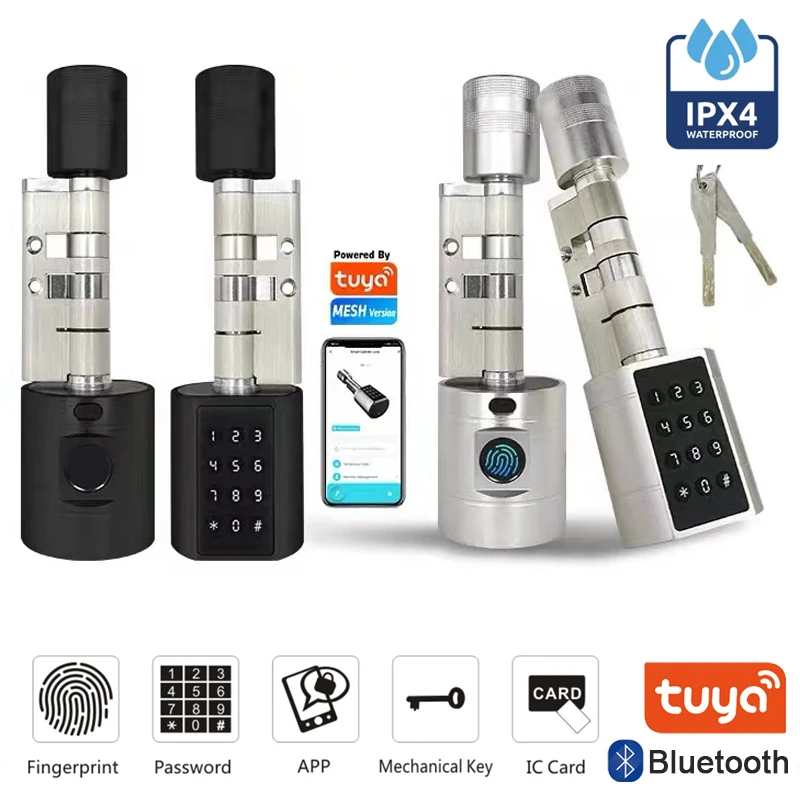
Smart home security has evolved from a futuristic concept into an everyday essential. In 2026, one of the most accessible and impactful upgrades you can make to your home or rental property is installing a smart door lock. Whether you are a homeowner looking for keyless convenience, a landlord managing multiple rental units, or an importer scouting high-demand products for cross-border e-commerce, the smart door lock market offers enormous potential. This comprehensive guide covers everything you need to know about choosing the right smart door lock — including an in-depth look at the popular Tuya Smart Fingerprint Door Lock, currently available at a massive 72% discount.
Why Smart Door Locks Are Taking Over Home Security in 2026
The global smart lock market was valued at approximately USD 3.6 billion in 2025 and is projected to surpass USD 6.5 billion by 2030, growing at a compound annual growth rate (CAGR) of over 12 percent. This rapid expansion is driven by several key factors: rising awareness of home security, the proliferation of Internet of Things (IoT) devices, and increasing demand for contactless and keyless entry solutions.
Smart door locks offer tangible benefits that traditional mechanical locks simply cannot match. You can grant temporary access to guests or service providers without being home, receive real-time notifications every time someone enters or exits, and monitor access logs remotely through a smartphone app. For landlords and Airbnb hosts, this means no more coordinating key handoffs or worrying about lost keys. For families, it means children and elderly members never have to fumble with keys again.
Beyond convenience, smart locks enhance security. Features like auto-lock timers, anti-peep PIN codes, and lockout after multiple failed attempts deter break-ins and unauthorized access. In many regions, insurance companies now offer discounts for homes equipped with certified smart locking systems, recognizing their role in reducing burglary risk.
Types of Smart Door Locks: Choosing the Right Form Factor
Not all smart door locks are built the same. Understanding the different form factors will help you select the right product for your specific door type and installation requirements.
Electronic Cylinder Locks — These replace the existing cylinder in your door while retaining the same visible deadbolt or latch mechanism. The Tuya Smart Fingerprint Door Lock falls into this category. Electronic cylinder locks are ideal for retrofit upgrades because they fit most standard European and Asian door cylinders without requiring drilling or major modifications. They typically offer multiple unlock methods including fingerprint, PIN, RFID card, and app control.
Deadbolt Smart Locks — Common in North American markets, these replace the entire deadbolt assembly on the interior side of the door. Brands like August, Schlage, and Yale dominate this segment. Installation is straightforward and usually takes under 30 minutes with just a screwdriver.
Lever Handle Smart Locks — Designed for commercial offices or interior doors, these integrate the smart mechanism into the lever handle itself. They are less common for main entrances but popular for internal security doors, server rooms, and office access control.
Padlock Smart Locks — Portable smart locks for gates, sheds, lockers, and storage units. These offer Bluetooth or fingerprint unlocking in a compact form factor but generally have fewer features than full door lock systems.
For most residential and small business applications, the electronic cylinder smart lock offers the best balance of affordability, ease of installation, and feature set. It is also the most popular category on cross-border e-commerce platforms like AliExpress and Amazon, making it a strong product choice for importers.
Essential Features to Look For in a Smart Door Lock
When evaluating smart door locks for purchase or resale, pay attention to these critical specifications:
Unlock Methods — The best smart locks offer at least three unlock options. Fingerprint recognition (optical or semiconductor), PIN code keypad, RFID card, smartphone app via Bluetooth or WiFi, and physical key backup are the most important. Each method serves a different scenario: fingerprints for daily use, PIN codes for guests, RFID for family members who prefer cards, and app control for remote access. A physical key backup ensures you are never locked out if the battery dies or electronics fail.
Build Quality and Materials — Look for zinc alloy or stainless steel construction rather than cheap ABS plastic. Zinc alloy offers excellent durability at a reasonable cost. The lock cylinder should be rated for at least 100,000 cycles. Check that the fingerprint sensor is scratch-resistant and responsive.
Battery Life — Most smart locks run on 4 AA batteries or a built-in lithium-ion pack. Look for battery life ratings of 6 to 12 months under normal use. Low battery alerts (either audible or via app notification) are essential. Some premium models include emergency power ports (Micro-USB or USB-C) for temporary charging when batteries are depleted.
Fingerprint Capacity and Speed — A good smart lock should store between 50 and 100 fingerprints and recognize them within 0.5 seconds. Capacitive semiconductor sensors are more secure and accurate than optical sensors and work well even with wet or slightly dirty fingers.
App Integration and Smart Home Compatibility — The Tuya Smart platform is one of the most widely adopted IoT ecosystems globally, compatible with Amazon Alexa, Google Assistant, and IFTTT. If you are building a smart home, choose a lock that integrates with your existing platform. Standalone app control is the minimum requirement; voice control and automation routines add significant convenience.
Weather Resistance — For outdoor installation, check the IP rating. IP54 or higher is recommended for covered front doors. Locks exposed to direct rain should have IP65 or better. Most electronic cylinder locks are designed for indoor-side installation with only the keypad or fingerprint sensor exposed outdoors.

TV98 ATV X9 Smart TV Stick Android14 Allwinner H313 OTA 8GB 128GB Support 8K 4K Media Player 4G 5G Wifi6 HDR10 Voice Remote iptv

Ai Translator Earbud Device Real Time 2-Way Translations Supporting 150+ Languages For Travelling Learning Shopping Business

Smart AI Translation Bluetooth Earphones With LCD Display Noise Reduce New Wireless Digital Long Battery Life Display Headphone
Tuya Smart Fingerprint Door Lock: Full Product Review and Deal Analysis
The Tuya Smart Fingerprint Door Lock (model: electronic cylinder smart lock) is a standout product in the budget-to-mid-range smart lock segment. Currently offered at EUR 47.15 — down from its original price of EUR 165.50 — this represents a 72 percent discount that makes it one of the most affordable smart locks available on AliExpress for cross-border buyers.
Here is a detailed breakdown of what this lock offers:
Five Unlock Methods — The lock supports fingerprint recognition (up to 100 fingerprints with 0.5-second recognition speed), a 4-to-12-digit PIN code keypad, RFID key cards, Tuya Smart APP remote control, and a physical remote control. This five-in-one approach covers every possible use case — daily entry for family members, temporary access codes for guests, app-based unlock for package deliveries, and key backup for emergencies.
Tuya Smart APP Integration — The Tuya ecosystem is one of the largest IoT platforms in the world with over 400 million devices connected. Through the Tuya Smart app (available on iOS and Android), you can remotely unlock your door, view real-time access logs, generate temporary PIN codes that expire automatically, and receive push notifications every time someone enters. The app supports multiple user profiles, making it easy to manage access for family, tenants, housekeepers, or delivery drivers.
Build and Design — The lock body is constructed from zinc alloy and ABS, providing a solid feel without being overly heavy. The adjustable cylinder fits door thicknesses ranging from 35mm to 55mm, covering the vast majority of standard residential doors. The fingerprint sensor is a semiconductor type (more secure than optical) and is positioned ergonomically for thumb or index finger placement.
Security Features — Beyond the basic unlock mechanisms, this lock includes an anti-peep PIN code feature (you can add random digits before and after your real PIN to prevent shoulder-surfing), an auto-lock function that engages automatically when the door closes, a lockout mechanism after five incorrect attempts, and a low battery warning system. The mechanical key backup ensures you are never locked out even if all electronic systems fail.
Who Should Buy This Lock? — If you are looking for an affordable entry into smart home security, this lock delivers excellent value. It is particularly well-suited for apartment dwellers who cannot make permanent modifications to their door, landlords managing short-term rentals or Airbnb properties who need to change codes between guests, and anyone who wants to eliminate the hassle of physical keys. At EUR 47.15, it costs less than many traditional high-security mechanical locks while offering far more functionality.
Installation Guide: How to Install a Smart Door Lock in 15 Minutes
One of the biggest advantages of electronic cylinder smart locks is how easy they are to install. No professional locksmith or electrician is required. Here is a step-by-step guide:
Step 1: Remove Your Existing Cylinder — Unscrew the retaining screw on the side of your door (usually located on the door edge, near the latch). Slide out the existing mechanical cylinder. Measure its length — the replacement smart lock cylinder must match this measurement. The Tuya lock comes with an adjustable cylinder that fits most standard sizes.
Step 2: Install the Smart Cylinder — Insert the smart lock cylinder into the door. Ensure the screw holes align, then tighten the retaining screw. The exterior keypad and fingerprint sensor should be on the outside of the door; the battery compartment and interior knob on the inside.
Step 3: Insert Batteries — Open the battery compartment on the interior side. Insert 4 AA batteries (included or purchased separately). The lock will beep or flash to indicate power is connected.
Step 4: Pair with the Tuya App — Download the Tuya Smart app from the App Store or Google Play. Create an account. Press and hold the pairing button on the lock for 3 seconds. The app will discover the device automatically. Follow the on-screen instructions to complete pairing.
Step 5: Configure Users and Test — Register your fingerprint by pressing your finger on the sensor 3-5 times. Set a master PIN code. Issue RFID cards to family members. Test each unlock method to confirm everything works. Enable auto-lock and configure notification preferences in the app.
The entire process typically takes 15 to 30 minutes for someone with basic DIY skills. No wiring, drilling, or programming expertise is needed.
Are Smart Door Locks Safe? Addressing Common Security Concerns
A common question potential buyers ask is whether smart locks are vulnerable to hacking or electronic tampering. The answer depends on the specific product and its security architecture.
Encryption and Security Protocols — Reputable smart locks use AES-128 or AES-256 encryption for communication between the lock and the smartphone app. The Tuya platform employs bank-grade encryption for data transmission, and all device pairing requires physical proximity. Remote unlock commands are authenticated through the cloud server, not direct peer-to-peer connections, adding an extra layer of security.
Physical Security — From a physical standpoint, smart locks must withstand the same brute-force attacks as traditional locks. Look for locks with hardened steel latch bolts and anti-drill plates. The Tuya lock’s zinc alloy construction offers excellent resistance to physical tampering. The mechanical key cylinder should also be pick-resistant (many use specialized pin configurations or magnetic key systems).
Common Vulnerabilities to Be Aware Of — No lock is 100 percent foolproof, and buyers should understand the realistic risk profile. Relay attacks (where an attacker intercepts and replays the signal from your key fob) are theoretically possible but extremely difficult with modern rolling-code protocols. The far more common security failure is user error — forgetting to lock the door, sharing codes indiscriminately, or using easily guessable PINs. Follow basic best practices: use a unique 6-digit PIN, enable auto-lock, and regularly review access logs.
According to home security reports, homes without any security system are 300 percent more likely to be burglarized. Even a basic smart lock significantly reduces this risk by eliminating the most common entry method — unlocked doors and compromised keys.
Smart Door Lock Buying Tips for Importers and Resellers
For small business owners and e-commerce entrepreneurs looking to import smart door locks for resale, this category offers strong margins and growing demand. Here are practical tips to source and sell effectively:
Demand Validation — Before committing to a large order, validate demand through sample testing. Order one unit from AliExpress or Alibaba, test it thoroughly, and create review content on your website or social media. Track click-through rates and engagement. If the organic interest is strong, scale up gradually rather than placing a 500-unit order immediately.
Supplier Vetting — Use the supplier sourcing framework to verify your smart lock manufacturer. Request video calls to see the factory floor, ask for third-party inspection reports, and order samples from at least three different suppliers before choosing. Verify that the supplier has valid export documentation and can provide CE, FCC, or RoHS certification for your target market.
Pricing and Profit Margins — Smart locks like the Tuya model retail for EUR 45-60 on AliExpress but can be sourced from Alibaba for USD 15-25 per unit in bulk (50-200 units). After shipping, customs duties, and platform fees, you can expect landed costs of USD 20-35 per unit. With retail pricing of USD 50-80, profit margins of 40-60 percent are achievable before marketing costs. Focus on value-added selling points like installation guides, multilingual user manuals, and responsive customer support to differentiate from generic listings.
Market Positioning — The smart lock market is segmented by price point. Budget locks under USD 50 compete on features and value. Mid-range locks (USD 50-150) compete on brand trust and build quality. Premium locks (USD 150+) compete on design, certification, and ecosystem integration. As a small importer, the budget segment is the most accessible entry point, but you must compete on clear product differentiation — unique features, better packaging, or bundled accessories.
For a complete framework on calculating your true costs, read our Importer’s Cost Calculation Workbook — it covers the seven hidden traps that inflate landed costs.
Frequently Asked Questions about Smart Door Locks
Q1: Can a smart door lock be hacked?
A1: While no internet-connected device is completely unhackable, reputable smart locks use AES-128 or AES-256 encryption that would take modern supercomputers millions of years to crack. The real-world risk of your smart lock being hacked is extremely low — far lower than the risk of losing traditional keys or a lock being picked. Follow basic cybersecurity practices: use strong WiFi passwords, keep the lock’s firmware updated, and avoid sharing admin app access.
Q2: What happens if the battery dies while I am outside?
A2: Most smart locks, including the Tuya model, have a physical key backup that works independently of the electronics. The key cylinder is concealed and only accessible from the outside. Some models also include a Micro-USB or USB-C emergency power port on the exterior — you can connect a portable power bank to power the lock temporarily and enter your PIN. Always keep the backup key in your car, at a trusted neighbor’s house, or in a secure lockbox.
Q3: Can I install a smart door lock on any door?
A3: Electronic cylinder smart locks fit most standard doors with a pre-existing cylinder hole. Measure your current cylinder length and diameter before purchasing. Most adjustable smart cylinders fit door thicknesses between 35mm and 55mm. For doors with non-standard thicknesses, thicker or thinner spacer rings may be needed. Full deadbolt replacement smart locks have different compatibility requirements and are generally designed for North American standard door prep (2-1/8 inch bore hole with 2-3/8 inch or 2-3/4 inch backset).
Q4: Do smart door locks work without WiFi?
A4: Yes. Most smart locks operate primarily over Bluetooth for local communication — fingerprint, PIN, and RFID functions work entirely offline. WiFi is only required for remote access (unlocking from outside Bluetooth range) and for receiving push notifications. If your WiFi goes down, the lock continues to work normally for all proximity-based unlock methods. The Tuya lock connects via Bluetooth for local control and uses your home WiFi (2.4 GHz) for remote features.
Q5: Are smart door locks worth it for rental properties?
A5: Absolutely. Smart door locks are one of the best investments a landlord or property manager can make. They eliminate the cost and hassle of rekeying between tenants (typically USD 50-150 per lock change). You can issue temporary codes for maintenance workers without duplicating keys. For short-term rentals, guests can check in without meeting you in person, and codes automatically expire at checkout. Many property managers report that smart locks pay for themselves within the first three tenant turnovers.
Related Articles
Related: How to Find Reliable Suppliers for Your Small Business in Under Two Weeks | From Random Products to Reliable Sales: A Small-Items Sourcing Plan That Delivers Profit | eBay vs Amazon vs Etsy: Which Online Marketplace Selling Strategy Wins for Small Importers



