








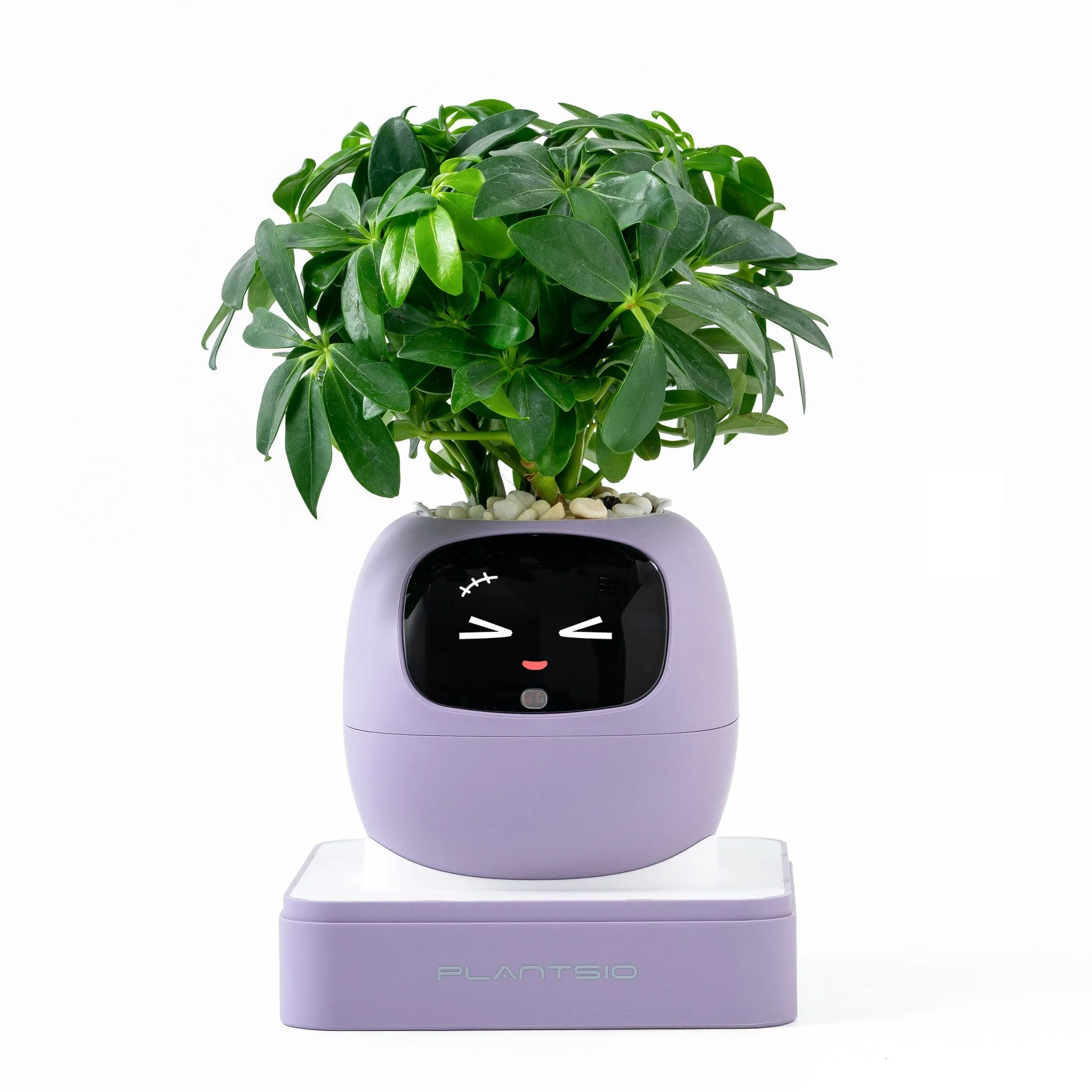
The Smart Planter 2nd Gen represents a fascinating convergence of artificial intelligence and home gardening, bringing interactive plant care to consumers through an intelligent pot equipped with 7 AI chips and 49+ emotional expressions. Priced at EUR 92.99 (down from EUR 132.84 at a 30% discount), this 2026 second-generation smart planter is marketed as the future of plant care, combining automated monitoring with an engaging emotional display that makes raising plants both easy and entertaining.
In this comprehensive review, we examine whether the Smart Planter 2nd Gen lives up to its ambitious claims, analyze the technology behind the emotional expressions and soil monitoring, and provide importers with actionable insights on the market potential for AI-powered gardening products. The smart garden industry has grown significantly as consumers increasingly seek technology that simplifies plant care while adding an element of fun to home decor.
Design and Emotional Expression Display of the Smart Planter 2nd Gen
The most visually distinctive feature of the Smart Planter 2nd Gen is its emotional expression display, which uses an integrated LED screen to show over 49 different facial expressions and mood indicators. When your plant is thriving, the planter displays a happy face with bright colors. When the soil is dry, it shows a thirsty expression with drooping eyes. At night, the display transitions to a sleepy face with a dimmed backlight, adding a charming bedtime routine to the plant care experience.
The planter itself is constructed from durable ABS plastic with a matte finish available in multiple colors including white, mint green, and soft pink. The design is modern and minimalistic, fitting naturally into contemporary home decor styles. The second generation model has refined the expression animations from the original, introducing smoother transitions and more nuanced emotional states such as “excited” when the plant sprouts a new leaf and “concerned” when light levels are suboptimal.
The emotional display serves a dual purpose: it provides immediate visual feedback about plant health at a glance, and it gamifies the plant care experience, encouraging users to check on their plants regularly and respond to the planter’s needs. This gamification element has proven particularly effective with younger consumers and children, who find the animated expressions engaging and motivating.
From an importer’s perspective, the display technology is one of the key selling points that differentiates this product from standard ceramic or plastic planters sold at a fraction of the price. The LED screen consumes minimal power and the battery life is rated at approximately 30 days of normal use on a single charge.
7 AI Chips: The Technology Behind Smart Plant Care
The “7 AI chips” marketing claim refers to seven dedicated sensor and processing modules built into the Smart Planter 2nd Gen. These include a soil moisture sensor, water level detector, ambient light sensor, temperature probe, growth tracking module, care reminder system, and plant health analysis processor. While the term “AI chips” is somewhat generous (most are standard microcontrollers with sensor interfaces), the combined system provides genuinely useful plant care automation.
The soil moisture sensor measures capacitance rather than resistance, which means it does not suffer from corrosion over time like cheaper resistive sensors. This is an important durability consideration for importers evaluating sample units. The water level detector monitors the built-in reservoir, alerting users when it needs refilling through a specific expression on the display. The ambient light sensor measures both intensity and duration of light exposure, which is critical for indoor plants that require specific day-length conditions.
The temperature probe monitors ambient temperature and alerts users if conditions fall outside the optimal range for common houseplants (typically 18-28 degrees Celsius). The growth tracking module uses time-based algorithms rather than actual visual recognition, which means it estimates growth stages based on elapsed time and ideal conditions rather than measuring actual physical growth. This is a minor limitation but does not significantly impact the user experience for most plant species.
For importers evaluating the technology, the key question is whether these sensors provide sufficient added value to justify the EUR 92.99 retail price. Our analysis suggests that the soil moisture and light monitoring features alone provide genuine utility for plant owners, while the emotional expressions and gamification elements provide the entertainment value that drives social media sharing and word-of-mouth marketing.
Plant Care Benefits and Target Audience Analysis
The primary value proposition of the Smart Planter 2nd Gen is eliminating the two most common causes of houseplant death: overwatering and insufficient light. According to horticultural studies, approximately 80 percent of houseplant deaths are caused by improper watering, with overwatering being nearly twice as common as underwatering. The smart planter’s automated monitoring directly addresses this problem by providing clear, visible alerts when water levels need attention.
The target audience for this product spans several demographic segments. Plant enthusiasts who already own multiple houseplants will appreciate the automation features that reduce daily maintenance. Beginners who have struggled to keep plants alive are the ideal customers, as the planter provides the guidance they need without requiring prior knowledge of plant care. Parents and educators value the interactive display as a teaching tool for children learning about plant biology and responsibility. Office workers see the planter as a low-maintenance desk companion that adds personality to their workspace.
The gift market represents a particularly strong opportunity for the Smart Planter 2nd Gen. At EUR 92.99, it occupies a sweet spot between an inexpensive trinket and a major luxury purchase, making it suitable for birthday gifts, housewarming presents, and corporate client appreciation. The combination of technology and nature appeals to both tech enthusiasts and plant lovers, expanding the addressable market beyond either category alone.
Seasonal demand patterns show that smart planters experience peak sales in spring (March-May) when consumers begin their gardening season, and again in December as a holiday gift item. Importers should plan their inventory ordering cycles to align with these peaks, placing bulk orders in January-February for spring inventory and September-October for holiday stock.

Ai Translator Earbud Device Real Time 2-Way Translations Supporting 150+ Languages For Travelling Learning Shopping Business

Smart AI Translation Bluetooth Earphones With LCD Display Noise Reduce New Wireless Digital Long Battery Life Display Headphone

TV98 ATV X9 Smart TV Stick Android14 Allwinner H313 OTA 8GB 128GB Support 8K 4K Media Player 4G 5G Wifi6 HDR10 Voice Remote iptv
Market Demand and Import Opportunity for Smart Planters
The global smart planter market was valued at approximately USD 180 million in 2025 and is projected to grow at a CAGR of 12.5 percent through 2030, according to industry reports. This growth is driven by urbanization of populations, increased interest in indoor gardening (accelerated by remote work trends), and the broader adoption of smart home devices. North America and Europe currently account for approximately 65 percent of global smart planter revenue, with Asia-Pacific showing the fastest growth rate.
For importers, the smart planter category offers several advantages. The products are relatively compact, reducing shipping costs compared to larger home goods. The technology elements provide clear differentiation from standard planters, supporting higher retail prices and better margins. The category is still relatively fragmented, with no single brand dominating the market, creating opportunities for nimble importers to establish themselves through targeted marketing and competitive pricing.
The EUR 92.99 retail price point of the Smart Planter 2nd Gen places it in the mid-range of the market. Lower-end smart planters from no-name brands sell for EUR 30-50 but lack the emotional display technology. Premium options from established brands like Click and Grow or AeroGarden sell for EUR 120-200 but focus on hydroponic growing rather than decorative plant care. The Smart Planter 2nd Gen occupies a unique middle ground that combines emotional interactivity with practical plant care at an accessible price point.
When evaluating the wholesale opportunity, importers should note that similar smart planters on Alibaba typically wholesale for USD 25-45 per unit depending on features and MOQ. The emotional display version with multiple chips commands a premium over basic moisture-monitoring only models. Minimum order quantities typically range from 100-500 units for the feature-complete version.
Competitor Comparison: How the Smart Planter 2nd Gen Stacks Up
To properly evaluate the Smart Planter 2nd Gen, we compared it against three competing products in the smart planter category: the Xiaomi Smart Plant Monitor (EUR 35), the Click and Grow Smart Garden 3 (EUR 99), and the Parrot Flower Power (discontinued but widely available on secondary markets at EUR 25-40).
vs Xiaomi Smart Plant Monitor: Xiaomi’s offering is a sensor probe rather than an integrated planter, meaning it can be used with any existing pot. It tracks light, moisture, temperature, and soil fertility but lacks any display or emotional expression. At EUR 35, it is significantly cheaper but provides no entertainment value or all-in-one convenience. The Smart Planter 2nd Gen wins on user experience and completeness but loses on price and flexibility.
vs Click and Grow Smart Garden 3: Click and Grow focuses on hydroponic growing with pre-seeded plant pods, targeting consumers who want guaranteed results with zero effort. The Smart Garden 3 costs approximately EUR 99 and grows herbs and small vegetables indoors. This is a different use case from the Smart Planter 2nd Gen, which works with standard potting soil and any plant of the user’s choice. The Smart Planter 2nd Gen offers more flexibility in plant selection while the Click and Grow offers guaranteed growing success.
vs Parrot Flower Power: The Parrot Flower Power was one of the earliest smart plant monitors, using Bluetooth to connect to an app for data visualization. It lacks the emotional display and all-in-one planter form factor of the Smart Planter 2nd Gen. The Parrot device was ultimately discontinued, suggesting that app-dependent plant monitors struggled to gain mainstream adoption. The Smart Planter 2nd Gen’s on-device display removes the friction of checking a phone app, which may prove to be a key usability advantage.
Overall, the Smart Planter 2nd Gen competes effectively in its niche by offering an integrated experience that no single competitor matches. Its closest competitor is likely the Xiaomi probe paired with a decorative pot, but this lacks the emotional display that drives social sharing and gift appeal.
Buying Tips for Importers: Evaluating Smart Planter Suppliers
Importers interested in the Smart Planter 2nd Gen or similar products should follow these guidelines when evaluating suppliers on Alibaba, Global Sources, or Made-in-China.
1. Verify Sensor Accuracy: Request samples and test the soil moisture sensor against a calibrated reference meter. Some budget smart planters use simple resistive sensors that corrode within weeks and give false readings. Capacitive sensors are more durable and accurate. Open the sample unit to verify the sensor type before committing to bulk orders.
2. Test Battery Life and Charging: Run the planter for one week at normal use and measure battery drain. Some suppliers exaggerate battery life claims by 50-100 percent. Also verify that the charging circuit meets safety standards (CE/UL/CCC certification) and does not overheat during extended charging.
3. Evaluate Display Quality: The emotional expression display is the primary selling point. Verify that the LED screen has adequate brightness for room lighting conditions, that animations are smooth rather than jerky, and that the screen does not suffer from dead pixels or uneven backlighting. Check the IP rating of the display area, as plant care inevitably involves water exposure.
4. Confirm Compliance and Certification: Smart planters sold in the EU must have CE marking with appropriate EMC and LVD directives. For the US market, FCC certification is mandatory for any device with electronic components. Bluetooth-equipped versions require additional wireless certification. Ensure your supplier provides documentation for all relevant markets.
5. Assess Packaging and Unboxing Experience: Smart planters are often purchased as gifts, making packaging quality critical. Request photos of the retail packaging and evaluate whether it communicates the product’s value adequately. Bilingual packaging (English + target market language) can significantly improve sell-through rates.
For comprehensive guidance on supplier evaluation, refer to our supplier sourcing guide for small businesses. Understanding your complete landed cost calculation is equally critical before committing to inventory.
Frequently Asked Questions About the Smart Planter 2nd Gen
Q1: What plants work best with the Smart Planter 2nd Gen?
The planter works with most common indoor houseplants including pothos, snake plants, peace lilies, philodendrons, succulents, and small ferns. Plants that require very specific soil conditions (like orchids or carnivorous plants) may not be suitable. The planter accommodates pots up to 15cm in diameter.
Q2: Does the Smart Planter 2nd Gen require an app or smartphone?
No, all functionality is built into the planter itself. The emotional expression display and sensor alerts work without any app. Some versions offer optional Bluetooth connectivity for data logging via a companion app, but the core experience is self-contained and does not require a phone.
Q3: How long does the battery last and how do you charge it?
The built-in rechargeable battery lasts approximately 30 days with normal use. Charging is via USB-C and takes about 2-3 hours for a full charge. A low battery expression appears on the display when charging is needed.
Q4: Is the Smart Planter 2nd Gen suitable for outdoor use?
The planter is designed for indoor use. While it can be placed on a covered patio or balcony, it is not fully waterproof and should not be exposed to rain or direct hose watering. The electronics are sensitive to moisture and should be kept in a dry environment.
Q5: What is the wholesale price and minimum order quantity for importers?
Wholesale prices for the Smart Planter 2nd Gen from Chinese suppliers typically range from USD 30-45 per unit for orders of 100-500 units. MOQs start at 50 units for most suppliers. The EUR 92.99 retail price provides a healthy margin when wholesale costs are managed effectively, though shipping costs for the bulky planter design should be carefully calculated.
Conclusion: Is the Smart Planter 2nd Gen Worth the Investment?
The Smart Planter 2nd Gen with its 7 AI chips and 49+ emotional expressions is a genuinely innovative product that occupies a unique position in the smart gardening market. For consumers, it offers a fun, educational, and practical plant care experience that addresses the most common causes of houseplant failure. For importers, the product represents an opportunity to enter a growing category with clear differentiation from commodity planters and strong gift market potential.
The key risks to consider include the relatively high retail price point (which may limit adoption among casual plant owners), the need for clear marketing to communicate the product’s value proposition, and the importance of quality control given the electronic components involved. Importers who invest in sample testing, proper certification, and compelling product photography will be best positioned to succeed with this category.
For further reading on related importing topics, see our guides on product sourcing strategies, marketplace selling approaches, and customs clearance essentials for electronics.





