








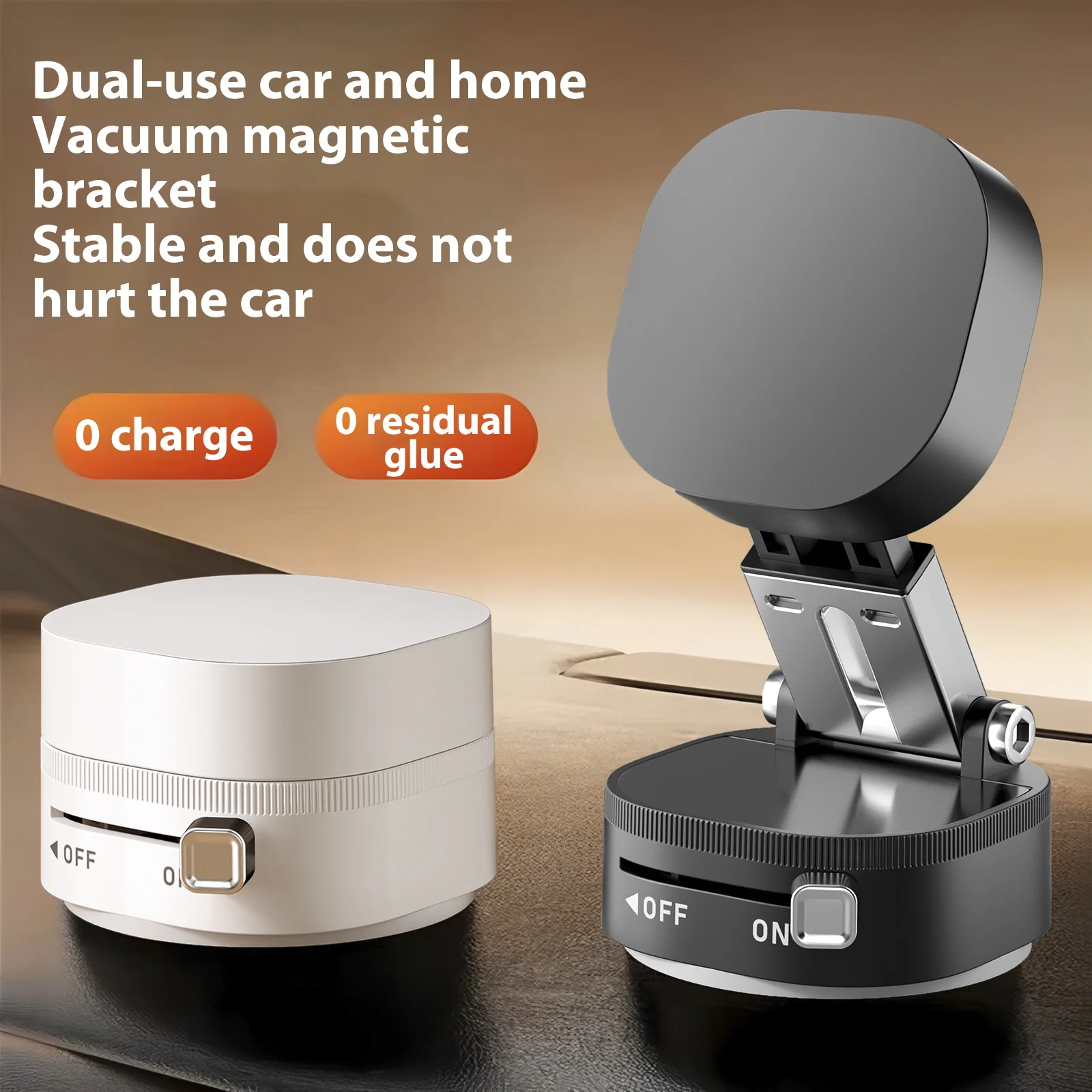
Car phone holders are one of the highest-volume accessory categories on Amazon, with over 8 million units sold every month across all variations. Among them, the vacuum magnetic car phone holder has emerged as the dominant format — combining the convenience of one-hand magnetic attachment with the security of a vacuum suction mount that works on virtually any dashboard or windshield. The 360-degree vacuum magnetic car phone holder takes this design to its logical conclusion: a fully articulating ball-joint neck, a powerful N52 neodymium magnet array, and an optional fast wireless charging module that keeps your phone powered during navigation. In this comprehensive guide, we cover everything you need to know about car phone holders — from product specifications and buying criteria to sourcing strategies, market analysis, and profit margin calculations for importers looking to enter this consistent, high-volume category.
Why the Vacuum Magnetic Car Phone Holder Dominates the Market
The car phone holder market has gone through a clear evolutionary path. Early models used spring-loaded clamp arms that required two hands to operate. Then came gravity-based holders where the phone’s weight triggered clamping arms. The current generation — vacuum magnetic holders — represents the best compromise of security, convenience, and usability, which is why they have captured the largest market share in the category.
Several converging trends explain the strong and sustained demand for vacuum car phone holders:
- Navigation dependency: Google Maps and Waze usage on phones means 78% of drivers use their phone for navigation at least weekly according to a 2024 consumer survey. A phone holder within easy sightline is essential for safe GPS use while driving.
- Legal requirements: Over 30 countries and 24 US states have laws banning handheld phone use while driving. In many jurisdictions, holding your phone for any reason while the engine is running can result in fines starting at $100. A car phone holder eliminates this legal risk entirely.
- Rideshare driver demand: Uber, Lyft, and Didi drivers rely on phone holders as essential equipment. With over 5 million active rideshare drivers in the US alone, this professional use case creates consistent replacement demand — drivers typically replace holders every 8-12 months due to wear.
- Universal phone compatibility: Unlike clamp-style holders that may not fit large phones with thick cases, magnetic holders work with any phone that has a metal plate attached (or phones with built-in MagSafe on iPhone 12+). This universality means a wider addressable market.
- Gift economy: At $10-29 retail, car phone holders are an easy impulse purchase and a popular gift item — particularly during holiday seasons, Valentine’s Day, and Father’s Day.
Key Specifications of the 360-Degree Vacuum Magnetic Car Phone Holder
Here is a detailed breakdown of the specifications for the 360-degree vacuum magnetic car phone holder with wireless charging:
| Feature | Specification |
| Mount Type | Vacuum suction cup (pump-activated) |
| Attachment Mechanism | Magnetic — N52 neodymium magnets |
| Rotation | 360-degree ball-joint head with adjustable tilt |
| Wireless Charging | 15W fast charging (Qi-compatible, MagSafe compatible) |
| Phone Compatibility | All smartphones with included metal plate or built-in MagSafe |
| Mounting Surfaces | Dashboard, windshield, or CD slot (adapter included) |
| Included Accessories | 2x metal plates, USB-C charging cable, CD slot mount, cleaning wipes |
| Weight | 98 grams (without wireless charger) / 145 grams (with wireless charger) |
| Suction Cup Material | Silicone with UV-resistant coating |
| Operating Temperature | -20°C to 80°C (-4°F to 176°F) |
The 360-degree rotation head deserves special attention. Most competing products offer 180-270 degrees of articulation, which can leave your phone at an awkward angle in some seating positions. Full 360-degree rotation plus 90-degree tilt ensures the phone can be positioned perfectly for both driver and passenger to see, regardless of where the mount is placed on the dashboard.
How to Choose the Best Car Phone Holder — 7 Buying Criteria
With hundreds of car phone holder models on the market, understanding what separates a quality product from a poor one is essential — both for your own purchase and for selecting products to import and sell. Here are the seven most important criteria:
1. Magnet Strength: The holding power of the magnet determines whether your phone stays attached during sharp turns, over bumps, or when using a large/heavy phone. Look for holders using N52 grade neodymium magnets — these are the strongest widely available magnetic grade. A good magnetic holder will hold a phone with a case weighing up to 300g (10.5 oz) securely. Test this by attaching the heaviest phone in your household — if it holds during a simulated sharp turn, the magnet is adequate.
2. Suction Cup Quality: Vacuum suction cups vary dramatically in quality. The best holders use a pump-action lever mechanism (not a push-down sticker) that creates a strong vacuum seal. The silicone material should be UV-resistant to prevent hardening and cracking from dashboard sun exposure. Temperature tolerance is critical — a cheap suction cup will lose its seal on a hot windshield in summer or crack in freezing winter temperatures.
3. Wireless Charging Speed: If you choose a holder with built-in wireless charging, look for 15W fast charging maximum (iPhone MagSafe speed) or 10W standard Qi charging. Many budget holders advertise “fast wireless charging” but deliver only 5W, which barely maintains battery level during GPS navigation (which is power-intensive). Verify the actual output wattage from the supplier specifications.
4. Installation and Compatibility: The best holders include multiple mounting options — dashboard mount (adhesive plate or suction), windshield mount, and CD slot mount. This flexibility means the product works in any car configuration. The holder should include at least two metal plates (one circular for MagSafe-compatible placement, one rectangular for standard placement) so users can optimize the magnetic attachment point on their phone.
5. Build Materials: Plastic quality matters. ABS plastic with a matte finish is preferable to gloss plastic, which shows fingerprints and reflects sunlight into the driver’s eyes. The ball joint should be metal (brass or stainless steel), not plastic — plastic ball joints wear down over 3-6 months and lose their friction grip, causing the phone to droop.
6. Cable Management: For wireless charging models, how the USB cable routes from the holder to the car’s power outlet matters. Good holders have a cable channel or notch that keeps the cable tidy and prevents it from interfering with the suction cup seal or the vent clip. Some premium models include a right-angle USB connector that sits flush against the holder body.
7. One-Handed Operation: The primary advantage of a magnetic holder is one-handed phone attachment and removal. Test that you can attach and detach the phone with one hand while keeping your eyes on the road. Some magnetic holders have weak magnets that require careful alignment — this defeats the purpose of one-handed convenience.

Smart AI Translation Bluetooth Earphones With LCD Display Noise Reduce New Wireless Digital Long Battery Life Display Headphone

Ai Translator Earbud Device Real Time 2-Way Translations Supporting 150+ Languages For Travelling Learning Shopping Business

TV98 ATV X9 Smart TV Stick Android14 Allwinner H313 OTA 8GB 128GB Support 8K 4K Media Player 4G 5G Wifi6 HDR10 Voice Remote iptv
Sourcing Vacuum Car Phone Holders — Supplier Selection Guide
Sourcing quality car phone holders requires careful supplier selection and sample testing. The category has a wide quality range, and importing substandard holders leads to high return rates and negative reviews. Here is the sourcing process used by successful importers in this category:
Supplier Research on Alibaba: Search for “vacuum magnetic car phone holder” and “wireless car charger mount.” Filter for suppliers with Gold Supplier status, 3+ years of trading history, and transaction volumes above $100,000. Look for suppliers whose primary product category is car accessories or phone accessories — specialists tend to have better quality control than generalists. Pay attention to factory audit reports available on Alibaba; suppliers with on-site factory audits score higher for reliability.
Sample Testing Protocol: Order samples from 4-6 shortlisted suppliers. Test each sample across 10 criteria: magnet holding strength (attach a 250g phone and shake vigorously), suction cup adhesion (measure days until vacuum fails on a clean glass surface), wireless charging speed (test with an iPhone and a Samsung Galaxy), ball joint friction (does the phone droop after 50 articulation cycles?), temperature tolerance (leave in a car on a 35°C day for 4 hours), packaging quality, included accessories count, cable quality, USB port fit, and overall build finish. Score each sample out of 10 and only proceed with suppliers scoring 7+.
Order Parameters: MOQs for car phone holders typically range from 100 to 500 units. Per-unit cost ranges from $1.50 to $2.50 for basic vacuum magnetic holders (without wireless charging) and $3.00 to $5.50 for wireless charging models. The cost breakdown for components is approximately: magnet assembly (25%), suction cup + arm mechanism (20%), electronics/wireless coil (30%), packaging (15%), and accessories (10%). Negotiate by asking for a price break at 1,000 units combined across two SKUs rather than 500 units of a single SKU — suppliers prefer larger total orders.
Pricing Strategy and Profit Margin Analysis
Accurate cost calculation is essential for determining profitability in the competitive car phone holder category. Here is a detailed breakdown of the cost structure for a wireless charging vacuum magnetic car phone holder selling on Amazon:
- Wholesale cost: $3.00-5.50 per unit (varies by wireless charging wattage and build quality)
- Ocean freight: $0.35-0.70 per unit (LCL from Shenzhen to US West Coast)
- FBA inbound shipping: $0.20-0.40 per unit
- Amazon referral fee: 15% of selling price = $2.25-3.75 on a $15-25 product
- FBA fulfillment fee: $3.50-4.50 per unit (standard small-size tier with optimized packaging)
- Storage fee: $0.15-0.30 per unit per month
- PPC advertising cost: $2.50-4.50 per unit (competitive category for keywords like “car phone holder”)
- Total cost per unit: $11.95-19.65
At a retail price of $15.99 (basic) to $29.99 (wireless charging), net profit per unit ranges from -$3.66 to $18.04. The wireless charging version is clearly more profitable. Category competition has compressed margins on basic holders to razor-thin levels — the smart strategy is to focus on the wireless charging variant where margins are healthier and perceived value is higher. Differentiation through packaging design, bundled accessories, and listing optimization is essential to command the higher price points.
Sales Channels Comparison: Amazon FBA dominates with 62% of category sales, but eBay (18%), TikTok Shop (10%), and Shopify DTC (7%) are growing channels. Basic holders sell best at $9.99-14.99 on eBay where price sensitivity is highest. Wireless charging holders perform best on Amazon and Shopify at $22.99-29.99 where buyers value the convenience feature. For TikTok Shop, focus on short demonstration videos showing the magnetic one-hand attachment — this format gets high engagement and conversion rates.
Frequently Asked Questions About Vacuum Magnetic Car Phone Holders
Q1: Are vacuum magnetic car phone holders compatible with all phone models?
Yes, with the included metal plate, the holder works with any smartphone regardless of model or brand. The metal plate (slim, adhesive-backed) attaches to the back of your phone or inside your phone case. For iPhone 12-16 users, the built-in MagSafe magnet array means no plate is needed — the phone attaches directly. Android phones with Qi wireless charging can also attach directly if the holder’s magnet is strong enough to grab the internal charging coil. This universal compatibility means a single SKU addresses the entire smartphone market.
Q2: How long does the vacuum suction cup last before needing replacement?
Quality silicone suction cups from reputable suppliers maintain their grip for 12-24 months in normal use. Factors that accelerate degradation include direct sunlight exposure (UV radiation hardens the silicone), extreme heat (dashboard temperatures can reach 70°C/158°F in summer), and frequent removal/reapplication cycles. In moderate climates and with the included UV-resistant coating, the suction cup should hold for 18+ months. Budget holders using PVC instead of silicone may fail within 2-4 months — another reason to prioritize quality when sourcing.
Q3: Does the wireless charging version interfere with the phone’s magnetic attachment?
Not at all. The wireless charging coil and the magnet array are designed to work together. The magnets are positioned around the charging coil (similar to Apple’s MagSafe design), and the charging pad is recessed slightly so the phone sits flush against the magnetic surface. When the phone is attached, the charging coil aligns automatically. The 15W fast wireless charging provides enough power to charge most phones at full speed, even while running GPS navigation with screen brightness at maximum.
Q4: Will the metal plate damage my phone or case?
No. The included metal plates are paper-thin (0.3mm) with a 3M adhesive backing. When attached to a phone case, the plate is virtually invisible and does not interfere with wireless charging (unless the plate is placed directly between the phone and the charger). For bare phones, the plate can be attached to the inside of a clear case. The adhesive leaves no residue when removed from most surfaces. There is no risk of scratching the phone as long as the surface is clean before application.
Q5: What is the minimum order quantity from Chinese suppliers for private labeling?
Most suppliers on Alibaba offer MOQs of 50-200 units for basic vacuum magnetic holders and 100-500 units for wireless charging versions. Sample orders of 2-5 units typically cost $25-60 with shipping. For custom packaging with your brand logo, expect an additional setup fee of $100-300 and a minimum of 500-1,000 units. Custom packaging is worth the investment — branded products sell for 20-40% more than unbranded generics on Amazon and create the foundation for a recognizable brand in the car accessories space.
Final Verdict: Is the Car Phone Holder Category Right for Importers?
The vacuum magnetic car phone holder category offers a reliable, high-volume opportunity for small importers. With consistent year-round demand, a mature and transparent supply chain, and a product format (lightweight, compact) that is easy to import across borders, it represents one of the more accessible entry points for new importers in the car accessories space. The wireless charging variant, in particular, provides healthy margins despite category competition.
Success in this category depends on three factors: selecting a supplier that delivers quality N52 magnets and durable silicone suction cups, optimizing packaging to reduce dimensional weight shipping costs, and differentiating your listing through premium presentation and bundled accessories (extra metal plates, a USB car charger, a storage pouch). Sellers who compete on quality and presentation rather than price consistently outperform those who treat car phone holders as a commodity.
Related Articles:
- How to Find Reliable Suppliers for Your Small Business in Under Two Weeks — Find and vet phone accessory suppliers using the proven supplier sourcing framework.
- From Random Products to Reliable Sales: A Small Items Sourcing Plan That Delivers Profit — Evaluate whether car phone holders fit your overall product sourcing strategy and portfolio mix.
- eBay vs Amazon vs Etsy: Which Marketplace Selling Strategy Wins for Small Importers — Compare marketplace options and choose the best sales channel for your car phone holder product.



