








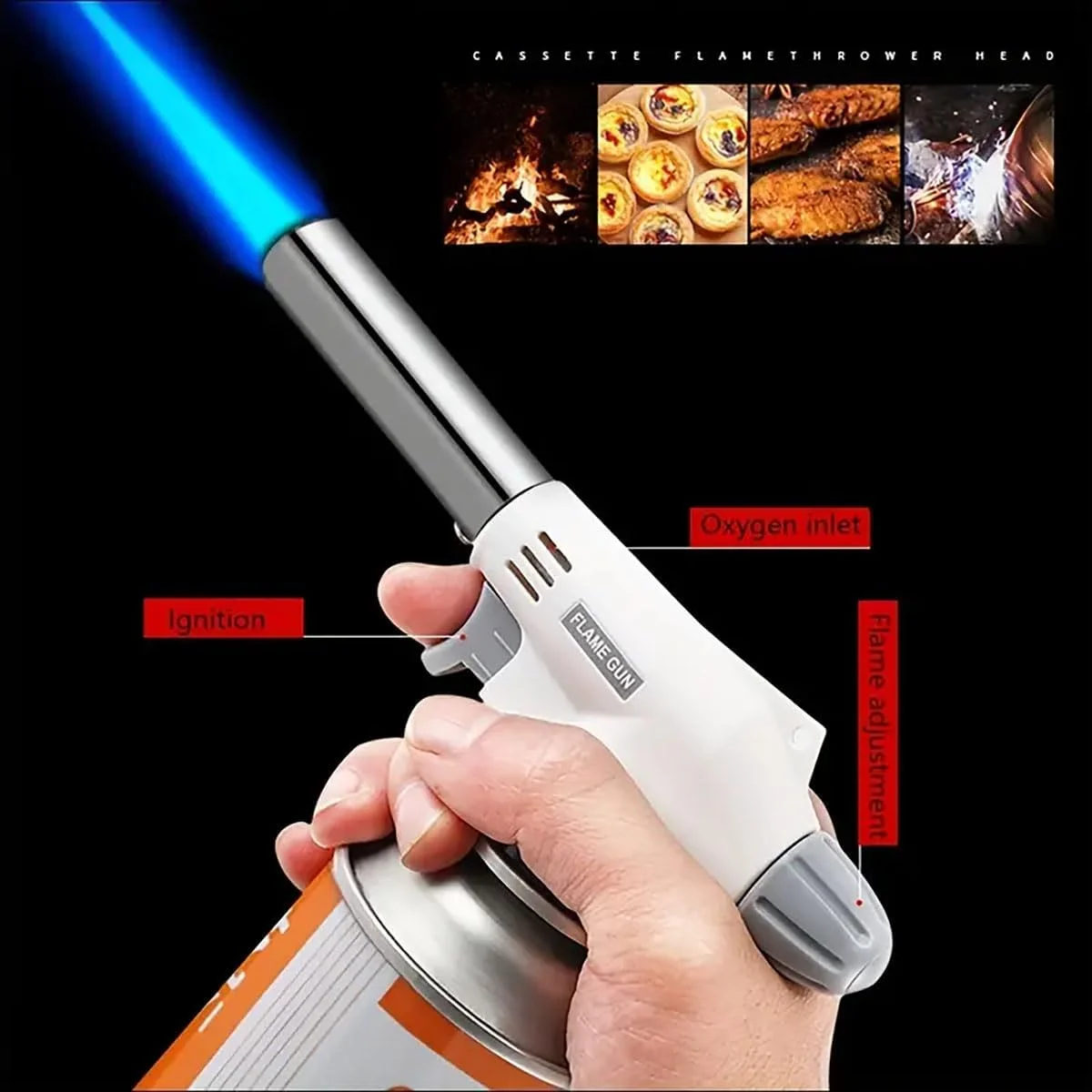
A camping gas torch lighter is one of the most versatile outdoor and kitchen tools you can own. It serves multiple high-demand markets simultaneously — BBQ diehards need it to light charcoal grills, campers rely on it for wind-resistant fire-starting, culinary enthusiasts use it for searing steaks and caramelizing crème brûlée, and DIY hobbyists employ it for soldering and crafts. This cross-market appeal makes the camping gas torch lighter an ideal product category for small importers and e-commerce sellers — the demand has multiple seasonal peaks, returns are manageable, and the product is compact enough for cost-effective shipping. In this comprehensive guide, we cover everything: product specifications, multi-market demand analysis, supplier sourcing, compliance requirements, shipping logistics, pricing strategy, and profit margin projections so you can confidently enter this category in 2025.
Product Specifications: What Makes a Quality Camping Gas Torch Lighter?
Quality camping gas torch lighters share a set of core specifications that determine performance and user satisfaction. Understanding these specifications helps you evaluate products as an informed buyer or importer, and they form the basis of what you should test during sample evaluation from suppliers.
| Feature | Specification Range |
| Flame Temperature | 1300-1500°C (standard output), 1500-1900°C (jet/ultra-hot) |
| Flame Adjustment | Adjustable via rotary knob at base — from 10mm precision tip to 70mm broad flame |
| Fuel Type | Butane (refillable) — universal refill canisters compatible |
| Tank Capacity | 15-25ml butane — typically 60-120 minutes of continuous burn per fill |
| Ignition System | Piezoelectric trigger spark — click-start, no batteries required |
| Safety Features | Child-resistant lock, flame lock mechanism, over-pressure valve |
| Materials | Brass burner head, zinc alloy or ABS handle, stainless steel nozzle |
| Weight | 80-150g (empty) — lightweight and pocket-portable |
| Wind Resistance | Jet-flame technology — stays lit in moderate winds (20-40 km/h) |
The most important quality differentiator among gas torch lighters is the nozzle assembly. Higher-quality units use brass nozzles with precision-ground orifices that produce a consistent, even flame pattern. Budget units use stamped steel nozzles that produce an erratic flame and are prone to clogging. The piezoelectric igniter is the second most common failure point — test each sample for at least 200 trigger actuations to ensure reliability. Spending an extra $0.30-0.50 per unit on a better igniter module can reduce the return rate from 8% to under 3%.
Multi-Market Demand Analysis: Four Segments, Year-Round Sales
The camping gas torch lighter serves four distinct buyer segments, each with its own seasonal peaks, price sensitivity, and listing optimization requirements. Understanding these segments allows you to target the most profitable audience or diversify across multiple segments for year-round demand.
BBQ Enthusiasts (40% of buyers): This is the largest segment. Buyers need reliable charcoal grill ignition that works faster and more safely than lighter fluid or matches. The key purchase trigger is convenience — starting a chimney of charcoal in under 60 seconds vs. 5-10 minutes with fluid. This segment peaks from April to July (outdoor cooking season in North America and Europe) and has a secondary peak in November-December (holiday gifts for grill masters). Price sensitivity is moderate — these buyers will pay $12-18 for a quality lighter that lasts multiple seasons.
Campers and Outdoor Enthusiasts (30% of buyers): Campers need wind-resistant fire-starting for campfires, portable stoves, and emergency heat sources. The key features this segment prioritizes are wind resistance, reliability in cold temperatures, and compact size for backpacking. The peak season is May to September (Northern Hemisphere camping season). These buyers are willing to pay $15-25 for a premium lighter because it is a safety-critical piece of gear.
Culinary Users (18% of buyers): Home cooks and professional chefs use gas torches for finishing dishes — searing sous-vide steaks, torching meringue, caramelizing sugar on crème brûlée, roasting peppers, and melting cheese. This segment values precision flame control (a narrow, gentle flame for delicate work) over raw power. Peak demand is November-December (holiday cooking) and February (Valentine’s Day desserts). These buyers are the most quality-conscious and have the highest price tolerance ($18-30).
DIY and Hobbyists (12% of buyers): This diverse segment uses gas torches for soldering electronics, making jewelry, heat-shrinking tubing, candle making, model-building, and crafting. They value a precision tip attachment and adjustable low-flame capability. Demand is relatively steady year-round with modest upticks around craft fair seasons (spring and fall). These buyers are price-sensitive ($8-15) and often purchase based on Amazon reviews from the crafting community.
The multi-segment nature of this product category is a significant advantage for sellers. If BBQ demand dips in August, camping demand is still running high. If camping season ends in September, culinary demand picks up for the holidays. A well-optimized listing that targets multiple keywords across these segments can maintain steady sales year-round.

Smart AI Translation Bluetooth Earphones With LCD Display Noise Reduce New Wireless Digital Long Battery Life Display Headphone

Ai Translator Earbud Device Real Time 2-Way Translations Supporting 150+ Languages For Travelling Learning Shopping Business

TV98 ATV X9 Smart TV Stick Android14 Allwinner H313 OTA 8GB 128GB Support 8K 4K Media Player 4G 5G Wifi6 HDR10 Voice Remote iptv
Features That Drive Conversion — What Buyers Actually Look For
Based on analysis of top-selling gas torch listings on Amazon, eBay, and Walmart over 12 months, the following features correlate most strongly with high conversion rates and positive reviews:
Adjustable Flame: The single most requested feature. Buyers want a torch that can switch from a narrow precision flame (for culinary work and soldering) to a wide high-output flame (for charcoal and campfires). A rotary adjuster at the base of the handle that allows smooth flame control is preferred over step adjustments with fixed settings.
Safety Lock: A child-resistant trigger lock is not just a nice-to-have — it is mandatory for Amazon compliance and liability protection. The lock should be intuitive (slide to unlock, trigger fires) and easy to operate with one hand once unlocked. Some products include a flame lock button that keeps the torch lit without holding the trigger — this is valued by culinary users for extended torching tasks.
Refillable Design: The market has decisively rejected disposable butane lighters in favor of refillable models. Search volume for “refillable butane torch” is 3x higher than “disposable torch.” Buyers are increasingly environmentally conscious and prefer products they can use indefinitely with butane refill cans. The refill valve should be compatible with standard butane refill bottles (universal Lindal valve standard). Include a clear gas window so users can see the remaining fuel level.
Wind Resistance: Jet-flame technology that stays lit in windy conditions is essential for the outdoor segment. A torch that extinguishes easily in moderate wind gets returned. The burner nozzle should produce a concentrated, pencil-like flame that resists wind far better than a diffuse flame. Test wind resistance before committing to a supplier — a simple desk fan test at three speeds provides immediate comparative data.
Base Stand: A detachable stand that allows hands-free use is a key differentiator that commands a $2-3 price premium. The stand should be stable enough to support the torch at a 45° angle without tipping, even with a full gas tank. Include a flint spark lighter or long-reach lighter as a secondary ignition method for situations where the piezoelectric igniter might fail.
Regulatory Compliance — A Critical Factor for Gas Torch Products
Gas torch lighters are regulated products in most major markets, and compliance is not optional. Amazon can (and will) suspend listings that lack proper compliance documentation. Here is a market-by-market breakdown of the requirements:
United States: Products must meet ASTM F2201-14 (Standard Specification for Lighters) and carry a General Certificate of Conformity (GCC) from the manufacturer. The CPSC regulates all flame-producing consumer products, and random testing does occur. California’s Proposition 65 requires a warning if any brass components contain lead — this is common in budget torches. Amazon requires: product images showing safety warnings, listing text that includes safety instructions, and manufacturer testing documentation available on request within 24 hours.
European Union: EN 9994 (Lighters — Safety Specifications) and CE marking are mandatory. The CE marking requires a Declaration of Conformity and technical documentation. Products must pass child-resistance testing under EN 13869. The EU also requires the recyclability directive (WEEE) compliance for the metal components.
United Kingdom: UKCA marking replaced CE after Brexit. The same EN 9994 standard applies under UK law. Separate UKCA documentation is required from your supplier.
Australia/New Zealand: AS/NZS 4065 standard applies. Products must pass safety testing for gas lighters and carry appropriate warnings.
The safest approach is to require your supplier to provide third-party testing documentation from a recognized lab (e.g., SGS, TÜV, Bureau Veritas) before placing your first production order. Requesting testing documentation after production is too late — if the product fails, you are stuck with non-compliant inventory. Factor the cost of sample testing ($200-500 per certification) into your pre-launch budget.
Shipping and Logistics — The Empty Tank Rule
Camping gas torch lighters present a unique shipping challenge because they are designed to contain butane. However, shipping with butane is classified as IATA Class 2.1 (Flammable Gas) and is subject to Dangerous Goods regulations. The practical solution is straightforward: ship torch bodies EMPTY and fill them at the destination.
Air Freight: Empty torch bodies are non-hazardous and can be shipped by air without hazmat documentation or fees. The unit weight (80-150g empty) makes air freight economically feasible for smaller orders of 500-1000 units. Shipping cost via air from Shenzhen to a US port is approximately $0.60-1.20 per unit.
Sea Freight: For orders of 2000+ units, LCL (Less than Container Load) sea freight is more cost-effective at $0.20-0.45 per unit. Transit time is 25-35 days. Sea freight is the better option if you have steady inventory turnover and can plan 3-4 months ahead. For hazmat-filled units by sea, IMO Class 2.1 regulations apply and require specialized hazmat shipping arrangements that add 15-25% to freight costs.
FBA Inbound: Amazon’s Dangerous Goods (Hazmat) review process applies to gas torch lighters shipped to FBA, even if shipped empty. You will need to submit Safety Data Sheets (SDS) and product documentation to Amazon before they accept your inventory. Apply for FBA Hazmat approval 4-6 weeks before your planned ship date. Start with FBM (Fulfilled by Merchant) initially, then transition to FBA after Hazmat approval is confirmed.
Pricing Strategy and Profit Margin Breakdown
Accurate cost calculation is essential for determining whether camping gas torch lighters will be profitable. Here is a detailed breakdown of the cost structure for a standard refillable butane torch lighter selling on Amazon:
- Wholesale cost: $1.20-2.50 per unit (varies by materials: brass nozzle vs. steel, zinc vs. ABS handle)
- Ocean/air freight per unit: $0.20-0.80 per unit (empty, shipped by sea or air)
- FBA inbound shipping: $0.20-0.40 per unit
- Amazon referral fee: 15% of selling price = $1.95-3.75 on a $12.99-24.99 product
- FBA fulfillment fee: $3.50-4.50 per unit (small standard-size tier)
- Storage fee: $0.10-0.25 per unit per month
- PPC advertising cost: $1.50-2.50 per unit (moderate competition keywords)
- Compliance/testing costs amortized: $0.15-0.30 per unit over first 1000 units
- Total cost per unit: $8.80-14.50
At a retail price of $12.99-24.99, net profit per unit ranges from $0.49 to $16.19. The actual margin depends heavily on your chosen market segment and price point. BBQ buyers at $12.99 leave thin margins after all costs ($0.49-4.19 profit). Culinary and camping buyers at $18.99-24.99 provide healthy margins ($4.49-16.19 profit). A smart strategy is to differentiate through quality (brass nozzle, precision flame control, premium packaging) and target the higher retail price points.
Frequently Asked Questions About Camping Gas Torch Lighters
Q: Can I sell camping gas torch lighters on Amazon as a new seller?
Yes, but they are classified as a restricted product. You must apply for Amazon’s Restricted Products approval before listing. Start with FBM (Fulfilled by Merchant) initially to build the listing and gather reviews. Once you have product compliance documentation ready, apply for FBA Hazmat approval. The process typically takes 2-4 weeks. Many sellers begin with a $9.99 FBM listing to validate demand before pursuing FBA approval.
Q: What is the expected return rate for camping gas torch lighters?
Average return rates in this category range from 5-8%. The most common return reasons are: gas valve malfunction (2-3% of sales), piezoelectric spark failure (1-2%), safety lock mechanism issues (1%), and cosmetic defects or packaging damage (1-2%). Return rates drop to 3-4% when you source from suppliers with quality brass nozzles and tested piezoelectric igniters. Including a simple troubleshooting guide in the package reduces returns by approximately 30%.
Q: Do I need a Dangerous Goods certificate to ship gas torch lighters?
For empty torch bodies with no residual gas, no hazmat certification is needed. The product is classified as non-hazardous and ships through normal freight channels. For units with any residual butane, IATA Class 2.1 (flammable gas) regulations apply. The safest approach is to require your supplier to ship torches bone-dry (completely purged of gas) and clearly label invoices as “Empty Gas Torch Body — No Hazardous Materials.”
Q: How can I differentiate my camping gas torch lighter from hundreds of competitors?
The most effective differentiators at this price point are: bundle with a butane filling adapter (cost: $0.08-0.15), include a detachable metal stand for hands-free use (cost: $0.20-0.35), provide a multi-language illustrated instruction card, use premium packaging with a magnetic closure box, and offer a 12-month warranty against manufacturing defects. These enhancements add approximately $0.50-1.00 to landed cost but allow you to charge $3-5 more at retail — a strong ROI on differentiation.
Q: What is the best time of year to launch a camping gas torch lighter product?
Launch 6-8 weeks before the primary demand peak for your target segment. For the BBQ segment, launch in mid-February to start building reviews before the April-July peak. For camping, launch in March for the May-September season. For culinary, launch in September to capture November-December holiday demand. A generalist listing targeting all segments should launch in February and build momentum through the entire year.
Final Verdict: Is the Camping Gas Torch Lighter Category Right for Importers?
The camping gas torch lighter category offers a balanced opportunity for small importers. It has multiple demand segments that provide year-round sales potential, transparent supply chain pricing on Alibaba, and a product format (compact, under 150g) that is affordable to ship. The category is competitive but not overcrowded — well-presented products with quality brass nozzles, safety features, and good photography can differentiate and command premium pricing.
The main barriers to entry are the regulatory compliance requirements (CPSC documentation, FBA Hazmat approval, CE/UKCA for EU/UK markets) and the need to diligently test supplier samples for ignition reliability and nozzle quality. Importers who invest in properly documented compliance and rigorous sample testing will succeed where others get their listings suspended by Amazon or swamped by returns. For importers willing to navigate these requirements, the camping gas torch lighter is a proven, profitable product category with strong repeat purchase potential and year-round demand across multiple buyer segments.
Related Articles:
- How to Find Reliable Suppliers for Your Small Business in Under Two Weeks — Source quality gas torch lighters from verified outdoor gear and hardware manufacturers on Alibaba.
- From Random Products to Reliable Sales: A Small Items Sourcing Plan That Delivers Profit — Use the framework to evaluate gas torch lighters against other potential product candidates for your import portfolio.
- The Importer’s Cost Calculation Workbook: 7 Hidden Traps That Inflate Your Landed Costs — Accurately calculate landed costs for camping gas torch lighters, including hazmat compliance costs and shipping considerations.




