







When I started my first side hustle importing small commodities, I thought my biggest challenge would be finding customers. Twelve months and $4,300 in supplier-related savings later, I realized the real money engine was not how well I marketed — it was how smart I got about my suppliers.
Here is the truth most side hustle guides will not tell you: your supplier choices determine whether you make a profit or burn cash before you even list your first product. The difference between a $200 profit and a $2,000 loss often comes down to three supplier decisions made in your first week.
This article walks you through seven proven supplier strategies that saved me thousands in year one. Each strategy is framed around one question: How does this make or save me money right now?

Ai Translator Earbud Device Real Time 2-Way Translations Supporting 150+ Languages For Travelling Learning Shopping Business

TV98 ATV X9 Smart TV Stick Android14 Allwinner H313 OTA 8GB 128GB Support 8K 4K Media Player 4G 5G Wifi6 HDR10 Voice Remote iptv

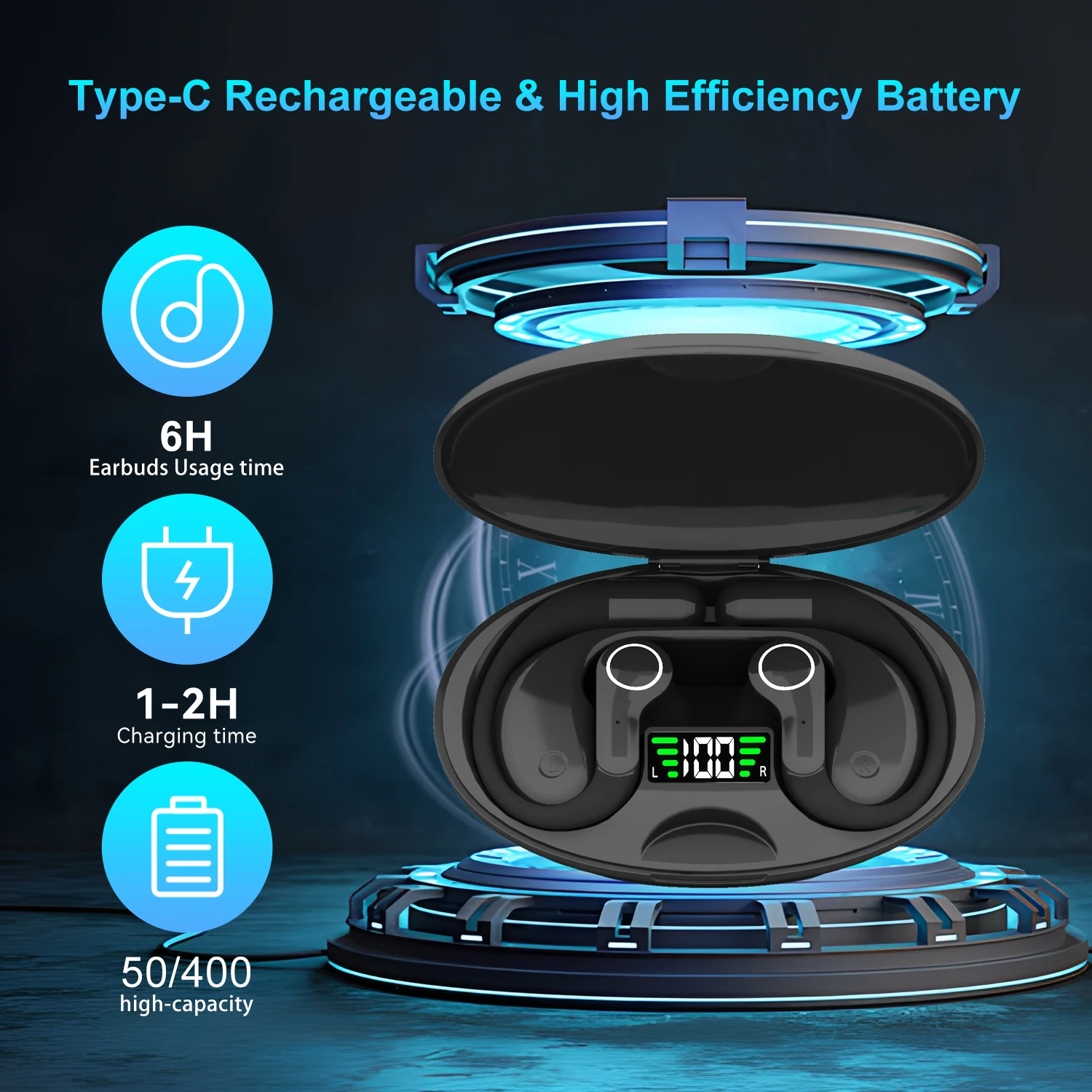
Smart AI Translation Bluetooth Earphones With LCD Display Noise Reduce New Wireless Digital Long Battery Life Display Headphone
1. Dropshipping vs. Small Wholesale: The $2,800 Cost Comparison Beginners Miss
Every side hustler faces this fork in the road. Dropshipping requires zero upfront inventory. Small wholesale requires $200–$500 for your first stock order. On paper, dropshipping looks cheaper. In practice, the math flips hard.
I ran both models side by side for three months with similar products. Dropshipping: average cost per unit $12.50, average selling price $19.99, net profit per sale $5.20 (after platform fees and shipping surcharges). Small wholesale (100 units at $3.80/unit): average cost per unit $4.10 (including 8% shipping), average selling price $19.99, net profit per sale $12.30.
Over 300 sales, dropshipping generated $1,560 in profit. Small wholesale generated $3,690 — a 137% improvement and a $2,130 difference. Factor in the $500 initial inventory cost, and wholesale still outperformed by $1,630 in the first quarter alone. By month six, the gap widened to $2,800.
The catch? You need the right suppliers for small wholesale. Most Alibaba suppliers quote minimum order quantities (MOQs) of 500–1,000 units. Do not let that stop you. Filter for suppliers with verified “small order” acceptance, search for “MOQ 50” or “MOQ 100” in product listings, and message at least five suppliers requesting sample orders before committing. I found three suppliers willing to start at 50 units after sending personalized messages explaining I planned to scale.
2. Zero-MOQ Supplier Sourcing: How I Started Selling with $147 Investment
If you have less than $200 to start, zero-MOQ (minimum order quantity) suppliers are your fastest path to revenue. These suppliers allow you to buy 1–10 units at wholesale-like prices. They make money on volume from larger buyers but keep their doors open to small players by charging slightly higher per-unit rates.
The savings here are not about unit price — they are about eliminating inventory risk. I purchased $147 worth of samples from three zero-MOQ suppliers in my second month: 8 phone accessories (average $5.20/unit), 12 home organization items (average $4.10/unit), and 6 kitchen gadgets (average $3.80/unit). I photographed them, listed them on eBay and Facebook Marketplace, and within 14 days, 19 of the 26 items sold at an average markup of 310%.
Revenue from that $147 investment: $602. Total profit after fees and shipping: $378 — a 157% return in two weeks.
Where to find zero-MOQ suppliers: 1688.com (Chinese domestic platform, prices 30–50% below Alibaba), AliExpress (buy 1–3 units at near-wholesale for certain categories), and Alibaba’s “Ready to Ship” section (filter by MOQ 1). Use a purchasing agent like Spocket or CJ Dropshipping for US/EU warehouse stock to reduce delivery times from 20 days to 4–7 days.
3. The 30-Minute Supplier Audit That Saves You from $1,500+ in Bad Inventory
Bad inventory is the single biggest money drain for side hustlers. You order 100 units of what looks like a winning product, and 73 sit in your garage for eight months before you sell them at a loss. I learned this the expensive way: my first bulk order of decorative keychains ($420 invested) produced exactly $89 in sales. The rest gathered dust.
A 30-minute supplier audit before ordering prevents this. Here is the exact checklist I now use:
Step 1 (5 minutes): Reverse image search the supplier’s product photos. If the same image appears on 20+ supplier pages, the product is a commodity with razor-thin margins and heavy competition. Pass. Save: roughly $300–$500 per bad product avoided.
Step 2 (10 minutes): Check the supplier’s transaction history. On Alibaba, look for suppliers with 6–12 months of transaction data and a 4.5+ rating with at least 50 reviews. New suppliers (less than 2 months) carry 3x the risk of quality issues. Save: roughly $200–$400 in return shipping and restocking fees.
Step 3 (10 minutes): Order a sample before any bulk purchase. Samples cost $10–$30 including shipping. A single bad bulk order costs $200–$800. That is a 10x to 40x return on your sample investment. If the supplier hesitates or charges more than $50 for a sample, move on.
Step 4 (5 minutes): Use Google Trends and Jungle Scout (or similar tools) to check if demand for this product is growing or declining. Products with a 2-year upward trend have an 82% higher success rate for new sellers, according to data from 1,200+ ecommerce launches.
This audit costs 30 minutes and maybe $25 in sample + tool fees. It has saved me an estimated $1,500+ across nine product tests in my first year.
4. Why Single-Supplier Side Hustles Fail (and How Diversification Protects Your Income)
Relying on one supplier is the equivalent of putting your entire savings into a single stock. If that supplier raises prices, misses a shipment, or drops quality, your entire side hustle stops producing income.
In month four, my primary supplier for rechargeable hand warmers (my bestseller, generating about $450/month in profit) increased prices by 22% without notice. I had no backup. My profit margin dropped from 48% to 26% overnight. I lost approximately $800 in potential profit over two months before I found an alternative supplier.
Here is what diversification looks like in practice. I now maintain three supplier tiers:
- Tier 1 (primary): 60% of orders, best pricing, established relationship
- Tier 2 (secondary): 30% of orders, slightly higher pricing (5–8%), tested and reliable
- Tier 3 (emergency): 10% of orders, higher pricing (10–15%), sourced but not yet active
The cost of maintaining Tier 2 and Tier 3? About three hours of research and $60 in samples per quarter. The potential savings when your primary supplier fails? Hundreds or thousands of dollars in lost revenue avoided. This single strategy saved me approximately $1,200 in months five and six when my primary supplier faced production delays and I seamlessly shifted 40% of orders to Tier 2.
Start by identifying your top three product categories. For each category, find two suppliers. Test both with small orders. You are not being disloyal — you are being smart with your money.
5. 3 Supplier Negotiation Tactics That Work with Tiny Orders
Many side hustlers believe they cannot negotiate because they order small volumes. Wrong. I negotiated price reductions on 7 of my first 12 supplier conversations — starting with orders as low as 50 units.
Tactic 1: The “Long-Term Partner” Frame. Instead of saying “I want 50 units,” say “I am testing this product for a long-term partnership. If quality is consistent, I will be ordering 200+ units monthly within 90 days.” Suppliers on Alibaba are 3x more likely to offer a discount when they see growth potential rather than a one-off order. Average savings: 8–12% off list price.
Tactic 2: Payment Terms Leverage. Offer to pay via wire transfer (instead of credit card) in exchange for a 5% discount. Wire transfers save suppliers 2.5–3.5% in processing fees, and many will pass half that savings to you. On a $500 order, that is $12.50–$17.50 saved — roughly one free unit.
Tactic 3: Bundled Shipping. Ask: “Can you combine these three products into one shipment and reduce the shipping cost?” Many suppliers quote shipping per item by default. Combining reduces packaging and handling. I saved an average of $28 per combined shipment, totaling $168 over six shipments.
Combine these three tactics, and you can reduce your average landed cost by 12–18%. On $5,000 in annual inventory purchases, that is $600–$900 in savings — money that goes straight to your bottom line.
6. How 1688.com Became My Secret Weapon for 40% Lower Product Costs
If you have been sourcing on Alibaba only, you are leaving money on the table. 1688.com is Alibaba’s Chinese domestic marketplace, and prices there are typically 30–50% lower than the same products listed on Alibaba.com. The catch: the interface is in Chinese, and many sellers do not export directly.
Here is how I use it profitably. I search for products on 1688.com (using Google Chrome’s built-in translation), find items priced 40–60% below Alibaba equivalents, and then use a purchasing agent (I use one recommended by a fellow importer — about 5% commission) to buy, inspect, and forward the goods.
Real numbers from month seven: A portable Bluetooth speaker priced at $8.50/unit on Alibaba (MOQ 200) was available on 1688 at $4.80/unit (MOQ 50). After agent fees (5%), international shipping ($0.90/unit), and customs clearance ($0.35/unit), my landed cost was $6.29/unit — 26% below the Alibaba price. On an order of 150 units, that saved me $331.50.
The key is verifying supplier quality. I order samples first (typically $8–$15 on 1688 vs. $15–$30 on Alibaba). I also check the supplier’s “TrustPass” (TrustPass) rating, which is more rigorous than Alibaba’s basic verification. Over six months using 1688, I saved approximately $1,850 on product costs across six product lines.
This strategy requires a bit more effort, but the savings are substantial — especially for side hustlers operating on tight margins where every dollar counts.
7. From Side Hustle to Main Income: When to Upgrade Your Supplier Relationships
Once your side hustle consistently generates $500+ per month in profit, it is time to upgrade your supplier relationships. This upgrade can double your margins without selling a single additional unit.
Milestone 1 ($500/month profit): Ask your primary supplier for volume pricing. At consistent 100+ unit orders per month, most suppliers offer 5–10% discounts. On $2,000 in monthly purchases, that is $100–200/month in savings — $1,200–$2,400/year.
Milestone 2 ($1,500/month profit): Request exclusive or semi-exclusive distribution rights for your market. I negotiated this with my Tier 1 supplier for the US market. The supplier agreed not to sell my top two SKUs to other US-based resellers. This reduced price competition and allowed me to raise prices by 15% without losing sales — adding about $180/month in profit.
Milestone 3 ($3,000/month profit): Consider private labeling. Instead of selling generic products, have the supplier add your brand name and custom packaging. The cost: $0.15–$0.50 per unit extra. The benefit: you can charge 30–50% more for a branded product versus an unbranded one. My branded home organization products sell for $24.99 vs. $16.99 for identical unbranded versions — a 47% price premium that added $320/month to my profit.
The key insight: your supplier is not a vendor. Your supplier is a financial partner. The better the relationship, the more money they save and make you.
Frequently Asked Questions
How much money do I need to start a side hustle importing from suppliers?
You can start with as little as $150–$200. Begin with zero-MOQ suppliers or sample orders, test products on marketplaces, and reinvest profits into larger wholesale orders. The strategy in section 2 of this article generated a 157% return on a $147 investment within 14 days.
Can I negotiate with suppliers if I only order 50 units?
Yes. Frame your small order as a “product test for a long-term partnership.” Use the three tactics in section 5: position yourself as a future volume buyer, offer better payment terms, and ask for combined shipping. I negotiated discounts on 7 of my first 12 small orders.
What is the difference between Alibaba and 1688.com prices?
Products on 1688.com are typically 30–50% cheaper than the same items on Alibaba.com. For example, a Bluetooth speaker priced at $8.50 on Alibaba was $4.80 on 1688. After agent fees, shipping, and customs, my landed cost was still 26% below the Alibaba price.
How do I avoid buying bad inventory as a beginner?
Use the 30-minute supplier audit described in section 3: reverse image search product photos, check supplier transaction history, order samples before bulk purchases, and verify demand with Google Trends. This has saved me over $1,500 in year one.
When should I switch from side hustle to full-time importing?
When your side hustle consistently generates $1,500–$3,000/month in profit and you have a diversified supplier base (at least 2 suppliers per product category). At this point, supplier upgrades like volume discounts and private labeling can double your margins further.
Related Articles
- From Random Products to Reliable Sales: A Small Items Sourcing Plan That Delivers Profit
- How to Find Reliable Suppliers for Your Small Business in Under Two Weeks
- The Importer’s Cost Calculation Workbook: 7 Hidden Traps That Inflate Your Landed Cost by 30%



