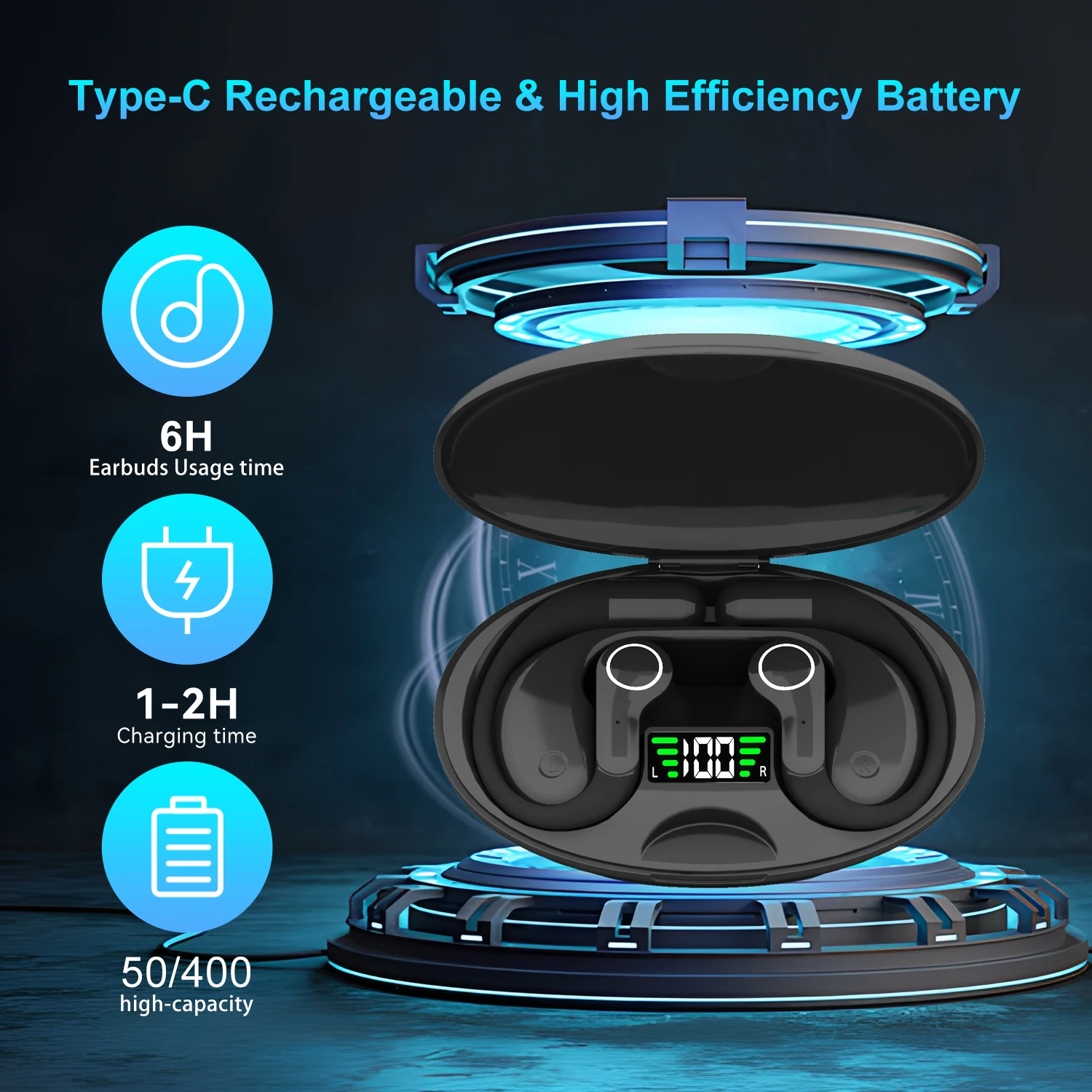









Smart AI Translation Bluetooth Earphones With LCD Display Noise Reduce New Wireless Digital Long Battery Life Display Headphone
Motherboard solution: ChinaCache 5636E-ANC+ENC. Talk time: 7-8 hours. Earphone battery: 40 mAh.
Buy Now

Ai Translator Earbud Device Real Time 2-Way Translations Supporting 150+ Languages For Travelling Learning Shopping Business
Experience seamless communication with our AI Translator Earbud, capable of real-time 2-way translations in over 150 languages, perfect for global travel and business.
Buy Now

TV98 ATV X9 Smart TV Stick Android14 Allwinner H313 OTA 8GB 128GB Support 8K 4K Media Player 4G 5G Wifi6 HDR10 Voice Remote iptv
Advanced Connectivity:Seamless streaming with dual-band WiFi 5GHz support and Bluetooth 5.0, ensuring a stable and fast connection for your media.
Buy Now
Why Supplier Tiering Is Your Single Biggest Leverage Point for Profit
Imagine two importers. Importer A sources the same product from three different factories. She splits her annual order of $120,000 equally — $40,000 to each. She visits all three during the same trip. She negotiates payment terms independently with each one. She runs the same quality inspection on every shipment. Importer B sources the same $120,000 but concentrates $80,000 with one primary factory, $30,000 with a secondary, and $10,000 with a new testing partner. She focuses her factory visit on Tier 1. She negotiates net-60 terms with Tier 1 and COD with Tier 2. She spot-checks Tier 1 shipments and does full inspections on Tier 3. Importer B’s margins are, on average, 15 to 22 percent higher than Importer A’s. The difference isn’t the product. It’s the system. A 2024 survey of 340 small importers by the Cross-Border Trade Association found that businesses using a formal supplier tiering system reported 17.3 percent higher net margins than those who didn’t. The reason is straightforward: tiering forces you to concentrate your best terms, attention, and order volume on the suppliers who generate the most profit, while systematically reducing risk exposure from unproven partners. Supplier tiering is not about loyalty. It’s about leverage. When one supplier represents 60 percent of your volume, they fight to keep your business. When every supplier represents 15 percent, none of them care enough to give you their best pricing or fastest lead times.Tactic 1: Build a Scoring System That Weighs Profit Contribution Above Everything
Most small importers tier suppliers based on gut feel. “This factory seems reliable.” “That one is cheap.” Gut feel has no place in a profit system. Build a numeric scoring matrix with four weighted factors: Profit contribution (40 percent weight). What percentage of your total gross profit comes from this supplier? A factory that generates $25,000 in annual gross profit deserves more weight than one that generates $5,000 — even if the second one is cheaper per unit. Use your actual The Importer’s Cost Calculation Workbook: 7 Hidden Traps That Inflate Your Landed Cost by 30%, not the ex-works price, to calculate this. Delivery reliability (25 percent weight). What percentage of this supplier’s orders arrive on or before the agreed date? Anything below 90 percent on-time delivery is a yellow flag. Below 80 percent is an automatic downgrade to Tier 3. Quality consistency (25 percent weight). What’s the defect rate across the last 10 shipments? Under 2 percent is excellent. Two to 5 percent is acceptable but needs monitoring. Over 5 percent means that supplier should not be in Tier 1, regardless of price. Communication responsiveness (10 percent weight). How quickly do they respond to emails, RFQs, and problem reports? A slow-responding factory is expensive in hidden ways — delayed samples, missed production windows, and last-minute scramble shipping costs. Score each supplier on a 1-to-10 scale for each factor, multiply by the weight, and add them up. Suppliers scoring 8.5 and above become Tier 1. Those between 6.5 and 8.4 become Tier 2. Everything below 6.5 is Tier 3 — or, if they score under 4, a candidate for removal. Importers who apply this exact scoring system report reclassifying an average of 30 percent of their suppliers — meaning the “gut feel” tier was wrong for nearly a third of their relationships.Tactic 2: Concentrate Order Volume to Create Real Negotiating Leverage
Once you have your tiers, the single most profitable move is to concentrate your order volume. This is where the money is. Tier 1 suppliers should receive 60 to 70 percent of your total order value. Tier 2 should get 20 to 30 percent. Tier 3 should get 5 to 10 percent — and those small orders are deliberate. They are tests. This concentration changes the economics of your supplier relationship. When a factory knows they are your primary supplier and that losing your business means losing $80,000 a year, they have a powerful incentive to offer you their best pricing, extend payment terms, and prioritize your production slots. In practice, small importers who consolidate from four or five equal suppliers to two or three tiered suppliers see cost reductions of 8 to 14 percent on their Tier 1 orders within six months. That is not a theoretical number. It’s the result of the factory optimizing their production runs for your volume, reducing changeover time, and giving you the pricing they reserve for their most important buyers. A real example: an importer of kitchen gadgets in Chicago consolidated from five Chinese factories to three tiers — one primary, one secondary, one testing partner. Within four months, his primary factory dropped unit pricing by 12 percent and extended terms from net-30 to net-60. His annual savings on that single product line exceeded $9,400.Tactic 3: Differentiate Your Payment Terms by Tier
One of the fastest ways to improve cash flow without touching your pricing is to negotiate different payment terms for different tiers. Yet most importers use the same terms across all suppliers. Apply this structure: Tier 1: Net-60 or net-90 after shipment. These suppliers have proven their reliability. Extending terms to 60 or 90 days frees up working capital for inventory purchases, marketing, or growth investments. The risk is low because you already trust their quality and delivery. Use the freed capital to negotiate a small volume discount — ask for 2 to 3 percent off in exchange for the larger order commitment. Tier 2: Net-30 or 50 percent deposit / 50 percent before shipment. These suppliers are solid but not proven enough to justify extended terms. Net-30 protects your cash while maintaining good faith. Track their on-time performance quarterly. If they hit Tier 1 metrics for two consecutive quarters, upgrade both their tier and their terms. Tier 3: 100 percent payment against documents or COD. New or unproven suppliers should not receive credit terms. Full payment against shipping documents protects you from non-delivery and gives you maximum leverage if quality falls short. Once they demonstrate consistent performance across three to five orders, consider moving them to Tier 2. Importers who tier their payment terms report an average working capital improvement of $18,000 to $25,000 in the first year. That cash doesn’t come from price increases. It comes from not prepaying for inventory you haven’t verified.Tactic 4: Apply Scaled Quality Control Based on Tier
Quality inspection is one of the biggest hidden cost centers in small importing. Full pre-shipment inspections cost $300 to $600 per batch. If you inspect every shipment from every supplier equally, you are burning inspection budget on low-risk orders while potentially missing defects in high-risk ones. Apply a tier-scaled approach: Tier 1: Random spot checks on 10 to 15 percent of shipments. These suppliers have a proven track record of under 2 percent defect rates. Full inspections are wasteful. A quarterly third-party audit covering three random shipments per year gives you enough data to confirm consistency without bleeding inspection fees. Tier 2: Pre-shipment inspection on every order. These suppliers are still building their track record. A full AQL 2.5 inspection on every shipment costs money — roughly $400 per inspection — but prevents the much larger cost of receiving a defective container. For a $20,000 shipment, a $400 inspection is a 2 percent insurance cost that pays for itself the first time it catches a problem. Tier 3: Pre-shipment inspection plus in-production inspection. New suppliers need double coverage. An in-production inspection at 30 to 40 percent completion catches issues early, giving the factory time to fix them before the full run is finished. A pre-shipment inspection at 95 to 100 percent completion catches anything the in-production check missed. Total inspection cost: roughly $700 to $900 per order for a new supplier. The cost is high — but it’s a fraction of the $12,000 to $25,000 loss you face if a full container of defective goods arrives at your door. Importers using scaled inspection report reducing their total inspection spending by 35 to 45 percent within one year, because they stop over-inspecting their reliable partners while maintaining strong quality control on unproven ones.Tactic 5: Run Quarterly Tier Reviews That Trigger Concrete Actions
A tier system that stays static is useless. Suppliers change. Factories hire new management, lose key staff, change material sources, or get acquired. These changes affect quality, delivery, and pricing. Run a formal tier review every quarter. The review takes about 90 minutes per supplier if you keep good records. Use the same scoring matrix from Tactic 1. Five outcomes are possible: 1. Upgrade to Tier 1 — Tier 2 supplier has hit Tier 1 metrics for two consecutive quarters. Move them up and offer improved terms. 2. Downgrade to Tier 2 — Tier 1 supplier’s defect rate has climbed above 3 percent or on-time delivery has dropped below 90 percent. Move them down and shift volume to a Tier 2 contender. 3. Cut to Tier 3 — Tier 2 supplier shows sustained decline. Reduce their volume to testing level and begin searching for a replacement. 4. Remove — Tier 3 supplier fails three consecutive inspections or fails to deliver on time for two orders. Remove them from your roster. 5. Maintain — No change needed. Document the decision and move on. The quarterly review process ensures your tier system reflects reality. Without it, suppliers drift down in performance while you keep treating them as Tier 1, slowly eroding your margins. One importer of home decor items found that his Tier 1 supplier’s defect rate had crept from 1.8 percent to 4.7 percent over six months — a decline he hadn’t noticed because he wasn’t tracking it quarterly. The quarterly review caught it, he shifted 30 percent of his volume to his Tier 2 backup, and the Tier 1 supplier corrected their quality within two months to win the volume back. The total margin preservation from that single catch was estimated at $7,800.Common Tiering Mistakes That Cost Importers $12,000+ Per Year
Even with a good system, importers make mistakes that silently drain profit. Here are the three most expensive ones. Mistake 1: Tiering based on unit price instead of landed cost. A supplier who charges 10 percent less per unit but ships late, forcing you to air-freight, is more expensive than the “expensive” supplier. Always calculate landed cost — including freight, duties, inspection, and expedited shipping costs — before assigning a tier. The difference between unit price and landed cost can be 25 to 40 percent, and basing tiers on the wrong number puts your entire system on a faulty foundation. Mistake 2: Keeping too many suppliers in Tier 1. Tier 1 should be exclusive. If you have six suppliers and five are Tier 1, you don’t have a tier system — you have a list. Cap Tier 1 at two suppliers max. Any more than that and you dilute the volume concentration that makes tiering profitable. Mistake 3: Ignoring geographic diversity in Tier 1. If your entire Tier 1 is in one country and that country faces a trade disruption — tariffs spike, a port shuts down, a political crisis erupts — your supply chain stops. Keep at least one Tier 2 supplier in a different country as a geographic hedge. The small premium you pay to maintain that relationship is insurance against a much larger loss.Frequently Asked Questions
What is supplier tiering and how does it increase profit margins? Supplier tiering is a system that categorizes suppliers by their profit contribution, reliability, and quality, then applies different treatment to each category. It increases margins by concentrating order volume with your best suppliers, which gives you negotiating leverage, reduces inspection costs on reliable partners, and improves cash flow through differentiated payment terms. How many suppliers should I have in each tier? Aim for one or two suppliers in Tier 1 (60 to 70 percent of volume), two or three in Tier 2 (20 to 30 percent of volume), and one to three in Tier 3 (5 to 10 percent of volume for testing). The exact numbers depend on your product range, but the principle is heavy concentration at the top. How often should I review my supplier tiers? Run a formal review every quarter using a consistent scoring matrix. In between, flag any supplier that has a major quality failure or delivery delay for immediate review. The quarterly cadence is frequent enough to catch drift but not so frequent that it creates administrative overhead. Can supplier tiering work with only two or three suppliers? Yes. Even with just two suppliers, you can apply the same logic: one primary (70 percent volume, best terms, relaxed inspection) and one secondary (30 percent volume, standard terms, full inspection). The system scales down to any number of suppliers. Does tiering mean I stop looking for new suppliers? No. Tier 3 is specifically designed for testing new suppliers. Run small test orders with new factories through Tier 3, evaluate them using your scoring matrix, and either upgrade or cut them after three to five orders.Related Articles
- How to Find Reliable Suppliers for Your Small Business in Under Two Weeks
- The Importer’s Cost Calculation Workbook: 7 Hidden Traps That Inflate Your Landed Cost by 30%
- From Random Products to Reliable Sales: A Small Items Sourcing Plan That Delivers Profit