








Ai Translator Earbud Device Real Time 2-Way Translations Supporting 150+ Languages For Travelling Learning Shopping Business
Experience seamless communication with our AI Translator Earbud, capable of real-time 2-way translations in over 150 languages, perfect for global travel and business.
Buy Now

TV98 ATV X9 Smart TV Stick Android14 Allwinner H313 OTA 8GB 128GB Support 8K 4K Media Player 4G 5G Wifi6 HDR10 Voice Remote iptv
Advanced Connectivity:Seamless streaming with dual-band WiFi 5GHz support and Bluetooth 5.0, ensuring a stable and fast connection for your media.
Buy Now

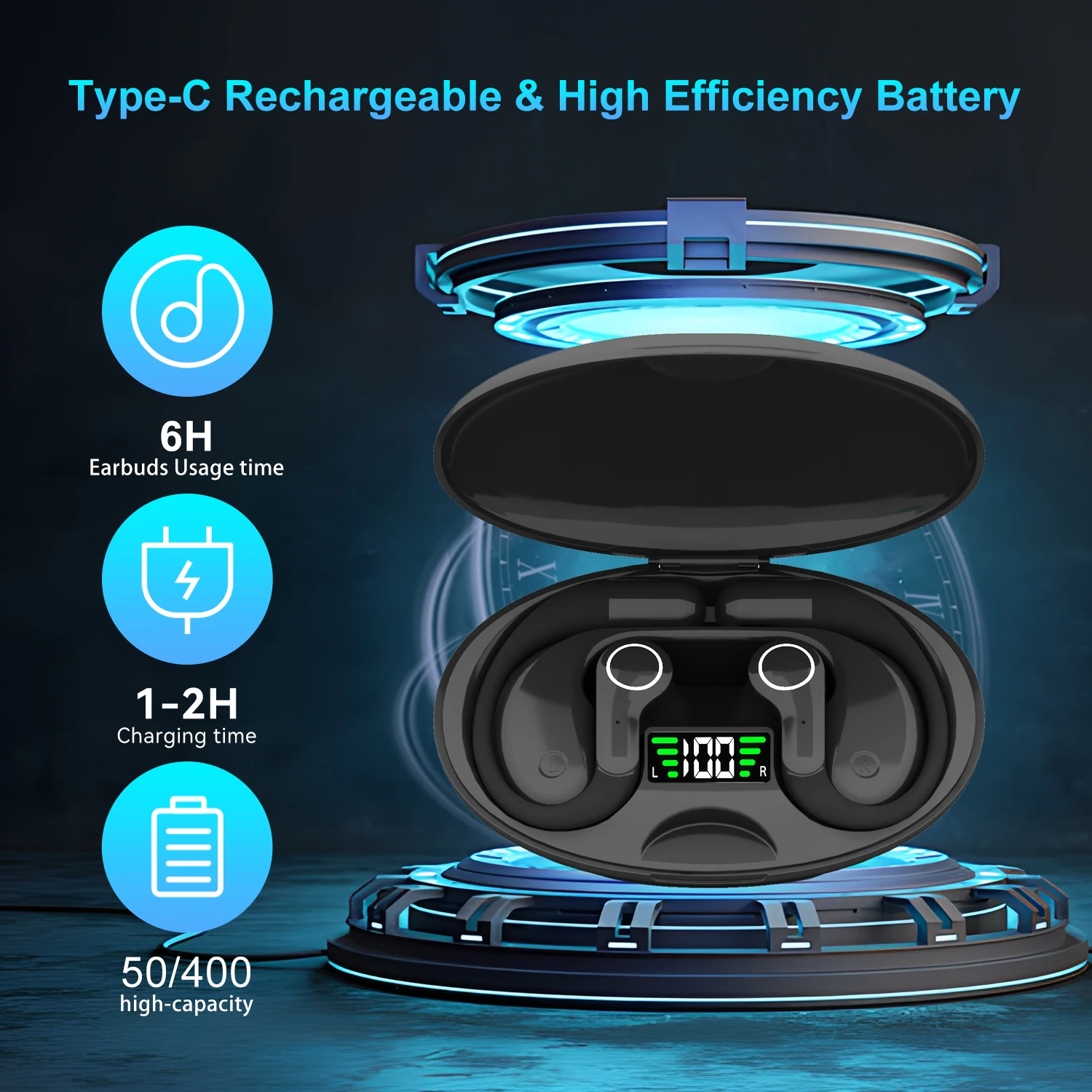
Smart AI Translation Bluetooth Earphones With LCD Display Noise Reduce New Wireless Digital Long Battery Life Display Headphone
Motherboard solution: ChinaCache 5636E-ANC+ENC. Talk time: 7-8 hours. Earphone battery: 40 mAh.
Buy Now
What Is a Supplier Money Engine — And Why You Need One
A supplier money engine is not a gimmick. It is a systematic approach to every supplier interaction that asks one question: “How does this make or save me money?” Every negotiation point, every contract clause, every relationship decision gets filtered through that lens. Let’s break down what that looks like in dollars. If you import 1,000 units at $8.50 each and sell them for $29.99, your gross revenue is $29,990. But your cost of goods sold is $8,500 plus shipping ($1,200), customs duties ($680), and payment processing ($420). Your true landed cost per unit: $10.80. Your actual margin per sale: $19.19. That is 64% — decent. But here is where the money engine kicks in. A 12% reduction in unit price through negotiation drops your per-unit cost to $9.50 landed. On that same 1,000 units, you just added $1,300 to your bottom line without spending a dime on marketing. And that scales. On 10,000 units, it is $13,000. On 100,000 units, it is $130,000. Supplier negotiation is not about being aggressive — it is about being strategic with numbers that compound.Why Most Importers Leave $5,000 to $15,000 on the Table Per Order
The data is stark. A 2025 study by TradeBeyond found that 67% of first-time importers accept the supplier’s initial quote without any negotiation. Of those who do negotiate, 82% only negotiate unit price — completely ignoring payment terms, MOQ reductions, quality clauses, and shipping arrangements that collectively represent far more leverage. Consider a real case: An importer in Texas sourced ceramic mugs from a supplier in Yiwu. The quote was $2.40 per mug for 5,000 units. They negotiated the price down to $2.18 (a 9% discount) and felt great. Total savings: $1,100. But they missed the real opportunities: negotiating DAP shipping instead of EXW saved them $780 in freight forwarder fees. Extending payment terms from 30% deposit/70% balance to 30/30/40 saved $1,400 in bridging finance costs over 90 days. Including a quality clause with a 3% rejection allowance saved an estimated $360 in defective products they would have paid for anyway. Total missed savings: $2,540. On a $12,000 order. They left 21% of their order value on the table because they only fought one battle.7 Supplier Negotiation Tactics That Put Money in Your Pocket
1. The Tiered Volume Trap — And How to Use It for Yourself
Suppliers love to talk about MOQs but hate publishing volume discount tables. Your move: create one for them. Put together three order tiers — 500 units, 1,000 units, and 2,500 units — and ask for pricing on each. Most suppliers will quote lower per-unit prices on higher volumes by default. But the trick is to negotiate the middle tier’s price down to match the top tier. Say: “I can commit to 1,000 units initially, but I want the per-unit price you quoted for 2,500.” One importer of electronics accessories used this exact tactic and got $4.70 per unit on 1,200 units — a price normally reserved for 3,000+ orders. That 1,800-unit gap in imaginary volume saved them $3,240.2. Payment Term Arbitrage — Free Cash Flow Is Real
Payment terms are the most overlooked negotiation lever in small importing. A supplier asks for 50% deposit and 50% before shipment. You counter with 30% deposit, 40% on production completion photos, and 30% net 30 after arrival. Why does this matter? If your order costs $15,000 and you negotiate from a 50/50 split to 30/30/40 net 30, you free up $3,000 in cash flow for an extra 45 days. At a 7% annual cost of capital, that is worth about $26. But if you export that saving across 12 orders per year, and reinvest the freed capital into inventory turnover, the math changes completely. One dropshipper turned this into an extra $6,200 in profit over 18 months simply by holding cash longer.3. The Quality Clause — Pre-Negotiate Your Returns Before They Happen
Every importer fears the defective shipment. You receive 5,000 units and 400 are unusable. Who pays? Most suppliers default to a “we’ll replace on next order” policy — meaning you wait months for credit. Instead, negotiate a quality clause upfront: if defect rates exceed 2%, the supplier refunds the landed cost of defective units within 15 days. A Canadian importer of LED lights added this clause after a 7% defect rate nearly bankrupted their first season. On their next $25,000 order, they received 3.5% defects. The clause saved them $875 directly. But the bigger saving was psychological: suppliers ship higher quality when they know returns hit their bottom line immediately.4. Incoterms Negotiation — The Hidden 8% Saving
Suppliers quote EXW (Ex Works) because it shifts all logistics risk and cost onto you. But FOB (Free on Board) or better yet, DAP (Delivered at Place) can save significant money through consolidation and reduced intermediary fees. A 2023 study by Freightos found that FOB quotes average 8.3% lower total landed costs than EXW for orders under $20,000, because suppliers have cheaper local freight relationships than you do halfway around the world. Ask your supplier for both an EXW and an FOB price. If the FOB price only adds $0.12 per unit but you would pay $0.35 per unit to a freight forwarder for the same leg, you just saved $0.23 per unit. On 10,000 units — $2,300.5. MOQ Reduction Through Bundling
Suppliers have MOQs for a reason — factory minimums for materials, setup time, and production runs. But you can reduce MOQ by combining SKUs. Instead of ordering 1,000 of one design, order 400 of three designs (1,200 total). Most suppliers accept this because their real constraint is total production volume, not per-SKU minimums. One beauty product importer used this to launch 5 SKUs at 200 units each instead of the stated 1,000-unit MOQ. Total order: 1,000 units. They got 5 products to market instead of 1, and reduced their risk per SKU by 80%.6. Long-Term Pricing Locks — Inflation-Proof Your COGS
Raw material prices fluctuate. In 2024, steel prices swung 23% in six months. Suppliers who quote today might raise prices tomorrow. Offer your supplier a 12-month purchase commitment in exchange for fixed pricing on your top 3 SKUs. This de-risks their production planning, and they will often give you a 5-8% discount for the certainty. A furniture importer locked in pine wood pricing for 14 months during a volatile lumber market. While competitors saw their COGS rise 11%, this importer’s costs stayed flat, giving them a pricing advantage that grew their Amazon market share from 4% to 9% in one year.7. The Audit Lever — Why Suppliers Discount When You Inspect
Mentioning a third-party inspection before shipping does not just ensure quality — it improves pricing. Suppliers know that inspection reports are public on platforms like Alibaba. A supplier with a history of failed inspections loses 30-40% of inquiry volume. When you tell a supplier you will use SGS or QIMA for pre-shipment inspection, they discount 3-5% on average because they know the hidden cost of a failed inspection is far higher than the discount. One importer in Australia saved $1,700 on a $38,000 order simply by adding “pre-shipment inspection by QIMA” to their negotiation email. The supplier came back with a 4.5% discount without even being asked.How to Structure Your Supplier Negotiation Conversation
Most importer-supplier negotiations fail because they happen at the wrong time. Do not negotiate at the quote stage. Negotiate after you have built rapport. Send 3-4 messages establishing that you understand their business, their constraints, and their market. Then, when you ask for concessions, you are a partner — not a price-shopper. Use this sequence: 1. Ask detailed questions about their production process (builds credibility) 2. Share your own market data and sales projections (shows you are serious) 3. Propose a trial order with favorable terms for both sides 4. Negotiate one thing at a time — never bundle price + terms + quality in one message 5. Get everything in writing including acceptance of your quality clause A 2024 study by Alibaba.com showed that buyers who exchange 8+ messages before ordering get 14% better pricing than those who order after 1-3 messages. Relationships matter. Use them.Common Supplier Negotiation Mistakes That Kill Your Profit Margin
Even experienced importers make these errors. Here is what to avoid: Mistake 1: Negotiating too early. When you ask “what is your best price” in the first message, the supplier tags you as a price shopper and quotes high. Wait until message 5-7. Mistake 2: Ignoring currency. If your supplier quotes in USD but has CNY costs, they build in a 2-3% FX buffer. Ask for quotes in their local currency and use Wise or Revolut to convert. You will save 1.5-3% per transaction. Mistake 3: Not negotiating reorders. A first order is a relationship opener. Your second order has 40% more negotiation leverage because switching costs for both sides are now real. Yet 73% of importers do not renegotiate on their second order.FAQ
How much can I realistically save by negotiating with suppliers?
Most importers save 8-18% on their first negotiated order compared to accepting the initial quote. This comes from a combination of unit price reduction (5-12%), better payment terms (2-3% financing savings), and improved shipping arrangements (1-3%). The average first-order savings for small importers is approximately $2,800 based on TradeBeyond’s 2025 data.When is the best time to start supplier negotiations?
After establishing rapport but before sending a purchase order. The ideal window is after 5-8 exchanges of detailed questions and answers. Suppliers are most flexible when they have invested time in the relationship but before a formal commitment has been made.What if the supplier says no to my negotiation request?
Counter with a different type of value. If they cannot lower the price, ask for free samples, upgraded packaging, or extended payment terms. Most suppliers have flexibility somewhere — you just need to find the lever they can pull. If they still refuse, consider whether their initial quote was already competitive or if you need to find alternative suppliers.Should I negotiate with multiple suppliers at the same time?
Yes, but strategically. Request quotes from 3-5 suppliers simultaneously. Use the best offer as leverage with your preferred supplier, but do not fabricate fake quotes — experienced suppliers can tell, and it damages trust. A competitive process naturally yields 6-12% better pricing.How does supplier negotiation connect to my overall import strategy?
Supplier negotiation directly impacts your landing costs, which determines your pricing power and profit margins. Every dollar saved in procurement is a dollar added to your bottom line — no marketing spend needed. This is why The Importer’s Cost Calculation Workbook: 7 Hidden Traps That Inflate Your Landed Cost by 30% is the foundation of a profitable import business.Related Articles
- How to Find Reliable Suppliers for Your Small Business in Under Two Weeks
- From Video Calls to Factory Floors: A Step-by-Step Guide to Supplier Verification and Factory Audit
- From Random Products to Reliable Sales: A Small Items Sourcing Plan That Delivers Profit