








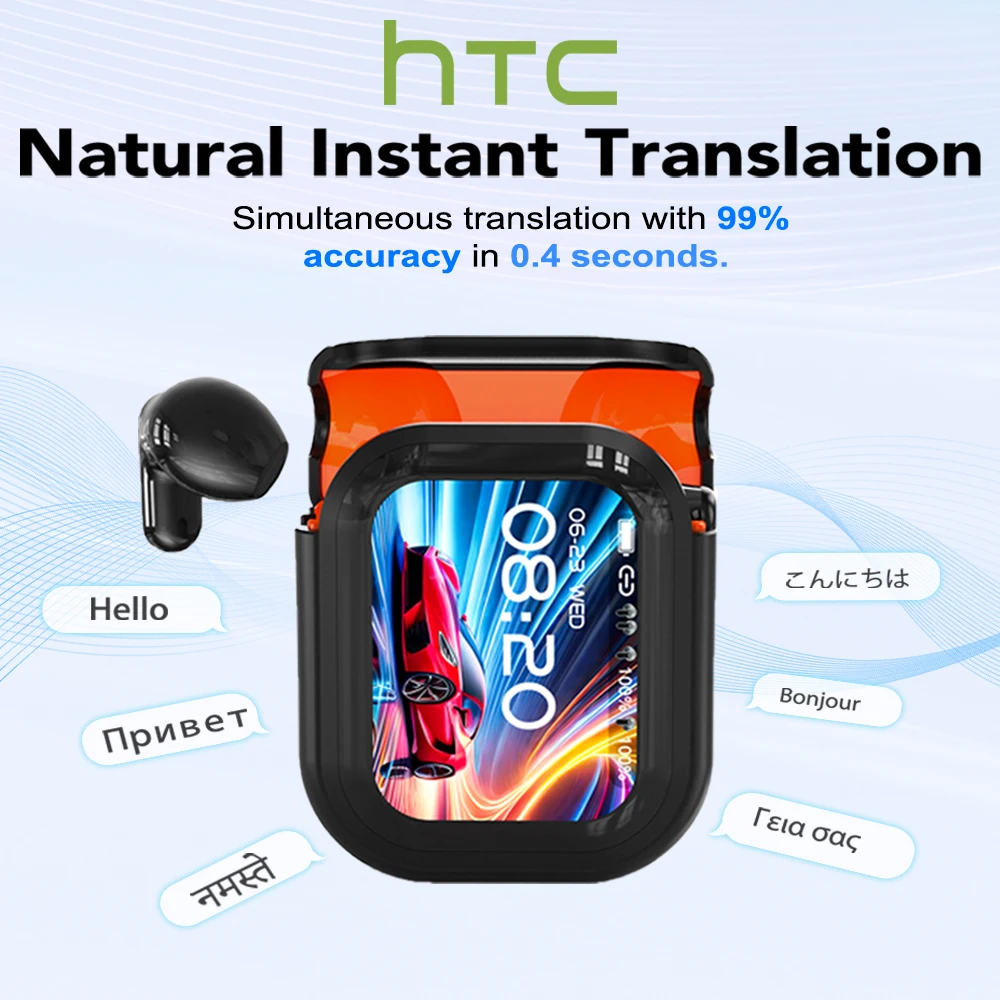
The AI smart devices market is the fastest-growing segment in consumer electronics, with global spending on artificial intelligence hardware expected to reach $150 billion by 2028. For small importers, this category offers access to cutting-edge technology at affordable price points that appeal to early adopters and mainstream consumers alike. Products like HTC AI translation earphones, smart audio glasses, and AI companion robots — such as the DeepSeek XiaoZhi robot — represent the vanguard of a new product category that is reshaping how consumers interact with AI in daily life.
The opportunity for importers is clear: AI-powered devices are following the same cost curve as previous technology revolutions. What cost $500 two years ago now costs $50-100, and the quality gap between premium and budget AI devices is narrowing rapidly. This creates an ideal market for importers who can identify quality AI hardware, source it efficiently, and sell it at prices that undercut brand-name alternatives by 40-60% while still maintaining healthy margins. This guide covers the top AI device categories, sourcing strategies, and selling approaches that work in 2026.
AI Translation Earphones: Breaking Language Barriers
AI-powered translation earphones, exemplified by products like the HTC AI translation earphones, are one of the fastest-growing segments in wearable technology. These devices combine premium true wireless earbud features (active noise cancellation, high-fidelity audio, long battery life) with real-time AI speech translation supporting 40-100+ languages. The value proposition is compelling: travelers, business professionals, and language learners can have natural conversations across languages without holding a phone or using clunky app interfaces.
The underlying technology has matured significantly. Modern AI translation earphones use on-device AI processing combined with cloud-based large language models (LLMs) for translation accuracy exceeding 95% for major language pairs (English-Chinese, English-Spanish, English-Japanese). Response latency has dropped from 3-5 seconds to under 1 second in the latest generation, making conversations feel natural. These improvements have transformed translation earphones from a novelty into a genuinely useful daily tool.
Key specifications for sourcing AI translation earphones: Bluetooth 5.3+ for stable connection, 6+ hours of listening time (translating mode: 3-4 hours), IPX5+ water resistance for outdoor use, 40+ language support with app-free operation preferred, 4+ microphones for noise cancellation and voice pickup, USB-C charging case with 20+ hours total battery, and translation latency under 2 seconds. Landed cost: $15-30 per unit at MOQ 200-500. Retail price: $39.99-79.99. Gross margin: 45-60%.

TV98 ATV X9 Smart TV Stick Android14 Allwinner H313 OTA 8GB 128GB Support 8K 4K Media Player 4G 5G Wifi6 HDR10 Voice Remote iptv

Smart AI Translation Bluetooth Earphones With LCD Display Noise Reduce New Wireless Digital Long Battery Life Display Headphone

Ai Translator Earbud Device Real Time 2-Way Translations Supporting 150+ Languages For Travelling Learning Shopping Business
AI Smart Glasses: The Wearable Display Revolution
AI smart glasses, such as the M02 smart glasses, represent the next evolution of wearable technology. These devices combine the form factor of regular eyewear with heads-up display (HUD) technology, AI assistant integration, camera functionality, and audio capabilities. The category has matured significantly since the early Google Glass days, with modern units offering practical features at consumer-friendly prices.
Current-generation AI smart glasses offer: micro-OLED or waveguide display technology for see-through information overlay, AI voice assistant integration (often custom Chinese AI models), 1080p photo and video capture, open-ear audio through bone conduction or directional speakers, touch/tap controls on the frame, and smartphone connectivity for notifications and data. Battery life is typically 4-8 hours of mixed use, with the charging case providing 2-3 full charges.
The market is divided into two tiers. Entry-level AI glasses ($50-120 retail) offer basic notifications, voice assistant, and camera functions in a lightweight frame. Premium models ($150-300 retail) add high-resolution displays, real-time navigation overlays, language translation in the glasses, and longer battery life. For importers, the entry-level tier offers the best volume opportunity, while premium models provide higher per-unit profit. Landed costs for entry-level AI glasses: $15-35 per unit. Premium models: $40-80 landed.
AI Companion Robots and Smart Home Devices
AI companion robots — like the DeepSeek XiaoZhi — are an emerging category that combines AI chat capabilities with physical presence. These devices use large language models to have natural conversations, answer questions, tell stories, control smart home devices, and provide companionship for children and elderly users. The category has exploded in China and is now gaining traction in Western markets.
Key features of AI companion robots include: voice interaction with LLM-powered conversation, visual recognition (facial recognition, object identification), movement capabilities (wheels, head/arm articulation — varying by price tier), smart home hub integration (Wi-Fi, Zigbee, Matter protocols), and educational content for children. Lower-cost models ($30-80 retail) are essentially smart speakers with a moving head and basic AI; premium models ($100-250 retail) add full mobility, better AI, and more expressive interaction capabilities.
For importers, this category requires careful consideration of software localization. Most Chinese AI companion robots are designed for the Chinese market with Mandarin-first AI and Chinese app ecosystems. For Western markets, you need suppliers who offer English-language firmware, or you need the technical capability to modify the software. Verify this capability before ordering — English-language support is not guaranteed even if the supplier claims it. Landed cost: $15-40 for basic models, $35-80 for premium models at MOQ 100-300.
Sourcing AI Devices: Finding the Right Suppliers
Sourcing AI smart devices requires a different approach than traditional electronics. The key difference is that AI devices depend on both hardware and software — and the software component (AI models, mobile apps, cloud services) is where most quality issues arise. A cheap translation earbud with a terrible translation app is worthless, regardless of how good the hardware is.
Recommended sourcing approach: start with established AI device OEMs that have proven products already shipping. Search Alibaba for “AI translation earphones OEM,” “AI smart glasses factory,” “AI companion robot wholesale.” Look for suppliers who have: a dedicated mobile app already developed (test it), English-language firmware and app interfaces, demonstrable AI model performance (request demo videos showing the device handling real conversations), and experience shipping to Western markets with proper certifications.
Request a minimum of 3-5 sample units of any AI device before placing a production order. Test each unit thoroughly: translation accuracy across multiple language pairs, battery life under real usage conditions, Bluetooth connection stability, app reliability (does it crash? does it reconnect properly?), and overall user experience. AI devices have more failure modes than simple electronics — a hardware sample that works perfectly may be useless if the companion app is buggy or the cloud AI server goes offline.
Certifications and Compliance for AI Devices
AI smart devices require the same baseline certifications as other electronics (FCC, CE, RoHS, Bluetooth SIG) but face additional regulatory considerations. The AI translation or voice assistant functionality may trigger data privacy regulations in some markets. For EU sales, GDPR compliance for any personal data processed by the device is mandatory. For US sales, California’s privacy laws may apply. For devices with cameras (smart glasses), some jurisdictions have specific restrictions on covert recording.
Cloud dependency is a critical compliance and business risk. If your supplier’s AI cloud service goes offline, your devices become significantly less useful. Negotiate a service-level agreement with your supplier guaranteeing minimum uptime (99% is reasonable) and a commitment to maintain the AI service for at least 3 years from your purchase. Some suppliers offer on-device AI processing for core functions (like translation) with cloud enhancement for premium features — this hybrid approach is more reliable than pure cloud-dependent devices.
Marketing AI Smart Devices to Import Customers
AI devices require more educational marketing than traditional consumer electronics. Customers need to understand not just what the product is, but how it works in real life and what problems it solves. Effective marketing approaches include: demonstration videos showing real conversation scenarios with translation earphones, comparison content showing AI glasses replacing a second phone screen, and use-case specific advertising targeting travelers (translation earphones), tech enthusiasts (smart glasses), and parents/elder care (companion robots).
Amazon listing strategy for AI devices: the title should include the primary use case (“AI Translation Earphones,” “AI Smart Glasses with Display”), key features (“Real-time Translation 100 Languages,” “Open Ear Audio”), and platform compatibility (“Works with iPhone & Android”). Bullet points should address specific customer concerns: translation accuracy percentage, language count, battery life in translation mode, charging speed, and what’s included in the box. A+ Content should include comparison charts showing your device vs. branded alternatives at 2-3x the price.
TikTok is particularly effective for AI devices because short-form video can demonstrate the “wow factor” of real-time translation or AI conversation. A 30-second video of someone having a natural conversation across languages using translation earphones is more persuasive than any written review. Partner with travel, tech, and lifestyle creators for authentic demonstrations. Facebook groups focused on language learning, tech gadgets, and smart home automation are also excellent targeted marketing channels.
Cost Structure and Margin Analysis
AI smart devices command premium margins compared to standard electronics, but the cost structure is different due to software and cloud service components. For a typical AI translation earphone: hardware cost is $12-18 (Bluetooth chipset, microphones, battery, charging case), software/app development amortization adds $1-3 per unit (if you are paying for app customization), cloud AI service fees (translation API calls) add $0.50-1.50 per active user per month, and packaging/shipping adds another $1-2. Total landed cost: $15-25.
Retailing at $49.99-69.99, translation earphones generate $25-50 gross profit per unit. The key cost variable is cloud AI service fees — if you are charged per-translation by your supplier’s API, a heavy user could cost $3-5 per month in cloud fees. Negotiate a flat-rate cloud service fee or find suppliers who offer free cloud AI for the first 1-2 years. Some suppliers now bundle cloud AI costs into the hardware price for the first 12 months, shifting the cost to the hardware margin rather than creating an ongoing expense for you.
Smart glasses margin structure is similar: hardware cost $15-30, software/display module $5-10, total landed $25-42, retail $79.99-149.99. AI companion robots have the widest margin range: hardware $18-40, AI software integration $3-8, total landed $25-55, retail $59.99-199.99 depending on features and build quality. Across all AI device categories, the importers who succeed are those who carefully manage the software cost component — it is the hidden variable that separates profitable AI imports from unprofitable ones.
Shipping and Logistics Considerations
AI smart devices present specific shipping challenges. All three categories contain lithium-ion batteries: translation earphones have small batteries (40-60mAh per earbud, 300-500mAh charging case), smart glasses have slightly larger batteries (200-400mAh), and companion robots typically have the largest batteries (1000-3000mAh). All require UN 38.3 certification for air shipment. Translation earphones are small enough to air freight economically at $1-2 per unit. Smart glasses are similar in size and shipping cost. Companion robots are bulkier and heavier at 0.5-2kg, making sea freight more economical for orders of 200+ units.
Warehousing and fulfillment for AI devices require special attention to the return process. Unlike a standard electronic device that can be restocked if returned unopened, an opened AI device that has been paired to a phone may require factory reset and re-pairing before it can be resold. Build a restocking process that includes visual inspection, charging verification, factory reset (via button sequence or app), Bluetooth pairing test, and repackaging. Budget 30 minutes of labor per returned unit for restocking, and factor this cost into your return rate calculations.
Frequently Asked Questions
Q: Is importing AI smart devices more risky than regular electronics?
Yes, AI devices have higher risk due to software dependencies, cloud service requirements, and faster obsolescence cycles. Mitigate this by: thorough sample testing including the companion app, choosing suppliers with proven cloud infrastructure, negotiating service continuity guarantees, and planning inventory turnover within 60 days to avoid being stuck with outdated models. The higher margins (45-60%) compensate for the additional risk.
Q: Do AI translation earphones actually work well enough to sell?
Yes, for major language pairs. Current-generation AI translation earphones achieve 90-95% accuracy for English-Spanish, English-Chinese, English-Japanese, and other common pairs. Accuracy drops to 80-85% for less common languages. The key is to be honest in your listings — state supported languages clearly and set appropriate expectations for accuracy. Customers who travel frequently find even 85% accuracy transformative compared to not having translation at all.
Q: What is the return rate for AI smart devices?
Translation earphones: 6-10%. Higher than regular earbuds (4-6%) because of software issues and unrealistic customer expectations. Smart glasses: 8-12% — highest in the category due to fit issues and display quality expectations. AI companion robots: 5-8% — moderate, mainly related to AI interaction quality and connectivity issues. Bundle clear setup guides and include QR codes linking to video tutorials to reduce returns.
Q: What minimum order quantities can I expect?
For AI translation earphones, MOQ ranges from 100-500 units depending on customization level. For unbranded (no logo, standard packaging), 100-200 units is typical. For OEM/ODM (custom logo, packaging, app splash screen), expect 300-500 units. Smart glasses: 100-300 units for standard models. AI robots: 100-300 for basic models, 50-100 for more complex units. Always order 10% extra for quality control sampling and warranty replacement stock.
Q: How fast does the AI device market move? Will my products become obsolete?
Fast. The AI device product cycle is 4-8 months — meaning a significant hardware or software update every 4-8 months. Plan inventory for 60-day sell-through maximum for translation earphones, 45-60 days for smart glasses (fastest evolving category), and 60-90 days for AI robots. Use just-in-time inventory and avoid large single orders. The good news is that the market is growing fast enough that demand absorbs most inventory — products rarely become completely unsellable, just less competitive against newer models.
Related: How to Find Reliable Suppliers for Your Small Business | From Random Products to Reliable Sales: A Small Items Sourcing Plan | eBay vs Amazon vs Etsy: Which Marketplace Selling Strategy Wins




