






The gaming and entertainment electronics market is undergoing a major transformation in 2026, driven by converging trends: retro gaming nostalgia, portable entertainment demand, and affordable big-screen projection technology. For small importers, this category offers diverse entry points across retro handheld consoles, Bluetooth speakers, and compact projectors — each with distinct margin profiles and customer bases. Products like the R36S retro handheld, Ortizan 40W Bluetooth speakers, and Magcubic HY300 Pro 8K projector exemplify the high-value, low-cost electronics that define this market segment.
What makes this category particularly attractive is the overlap between customer segments. A single buyer might purchase a retro handheld for their commute, a Bluetooth speaker for their patio, and a projector for movie nights — and they’re likely to discover all three through the same shopping channels. For importers, creating a cohesive product line that addresses multiple entertainment needs from one sourcing pipeline reduces supplier complexity and opens cross-selling opportunities. Leveraging the same FBA account means your retro handheld customers see your Bluetooth speaker listing as a “frequently bought together” recommendation, driving additional sales without extra advertising spend.
Another structural advantage is the global nature of entertainment demand. A gaming console that sells in the US will also perform well in Europe, Australia, and increasingly in Southeast Asian markets. This allows importers to list on multiple Amazon marketplaces (US, UK, DE, FR, IT, ES, AU, JP) without significant product adaptation — only power adapters and packaging language need adjustment. The universal appeal of gaming, music, and movies means these categories have lower localization barriers than many consumer goods.
The Retro Handheld Gaming Boom: Understanding the R36S Market
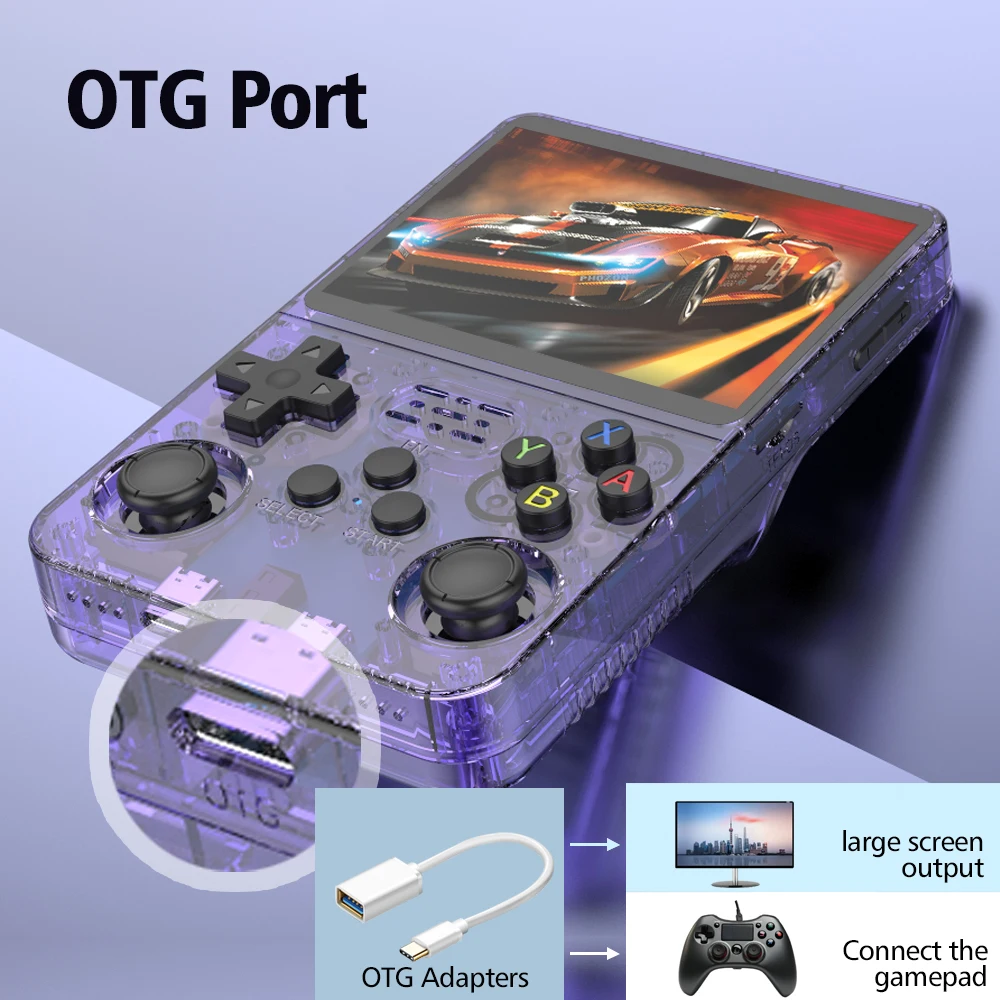
Retro handheld game consoles like the R36S represent one of the fastest-growing niches in consumer electronics. These devices emulate classic gaming systems — NES, SNES, Game Boy, PlayStation 1, Sega Genesis, arcade MAME — on portable hardware priced under $50. The R36S, with its 3.5-inch IPS display, 128GB of preloaded games, and Linux operating system, is a category leader that exemplifies the winning formula.
The retro handheld market has grown from a niche enthusiast segment to a mainstream consumer category, driven by several factors: nostalgia among Millennials (ages 30-45) who grew up with 8-bit and 16-bit consoles, affordability compared to modern gaming hardware (a fraction of a Steam Deck or Nintendo Switch), portability for commuting and travel, and the appeal of curated game collections. Sales data from major marketplaces shows retro handhelds growing at 35-45% year-over-year, with the $25-50 price point accounting for 60% of unit sales.
For importers, the R36S and similar products have specific supply chain characteristics: Linux-based devices (primarily based on Rockchip RK3326 or Allwinner chipsets) cost $18-28 landed at MOQs of 100-500 units. The main cost components are the screen ($4-8), PCB and SoC ($5-10), plastic shell and buttons ($2-4), battery ($1.50-3), and packaging ($0.50-1.50). Retail prices range from $34.99-59.99, yielding 40-55% gross margins.

Ai Translator Earbud Device Real Time 2-Way Translations Supporting 150+ Languages For Travelling Learning Shopping Business

TV98 ATV X9 Smart TV Stick Android14 Allwinner H313 OTA 8GB 128GB Support 8K 4K Media Player 4G 5G Wifi6 HDR10 Voice Remote iptv

Smart AI Translation Bluetooth Earphones With LCD Display Noise Reduce New Wireless Digital Long Battery Life Display Headphone
Bluetooth Speakers: Ortizan and the Portable Audio Segment
The portable Bluetooth speaker market is projected to reach $28 billion globally by 2028, with the 20-50W power range being the sweet spot for importers. The Ortizan 40W Bluetooth speakers represent this segment well: multi-driver configuration, deep bass, IPX7 waterproofing, and competitive pricing. Understanding what makes a Bluetooth speaker sell helps importers select the right products and suppliers.
Key specifications to evaluate when sourcing Bluetooth speakers:
- Audio output (watts): 20-50W RMS is the most popular range. Under 15W is too quiet for outdoor use; over 60W adds significant weight and shipping cost.
- Driver configuration: Dual passive radiators plus a full-range driver produce the best bass-to-size ratio. Single-driver speakers at the same power rating sound noticeably thinner.
- Waterproof rating: IPX7 is the standard for outdoor speakers. IPX5 is acceptable for shower/bathroom use only.
- Battery capacity: 3600-7200mAh for 8-20 hours playback. USB-C charging is mandatory; avoid micro-USB suppliers.
- Bluetooth version: Bluetooth 5.0+ for stable connection and lower power consumption. Bluetooth 5.3 with LE Audio is appearing in 2026 models.
- Additional features: TWS pairing (stereo linking two speakers), AUX input, TF card slot, built-in microphone, RGB lighting (popular), power bank function.
Landed costs for a 40W IPX7 Bluetooth speaker (similar to Ortizan): $10-16 per unit at MOQ 200-500. Shipping (sea freight): $1.50-3 per unit. Retail price: $24.99-39.99. Gross margin: 45-55%. The category benefits from strong repeat purchase behavior — customers who buy one Bluetooth speaker often purchase additional units for gifting or multi-room setup.
Mini Projectors: Magcubic and the Big-Screen Disruption
Compact LED projectors have disrupted the home entertainment market by offering 100-200 inch screen sizes at a fraction of the cost of traditional TV or laser projectors. The Magcubic HY300 Pro with “8K support” (4K input upscaling to 8K) exemplifies the category: small form factor, built-in Android smart system, auto keystone correction, and Wi-Fi connectivity at an accessible price point.
The mini projector market is growing at 14% CAGR and expected to reach $15 billion by 2028. Key selling points for importers include: portability (2-5 lbs for most models), easy setup (15 seconds from box to projection), multi-functional use (movies, gaming, outdoor events, presentations), and significantly lower cost per inch than traditional displays.
Critical specifications for mini projectors: native resolution (1080p minimum for 2026 customers, upscaled 4K is a bonus), brightness (300-800 ANSI lumens for indoor use, 1000+ for outdoor), contrast ratio (5000:1 minimum), lamp life (20,000-50,000 hours LED), operating system (Android 11+ with Google Play Store support), connectivity (HDMI, USB, Wi-Fi, Bluetooth, screen mirroring), and auto-focus/keystone correction (automatic is a strong selling point over manual).
The key difference between LCD (single-chip) and DLP (DMD chip) projectors is important for importers to understand. LCD projectors are cheaper ($35-60 landed) and offer better color saturation, but they have lower contrast and visible pixelation (screen door effect). DLP projectors are more expensive ($50-85 landed) but provide sharper images, higher contrast, and less noticeable pixel structure. For the mass market, LCD projectors in the $79.99-129.99 retail range sell best because customers prioritize lower price over marginal image quality improvements. DLP projectors are better positioned for the $129.99-199.99 segment targeting enthusiasts and home theater buyers.
Another important consideration is built-in streaming support. Projectors with Android OS and Google Play certification (Netflix, Disney+, Prime Video pre-installed) command a $20-40 retail premium over non-certified models. Note that Netflix certification requires specific licensing from Netflix that many Chinese OEMs cannot obtain — verify this claim carefully. Some projectors run Android but lack the widevine L1 DRM required for HD Netflix streaming. Include this detail prominently in your product descriptions to manage expectations.
Landed costs for a 1080p smart projector: $35-55 per unit at MOQ 100-500. Shipping (air freight for smaller orders): $5-10 per unit. Retail price: $79.99-149.99. Gross margin: 40-55%. Projectors have lower return rates (3-6%) compared to other electronics categories, as the technology is mature and customer expectations are well-established.
Supplier Sourcing Strategy for Gaming and Entertainment Electronics
Where to Source
Shenzhen is the undisputed hub for all three product categories. For retro handhelds, the key suppliers cluster near Huaqiangbei, specifically in the SEG Plaza area and surrounding electronics malls. For Bluetooth speakers, the supply chain extends into Dongguan and Huizhou, where audio component manufacturing is concentrated. For mini projectors, Guangzhou has a cluster of optical and DLP/LCD module manufacturers.
On Alibaba, effective search terms include “retro game console 128GB wholesale,” “portable Bluetooth speaker 40W OEM,” and “1080p mini projector Android smart.” Look for Gold Suppliers with verified manufacturing capabilities. Request video calls to tour the factory floor — the presence of SMT lines, injection molding machines, and quality testing stations differentiates genuine manufacturers from traders.
Sample Testing Protocol
For each product category, develop a specific testing protocol. For retro handhelds: test 50+ games across different emulators, check screen brightness at maximum and minimum, test battery life with continuous gameplay, verify save state functionality, and test USB/charging port durability. For Bluetooth speakers: test at maximum volume for distortion, measure battery life at 50% and 100% volume, verify IPX7 rating with submersion test, test TWS pairing stability, and check Bluetooth range in open and obstructed environments. For projectors: measure actual ANSI lumens (many suppliers inflate ratings), test keystone correction accuracy, check Android app compatibility, evaluate fan noise at operating temperature, and verify advertised resolution with test patterns.
Certifications and Quality Standards
Each product category has specific certification requirements. Retro handhelds require FCC Part 15 (for Wi-Fi and Bluetooth in the US) and CE/RED (EU). Bluetooth speakers need FCC, CE/RED, and RoHS — plus Bluetooth SIG QDID certification. Because speakers contain larger batteries (up to 7200mAh), they require stricter UN 38.3 battery certification and may face air freight restrictions above 100Wh. Mini projectors require the same certifications plus specific laser safety classifications if using laser light sources (LED projectors are generally exempt). Projectors may also need UL/ETL certification for the US market if they include a power supply that plugs into wall outlets.
Quality assurance is especially important for these categories because customers have high expectations for entertainment devices. A retro handheld with a dead pixel, a speaker with static noise, or a projector with poor focus will generate negative reviews that sink a listing. Build in quality checks at multiple stages: supplier factory QC, third-party inspection (SGS, Bureau Veritas) before shipment, and inbound QC at your warehouse or Amazon fulfillment center.
Profit Analysis and Cost Management Across Three Categories
Each of the three entertainment categories has a distinct profit profile that affects inventory and pricing strategy:
Retro handhelds: Low entry cost ($3,000-6,000 for 200-300 units landed), high margin (40-55% gross), fast inventory turns (sell-through in 45-75 days). Best for importers with limited capital who need quick cash flow. The main risk is product obsolescence — new models with larger screens or better chipsets appear every 6-9 months. Plan to clear inventory within 60 days of launch.
Bluetooth speakers: Moderate entry cost ($5,000-10,000 for 200-400 units), competitive margins (35-50% gross), moderate inventory turns (60-90 days). The category has the broadest customer base and best year-round demand profile. Main risk is price competition from established brands — differentiation through design, unique colors, or bundled accessories is essential.
Mini projectors: Higher entry cost ($8,000-18,000 for 100-300 units), best margins (45-60% gross), slower turns (90-120 days). The highest profit per unit but requires more capital and patience. Main risk is supplier quality inconsistency and customer service burden (more setup questions). Well-suited for importers with existing Amazon experience and customer support capacity.
Shipping and Logistics Best Practices
All three categories contain lithium-ion batteries, requiring careful shipping planning. For retro handhelds (1500-3000mAh batteries), air freight is feasible with proper UN 38.3 documentation at $2-4 per unit. For Bluetooth speakers (3600-7200mAh batteries), larger batteries limit air shipment to 2-3 units per package for some carriers — sea freight becomes more cost-effective at 300+ unit orders. For projectors, the built-in power supply adds weight (2-5 lbs per unit) and may require UL listing for US import.
HS code classification varies: retro handhelds typically fall under 9504.90 (video game consoles, 0% duty in US), Bluetooth speakers under 8518.22 (loudspeakers, 4.9% duty), and projectors under 8528.62 (projectors, 0-3% duty depending on type). Consult a customs broker to confirm correct classification for your specific products. Incorrect classification can lead to duty overpayment or customs holds.
Marketplace Selling Strategy
Each product category performs best on specific sales channels. Retro handhelds excel on Amazon and AliExpress (global audience for nostalgia-driven purchases). Bluetooth speakers sell well on Amazon, eBay (competitive pricing appeals to bargain hunters), and TikTok Shop (audio unboxing and comparison videos drive impulse purchases). Mini projectors perform strongly on Amazon (search-driven purchases), Walmart Marketplace (family-oriented audience), and DTC via Shopify (better margins with direct marketing).
Bundle strategies can significantly increase average order value. Consider: retro handheld + protective case + screen protector + charging cable (AOV increase $8-12). Bluetooth speaker + USB-C cable + carrying bag (AOV increase $5-8). Projector + projector screen + HDMI cable + tripod (AOV increase $15-25). Bundles improve customer satisfaction by providing everything needed in one purchase, and they improve review velocity since customers perceive higher value.
Seasonal Demand and Advertising Strategy
Entertainment electronics follow distinct seasonal patterns that smart importers exploit. The peak selling season runs October-December, driven by holiday gift buying. During this period, retro handhelds see 3-5x sales volume, Bluetooth speakers 2-4x, and projectors 3-6x. Black Friday through Christmas is the make-or-break window for annual profitability. Plan inventory and FBA shipments to arrive by September 15 to ensure all stock is received and live before the October demand ramp.
Secondary peaks include: summer (May-August) for Bluetooth speakers and outdoor projectors (pool parties, camping, backyard movie nights), Prime Day (July) for all categories at 2-3x baseline, and Chinese New Year (January-February) when consumer spending on entertainment increases. Use the slower months (March-April, September) for new product launches testing before the peak seasons.
Advertising costs vary by category and season. Amazon PPC for retro handhelds averages $0.60-1.20 per click — moderate competition. Bluetooth speaker CPCs are higher at $0.80-1.50 due to more competitors. Projector CPCs are $0.70-1.30 but convert at 8-12%, providing strong ROAS of 4-6x. During Q4, CPCs increase 30-50% across all categories but conversion rates double, making the net ROAS similar or better. Budget your annual advertising spend with 50% allocated to Q4, 25% to summer, and 25% to the rest of the year.
Frequently Asked Questions
Q: Are retro handheld game consoles legal to import?
Yes, the hardware is completely legal. The legal question concerns the preloaded ROMs (game files). Most suppliers preload thousands of games without licensing — this is a gray area. For risk mitigation, some importers source units without preloaded games and add a “game card” separately, or source from suppliers who preload only open-source/homebrew games. In practice, enforcement against individual importers is extremely rare for retro handhelds, but the risk exists theoretically.
Q: What is the best price point for Bluetooth speakers in 2026?
$24.99-39.99 is the sweet spot for 20-50W portable Bluetooth speakers. At $15-20, you compete with low-quality no-name brands. At $40-60, you face well-known brands like JBL, Anker Soundcore, and Tribit. The $25-39 range allows you to offer quality features (IPX7, 40W, TWS pairing, good battery life) while undercutting branded competitors by 30-50%.
Q: How do I verify a mini projector’s true brightness?
Chinese suppliers frequently inflate ANSI lumen ratings by 2-5x. To verify, ask for an ANSI lumen test report from a third-party lab (SGS, TUV, or Bureau Veritas). Alternatively, test the sample yourself: project a 100-inch image in a dark room, measure lux at 9 evenly spaced points, and calculate using the ANSI standard formula. As a rule of thumb, $50-80 projectors deliver 200-400 real ANSI lumens, $80-150 deliver 400-800, and genuine 1000+ lumen projectors cost $200+.
Q: What is the return rate for these product categories?
Retro handhelds: 4-8%. Common reasons: dead pixels, battery issues, corrupted SD card, customer unable to navigate Linux UI. Bluetooth speakers: 4-7%. Common reasons: sound quality not meeting expectations, Bluetooth pairing issues, battery life shorter than advertised. Mini projectors: 3-6%. Common reasons: brightness lower than expected, fan noise, focus issues, Android performance problems. Quality products with thorough QC can reduce returns by 50% across all categories.
Q: Should I start with one product or all three categories?
Start with one category where you have the most product knowledge. Retro handhelds have the lowest entry cost (starting capital $3,000-6,000 for inventory) and fastest inventory turns. Bluetooth speakers have the widest customer base and best repeat purchase behavior. Mini projectors have the highest per-unit profit but require more capital ($6,000-15,000) and more storage space. Once you’ve proven your sourcing and selling system with one category, expand to the next.
Related: How to Find Reliable Suppliers for Your Small Business | From Random Products to Reliable Sales: A Small Items Sourcing Plan | eBay vs Amazon vs Etsy: Which Marketplace Selling Strategy Wins



