








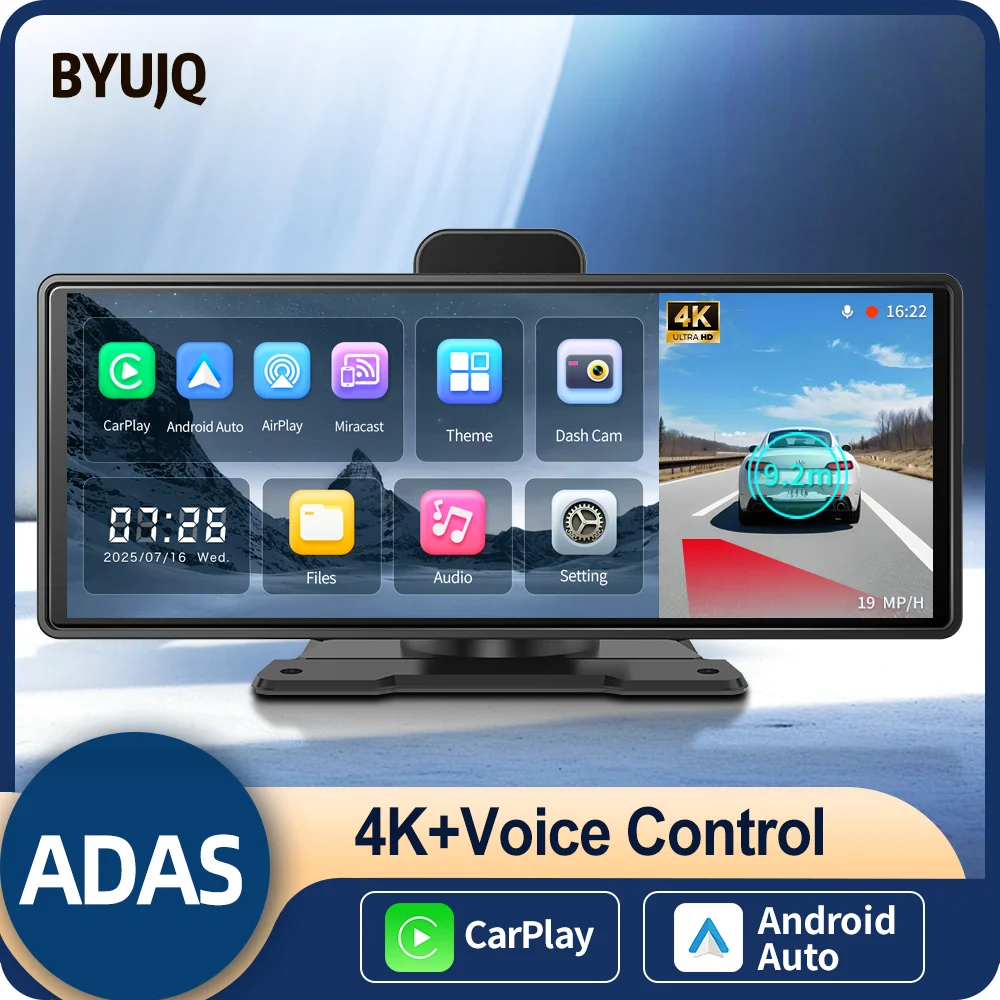
The car electronics aftermarket is a massive and growing industry, valued at over $350 billion globally and projected to reach $500 billion by 2030. For small importers, automotive electronics offer unique advantages: consistent demand (every vehicle owner is a potential customer), wide price ranges (from $5 accessories to $200+ systems), and multiple sales channels. Products like dashcams, wireless CarPlay adapters, and car vacuum cleaners — exemplified by the BYUJQ dashcam, Skilldrive CarPlay adapter, and CENRR car vacuum — demonstrate the diversity and profitability of this category.
The automotive aftermarket is particularly attractive because it resists the commoditization pressure that plagues general consumer electronics. Car owners are less price-sensitive than general consumers — they make purchasing decisions based on functionality, compatibility, and reliability rather than absolute lowest price. This allows importers to maintain healthier margins while building customer loyalty through product quality. This comprehensive guide covers the three most profitable car electronics sub-categories for importers: dashcams, wireless CarPlay adapters, and car vacuum cleaners.
Dashcams: The Highest-Volume Automotive Electronics Category
The global dashcam market is projected to reach $8.5 billion by 2028, growing at 15% CAGR. Dashcams have transitioned from a niche enthusiast product to a mainstream automotive accessory, driven by increasing awareness of insurance fraud, hit-and-run incidents, and the availability of affordable high-resolution recording. Products like the BYUJQ dashcam represent the modern standard: 4K recording, wide-angle lens, GPS tracking, night vision, and parking mode monitoring.
Key specifications to evaluate when sourcing dashcams: video resolution (4K is the 2026 standard for front cameras, 1080p acceptable for rear), field of view (140-170 degrees for front, 120-140 for rear), night vision capability (Sony STARVIS or equivalent sensor is the gold standard), storage (microSD up to 256GB, loop recording), GPS logging (speed, location, route data), parking mode (motion detection or impact-triggered recording when car is off), supercapacitor vs. battery (supercapacitors are more heat-tolerant for dashboard mounting), and display (2-3 inch screen for setup and playback).
The most important quality factor in dashcams is the image sensor. Sony STARVIS sensors (IMX415, IMX335, IMX307) dominate the premium tier. Omnivision and GalaxyCore sensors are found in budget models. A dashcam claiming “4K” with a cheap sensor will produce visibly worse footage than a 1080p camera with a Sony STARVIS sensor. Verify the actual sensor model before ordering. Capacitor-based dashcams (instead of battery) are preferred for reliability in hot car interiors — budget dashcams with lithium batteries have a higher failure rate in summer conditions.
Landed costs for quality dashcams: single-channel (front only) at $10-18, dual-channel (front + rear) at $18-30, retail prices: $29.99-49.99 for single, $49.99-79.99 for dual, gross margin: 45-60%. Return rates: 5-8% — mainly due to installation difficulty and SD card compatibility issues. Including a high-endurance SD card in the package ($3-5 cost) drastically reduces returns and justifies a $5-10 higher retail price.

Ai Translator Earbud Device Real Time 2-Way Translations Supporting 150+ Languages For Travelling Learning Shopping Business

TV98 ATV X9 Smart TV Stick Android14 Allwinner H313 OTA 8GB 128GB Support 8K 4K Media Player 4G 5G Wifi6 HDR10 Voice Remote iptv

Smart AI Translation Bluetooth Earphones With LCD Display Noise Reduce New Wireless Digital Long Battery Life Display Headphone
Wireless CarPlay Adapters: Adding Smart Connectivity to Any Vehicle
Wireless CarPlay and Android Auto adapters, like the Skilldrive CarPlay adapter, address a massive pain point: millions of vehicles manufactured between 2016-2022 have wired-only CarPlay, but drivers want the convenience of wireless connectivity. These small USB dongles plug into a car’s USB port and enable wireless CarPlay/Android Auto, eliminating the need to plug in a phone every time you drive.
The addressable market for wireless CarPlay adapters is enormous. Over 100 million vehicles on US roads alone have wired CarPlay that can be upgraded to wireless with a $30-60 adapter. The market is growing as newer vehicles also adopt wireless-only CarPlay implementations, creating demand for adapters that support multiple vehicles or serve as replacements for lost factory dongles.
Technical specifications that matter: supported protocols (wireless CarPlay and Android Auto both required), connection latency (under 200ms for acceptable user experience), startup time (15-30 seconds from ignition to CarPlay connection), firmware updatability (OTA updates via app), audio codec support (aptX or LDAC for higher quality), dual Bluetooth support (for phone and OBD-II simultaneous connection), and form factor (compact enough to not block adjacent USB ports).
Landed costs: $10-18 per unit at MOQ 200-500. Shipping (air freight for small packages): $1-2 per unit. Retail price: $29.99-59.99. Gross margin: 50-65%. Return rates: 6-10% — higher than average because of compatibility issues. The most common reason for returns is “does not work with my car” — many customers don’t check the compatibility list before buying. Mitigate this by including clear compatibility information in the listing title and prominently linking to a compatibility checker.
Car Vacuum Cleaners: Portable Cleaning Solutions
Portable car vacuum cleaners, like the CENRR car vacuum, are a high-growth sub-category driven by the increasing popularity of car detailing and interior care. These compact, cordless devices use high-power motors (6000-12000Pa suction) and rechargeable batteries to provide convenience cleaning power that bridges the gap between full-size shop vacs and tiny handheld dustbusters.
What makes car vacuums attractive for importers is the cross-market appeal. These products sell to car owners (primary market), pet owners (cleaning pet hair from car seats and home upholstery), RV and boat owners, and small business owners (mobile detailers). This expands the TAM significantly beyond just automotive buyers. The category also benefits from gifting demand — car vacuums are popular Father’s Day and holiday gifts.
Key specifications: suction power (6000-12000Pa minimum for effective cleaning), battery capacity (5000-8000mAh for 15-30 minutes runtime), motor type (brushless motors are quieter and more durable than brushed), filtration system (HEPA filter is a strong selling point for allergy sufferers), accessories (crevice tool, brush attachment, extension hose), charging (USB-C fast charging), and noise level (under 75dB is preferred).
Landed costs: $12-22 per unit at MOQ 200-500. Retail price: $34.99-59.99. Gross margin: 45-60%. Return rates: 4-7%. Common issues: battery not lasting as long as advertised (test actual runtime and be honest in listings), suction dropping when battery is low, and filter clogging quickly. Include a spare HEPA filter in the package to improve customer satisfaction and reduce returns.
Shipping car vacuums requires attention to weight and packaging. A typical car vacuum weighs 400-800g plus packaging (600-1200g total). Air freight for small orders costs $3-6 per unit. Sea freight for container shipments reduces per-unit cost to $0.50-1.50. The main boxes should be designed for retail display since many car vacuums are sold through Amazon FBA where the product box is the customer-facing package. Make sure your packaging includes: product photos showing the vacuum in use, key specifications (suction, battery, weight) clearly listed, and a QR code linking to a video demonstration.
Supplier Sourcing for Car Electronics
Car electronics suppliers are concentrated in Shenzhen and Guangzhou, with specific sub-category strengths. Dashcam manufacturers cluster in Shenzhen’s Huaqiangbei area, where you can find everything from entry-level 1080p models to 4K Sony STARVIS-equipped units. Wireless CarPlay adapter suppliers are also Shenzhen-based, concentrated in the Nanshan and Bao’an districts. Car vacuum manufacturers are more distributed, with strong clusters in Yongkang (Zhejiang province) — China’s hardware manufacturing hub — and the Shunde district of Foshan (Guangdong province).
Effective Alibaba search terms: “4K dashcam OEM Sony STARVIS,” “wireless CarPlay adapter USB dongle,” “portable car vacuum cleaner 8000Pa” and “12V car vacuum cordless rechargeable.” For verification, request samples and test: dashcam video quality in day/night conditions, GPS accuracy, and heat tolerance (leave in a 60°C environment for 4 hours); CarPlay adapter connection speed and compatibility with iPhone and Android across multiple vehicle models; car vacuum suction power measured at the nozzle (not at motor), battery runtime under continuous use, and noise level at maximum power.
Certifications and Compliance for Automotive Electronics
Car electronics have specific certification requirements. For dashcams: FCC Part 15 (US), CE/RED (EU), and potentially FCC Part 15B for the digital recording function. For CarPlay adapters: FCC, CE, Bluetooth SIG QDID certification, and Apple MFi certification (if using Lightning connector — though CarPlay is now predominantly wireless or USB-C based). MFi certification is expensive and time-consuming, so most importers use CarPlay adapters that work through standard protocols without MFi. For car vacuums: FCC Part 15 (if digital motor controller), CE, RoHS, and UL/ETL certification for the power adapter and battery charger.
One important consideration for car electronics is the operating environment. Unlike home electronics, car devices are exposed to temperature extremes from -20°C (cold winter startup) to 85°C (dashboard in direct summer sun), continuous vibration, and electrical noise from the vehicle’s alternator and ignition system. Test samples under these conditions: freeze a dashcam overnight and test startup at -10°C; leave it on a dashboard in direct sun for 4 hours and verify it still functions; test CarPlay adapter connectivity with the vehicle engine running (electrical noise can interfere). These real-world tests reveal quality issues that specification sheets never mention.
Marketplace Selling Strategy for Car Electronics
Amazon is the dominant sales channel for car electronics, accounting for 50-60% of online sales. The key to success on Amazon is listing optimization for compatibility. Dashcam listings must specify: resolution (4K/2K/1080p), GPS inclusion, parking mode features, sensor type (Sony STARVIS), and maximum supported SD card size. CarPlay adapter listings must emphasize which vehicle makes and models are supported, iOS/Android compatibility, and firmware update capability.
eBay performs well for car electronics, especially for parts and accessories where buyers specifically search by vehicle model. Offer bundles (dashcam + hardwire kit + SD card) on eBay to increase average order value. Walmart Marketplace is growing in importance for automotive categories. TikTok Shop works exceptionally well for car vacuum cleaners and dashcams — “satisfying” cleaning videos and dashcam “best of” compilations are highly shareable content formats.
Amazon PPC for car electronics: dashcams average $0.70-1.40 CPC with 8-12% conversion rate. CarPlay adapters: $0.80-1.50 CPC with 8-15% conversion (higher intent buyers). Car vacuums: $0.60-1.20 CPC with 7-10% conversion. Target keywords should include vehicle-specific long-tail terms: “Toyota Corolla dashcam 2023,” “Honda CRV wireless CarPlay adapter,” “best car vacuum for pet hair.” These long-tail keywords have lower competition and higher conversion rates than generic terms.
Seasonal trends in car electronics follow a predictable pattern. Dashcam sales peak in November-December (holiday gifting) and again in July-August (Prime Day promotions and summer road trip planning). Wireless CarPlay adapters sell consistently year-round with small peaks in December (gifting) and March-April (spring season when people start driving more). Car vacuums have the strongest seasonal pattern: peak from November through January (gifting season and New Year car cleaning) with a secondary peak in April-May (spring cleaning and detailing season). Plan your inventory ordering and FBA shipping calendars around these seasonal patterns — order dashcam stock in August for November peak, CarPlay adapter stock in September for December, and car vacuum stock in September for the holiday season.
Frequently Asked Questions
Q: Is importing car electronics profitable for a small business?
Yes, car electronics offer 45-60% gross margins — among the highest in importable consumer electronics. The combination of motivated buyers (people need these products for their cars), low price sensitivity (car owners spend more willingly than general consumers), and repeat purchase potential (customers own multiple vehicles or upgrade existing products) creates a favorable profit structure.
Q: Can I sell car electronics without FCC certification?
Technically no — any electronic device that emits radio frequencies (Wi-Fi, Bluetooth, GPS) requires FCC Part 15 certification for sale in the US. Amazon now actively enforces FCC compliance and may remove listings without proper certification. The risk is fines and product seizures, not just Amazon compliance. Budget $3,000-8,000 per product for FCC testing, or use suppliers who can provide valid FCC certification from an accredited lab.
Q: What dashcam features matter most to customers?
Based on Amazon review analysis, the top features customers care about are: video quality (4K clarity, readable license plates at night — 90% of reviews mention this), ease of installation (dashcam), GPS speed/distance logging, parking mode (motion detection when parked), and reliability (does it record every time you drive?). Features like G-sensor, wide dynamic range, and loop recording are expected baseline features rather than differentiators.
Q: What is the best entry-level car electronics product for new importers?
Start with wireless CarPlay adapters. They are small (low shipping cost), light (low FBA fees), have high margins (50-65%), and require minimal upfront investment ($2,000-4,000 for 200 units). The category is growing rapidly as more vehicles get CarPlay and drivers discover the wireless convenience. Once you establish your brand, expand to dashcams (higher per-unit profit but more capital) and car vacuums (broader customer base, season for gifting).
Q: How do I handle compatibility questions for CarPlay adapters?
Create a detailed compatibility database on your website or in your listing. Include a searchable filter by vehicle make, model, and year. Run regular compatibility tests with popular vehicles (Toyota, Honda, Ford, BMW, Mercedes, VW) and update your list. Respond to customer questions within 2 hours during business hours. The #1 reason for CarPlay adapter returns is “doesn’t work with my car” — solving this through better compatibility information can cut your return rate in half.
Q: Should I focus on one car electronics product or offer a full line?
Start with one product where you can become an expert (wireless CarPlay adapters are the most forgiving entry point). Master the sourcing, quality control, listing optimization, and customer service for that one product. Once you are consistently selling 100+ units per month and have 50+ positive reviews, expand to related products. Selling CarPlay adapters, for example, makes it natural to add dashcams and car phone mounts — your existing customers are the same target audience.
Related: How to Find Reliable Suppliers for Your Small Business | From Random Products to Reliable Sales: A Small Items Sourcing Plan | eBay vs Amazon vs Etsy: Which Marketplace Selling Strategy Wins





