








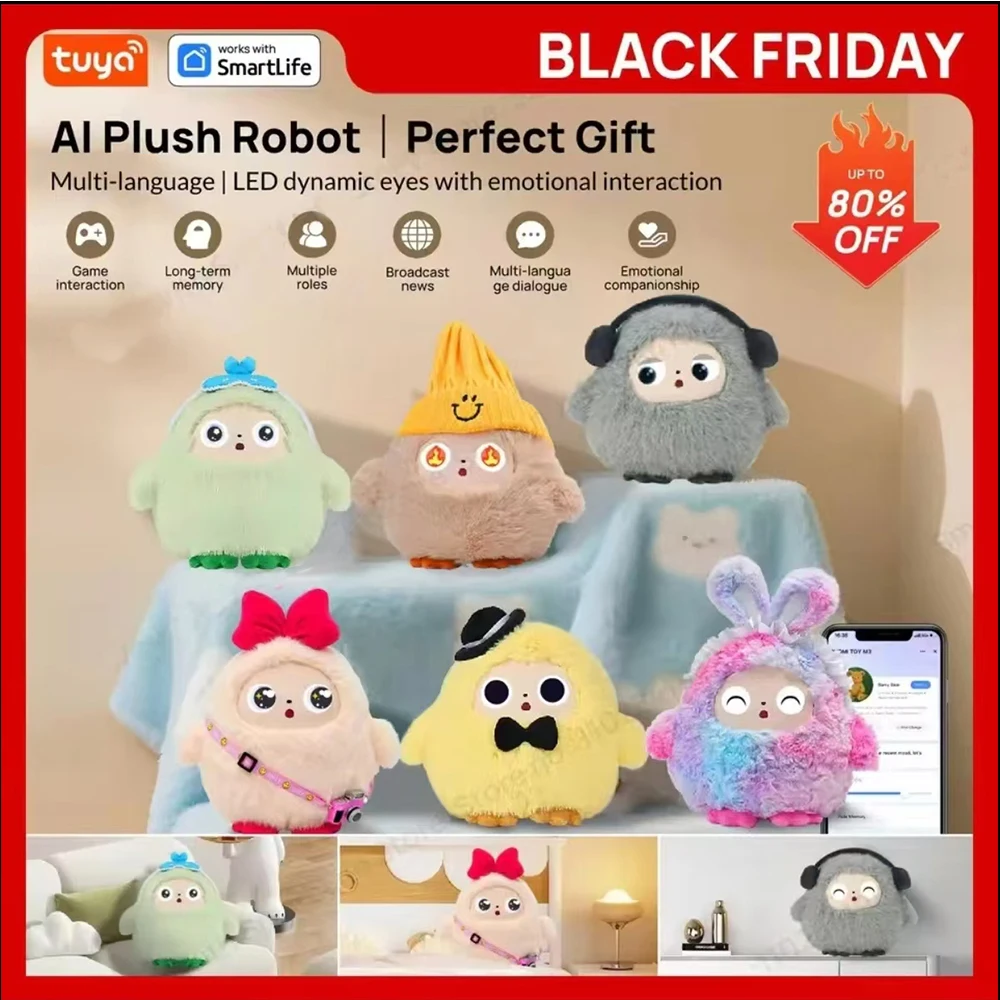
The global smart toy market is booming, and AI plush toys for import represent one of the fastest-growing opportunities for cross-border e-commerce sellers in 2026. These intelligent stuffed animals combine the comfort of traditional plush toys with cutting-edge artificial intelligence — including voice recognition, expressive LED eyes, multilingual dialogue capabilities, interactive games, and emotional companionship features. For small importers looking to enter the smart toy category, AI plush toys offer a compelling product that appeals to parents seeking educational, interactive, and emotionally supportive playthings for their children. This comprehensive guide covers everything you need to know about sourcing, verifying, pricing, and selling AI plush toys profitably through online marketplaces.
Why AI Plush Toys Are Dominating the Smart Toy Market in 2026
The smart toy industry was valued at over $18 billion in 2025 and is projected to grow at a compound annual growth rate (CAGR) of 15-18% through 2030. AI plush toys sit at the intersection of three major consumer trends: the demand for educational technology for children, the growing awareness of children’s emotional well-being, and the increasing sophistication of voice AI at lower price points. Unlike traditional plush toys that serve purely as comfort objects, AI plush toys actively engage children through conversation, storytelling, singing, and interactive games. This added functionality justifies a significantly higher retail price — typically $30-$80 compared to $10-$20 for standard plush toys — giving importers much healthier profit margins. Parents today are actively searching for screen-free interactive toys that promote language development, emotional intelligence, and creative play, and AI plush toys check all these boxes beautifully.
For cross-border e-commerce sellers, the AI plush toy category offers several distinct advantages. First, these products are lightweight and compact, making them cost-effective to ship via ePacket or other small parcel services. Second, the product category benefits from the giftability factor — AI plush toys are popular birthday, holiday, and special occasion gifts, which drives consistent demand year-round with notable spikes during Christmas, Chinese New Year, and back-to-school seasons. Third, the technology barrier creates a natural moat against the flood of ultra-cheap, low-quality competitors. Not every seller can properly source AI-integrated toys with reliable voice recognition and safety certifications, which means sellers who do their homework can maintain strong positions in search results and command premium pricing.
Key Specifications to Check When Sourcing AI Plush Toys
When evaluating AI plush toys for import, several technical specifications and quality indicators demand close attention. Voice recognition accuracy is the single most important feature — a toy that cannot reliably understand a child’s speech will frustrate rather than delight, leading to poor reviews and returns. Look for products using well-established speech recognition modules that support at least three languages with clear, natural-sounding responses. The LED eye display should offer at least 6-8 distinct expressions (happy, sad, surprised, sleepy, thinking, laughing, loving, curious) synchronized with the toy’s voice output. Battery life is another critical specification; aim for toys offering at least 4-6 hours of active use per charge, with USB-C charging for modern convenience. Material safety certifications including EN71 (European standard), ASTM F963 (US standard), and CPSIA compliance are non-negotiable — these certifications are your legal protection and your proof of quality to customers.
Additional features worth comparing include the number of pre-loaded songs and stories (50+ is a good baseline), the availability of companion mobile apps for firmware updates and content expansion, recording time for custom messages from parents, and physical durability — drop testing from 3-4 feet onto a hard surface should cause no damage. The plush material itself should use hypoallergenic polyester fiber with double-stitched seams to prevent stuffing leakage. Some advanced models now integrate temperature sensors that can detect fever through the plush exterior, adding a practical health-monitoring angle that some parents find valuable. By carefully vetting these specifications, you can select a product tier that aligns with your target market’s expectations and price sensitivity.

TV98 ATV X9 Smart TV Stick Android14 Allwinner H313 OTA 8GB 128GB Support 8K 4K Media Player 4G 5G Wifi6 HDR10 Voice Remote iptv

Smart AI Translation Bluetooth Earphones With LCD Display Noise Reduce New Wireless Digital Long Battery Life Display Headphone

Ai Translator Earbud Device Real Time 2-Way Translations Supporting 150+ Languages For Travelling Learning Shopping Business
How to Source AI Plush Toys from Reliable Suppliers
Sourcing AI plush toys requires a different approach than sourcing simpler products, because you are buying integrated electronics encased in soft goods — two very different manufacturing disciplines. The supplier must demonstrate competence in both domains, or partner with a reliable electronics sub-assembler. Start your search on Alibaba and Global Sources using keywords like AI plush toy, smart stuffed animal, voice interactive plush, and educational robot toy. Filter for suppliers with Trade Assurance, verified factory audits, and at least 3-5 years of experience in the smart toy category. During initial contact, request sample units of your top 3-5 candidates and test every feature systematically: voice recognition accuracy in quiet and moderately noisy environments, LED eye response time, audio quality at maximum volume, battery endurance, and charge cycle consistency over 30 days of testing.
A critical but often overlooked step is verifying that the supplier has the legal rights to the software and firmware running on the device. Some smaller factories use cracked or unlicensed voice recognition engines, which can expose you to intellectual property infringement claims down the line. Request written confirmation of software licensing and ask whether the firmware can be customized with your branding or localization requirements. For more detailed guidance on supplier vetting, refer to our step-by-step guide on how to find reliable suppliers for your small business in under two weeks. You should also read our deep dive on supplier verification and factory audits to ensure you are partnering with legitimate manufacturers.
Voice Recognition and LED Eye Technology Explained
The technology stack inside a modern AI plush toy is surprisingly sophisticated. At its core, the toy contains a microcontroller running a lightweight speech recognition engine, typically based on edge AI processing that handles basic commands locally without requiring a cloud connection. This local processing capability is crucial because it means the toy works instantly without Wi-Fi, reducing latency and eliminating privacy concerns that some parents have about internet-connected children’s products. The microphone must be carefully positioned and acoustically tuned within the plush body to capture a child’s voice clearly — a design challenge that separates well-engineered toys from poorly performing ones. Some premium models now incorporate keyword spotting technology that lets the toy remain in low-power sleep mode until a wake word like Hello Teddy is detected, dramatically extending battery life to 7-10 days of standby.
The LED eye display has evolved significantly from simple blinking lights. Current-generation AI plush toys use programmable RGB LED matrices behind translucent eye lenses, capable of rendering detailed expressions, animated pupil movements, and even simple eye-tracking that follows a speaker’s movement across the room. These dynamic expressions are mapped to specific emotional states through the toy’s dialogue management system — when the toy tells a happy story, its eyes form crescent-shaped smiles with sparkle animations; when it plays a guessing game, the eyes narrow thoughtfully. This emotional synchronization creates a powerful sense of aliveness that drives the emotional bonding experience. From a selling perspective, high-quality LED eyes are your strongest visual differentiator, so product images and videos that showcase the eye animations in action are essential for conversion.
Multilingual Capabilities and Educational Value
One of the strongest selling points of AI plush toys for import is their multilingual support, which directly addresses the global nature of cross-border e-commerce. A single product can serve English-speaking markets (US, UK, Canada, Australia), Spanish-speaking markets, French-speaking markets, and many others without requiring different SKUs or packaging variations. This is a massive operational advantage for importers who want to list the same product across multiple Amazon marketplaces or eBay sites. The best AI plush toys offer seamless language switching — either automatically based on detected speech patterns or manually through a parent-controlled settings mode. Some advanced models support bilingual mode, where the toy speaks in one language and the child responds in another, actively facilitating language learning through immersive interaction.
Beyond language learning, AI plush toys deliver educational value through structured interactive games that teach numbers, letters, shapes, colors, animals, and basic math. Unlike passive educational content like videos or apps, AI plush toys provide interactive, spoken responses that feel like real conversation. This interactive format has been shown to improve information retention in young children compared to passive media consumption. Many models now include quiz mode features where the toy asks questions and rewards correct answers with enthusiastic praise and animated eye displays. The best educational AI plush toys differentiate themselves by offering age-adaptive content — material that becomes progressively more challenging as the child demonstrates mastery. For sellers, emphasizing this educational scaffolding in product descriptions and A+ content can significantly increase conversion by appealing to parents’ desire for toys that grow with their children.
Pricing Strategy and Profit Margins for AI Plush Toy Importers
Understanding your true landed cost is essential for pricing AI plush toys profitably. Factory pricing for quality AI plush toys typically ranges from $12-$25 per unit depending on feature set, order quantity (MOQ 500-2000 units is typical), and customization level. Add shipping costs of approximately $3-$7 per unit via sea freight combined with last-mile delivery for smaller orders, or $6-$12 per unit via air freight for faster replenishment. Customs duties and taxes vary by destination but typically add 3-12% of the product value for electronics with textile components. Platform fees including Amazon referral fees (15%), eBay final value fees, or Shopify processing fees take another 2-15%. After accounting for all costs, target a minimum 40% gross margin at your retail price point of $39-$79. For a comprehensive breakdown of every cost component, work through our importer’s cost calculation workbook to identify hidden cost traps before they eat your profits.
Pricing strategy should consider the competitive landscape. On Amazon, AI plush toys in the $35-$55 price range see the highest conversion rates. Products priced below $30 often raise quality concerns among buyers, while products above $80 face significantly lower demand unless they offer genuinely unique features. Create a tiered product strategy if possible: an entry-level model ($35-$45) with core voice capabilities and 3 languages, a mid-range model ($45-$60) with LED eyes and 5+ languages, and a premium model ($60-$80) with app connectivity and custom recording features. This tiered approach captures customers at multiple price points and gives you room to run promotions without compressing margins. For marketplace-specific selling strategies, check out our guide on choosing the right online marketplace for your import business.
Regulatory Compliance and Safety Certifications for Smart Toys
Selling AI plush toys internationally requires navigating a complex landscape of safety regulations, and getting this wrong can result in product seizures, platform suspensions, or liability for child safety incidents. For the US market, your product must comply with CPSIA (Consumer Product Safety Improvement Act) requirements including lead content limits (under 100 ppm for accessible components), phthalate limits, small parts testing for children under 3, and tracking label requirements. The ASTM F963 standard covers mechanical and physical testing including seam strength, stuffing material, and battery compartment accessibility. For the EU market, the EN71 standard applies, with additional requirements under the Toy Safety Directive (2009/48/EC) including REACH compliance for chemical substances, electromagnetic compatibility testing for the electronic components, and WEEE compliance for electronic waste management.
Beyond regulatory compliance, ensure your product listing descriptions include appropriate age warnings and supervision guidelines. Lithium-ion battery safety is a growing concern for regulators and platforms alike — your batteries must have UN38.3 certification for air transport and IEC 62133 certification for consumer safety. Amazon and other major platforms increasingly require these certifications before approving electronics category listings. Partner with a testing laboratory like Bureau Veritas, SGS, or Intertek early in your product development cycle to avoid costly redesigns. For detailed customs clearance procedures including documentation requirements for electronic toys, refer to our small importer’s customs clearance playbook.
Frequently Asked Questions About AI Plush Toys for Import
Q1: What is the typical minimum order quantity (MOQ) for AI plush toys from Chinese suppliers?
Most reputable factories require an MOQ of 500-2000 units per design. Some newer suppliers on Alibaba offer lower MOQs of 100-300 units but at higher per-unit costs, which can be viable for testing a new product before committing to larger volumes.
Q2: How do I verify that an AI plush toy has proper safety certifications?
Request certification test reports from accredited labs (SGS, Bureau Veritas, Intertek) directly from the supplier. Cross-reference the report’s test number with the issuing lab’s database. Do not accept generic certification claims without documented evidence — many suppliers claim certifications they do not actually hold.
Q3: What is the typical profit margin for importing and selling AI plush toys?
Importers who source well and price strategically can achieve 40-55% gross margins. Net margins after platform fees, advertising costs, and returns typically land at 15-25%. These margins are achievable because the technology component creates differentiation that supports premium pricing over standard plush toys.
Q4: Can I customize the voice, songs, and stories in AI plush toys for my brand?
Yes, most quality suppliers offer customization options including branded packaging, custom voice recordings, curated story libraries, and even multilingual content tailored to your target markets. Expect additional setup fees of $500-$3,000 for firmware customization depending on complexity.
Q5: What are the top-selling AI plush toy designs in 2026?
Popular designs include teddy bears, bunny rabbits, cartoon-style dinosaurs, unicorns, puppy dogs, and owl characters. Animal designs with large, expressive eyes tend to perform best. Seasonal variations like Christmas-themed characters can provide strong fourth-quarter sales boosts.
Related Articles
How to Find Reliable Suppliers for Your Small Business in Under Two Weeks
From Random Products to Reliable Sales: A Small Items Sourcing Plan That Delivers Profit
eBay vs Amazon vs Etsy: Which Online Marketplace Selling Strategy Wins for Small Importers




