








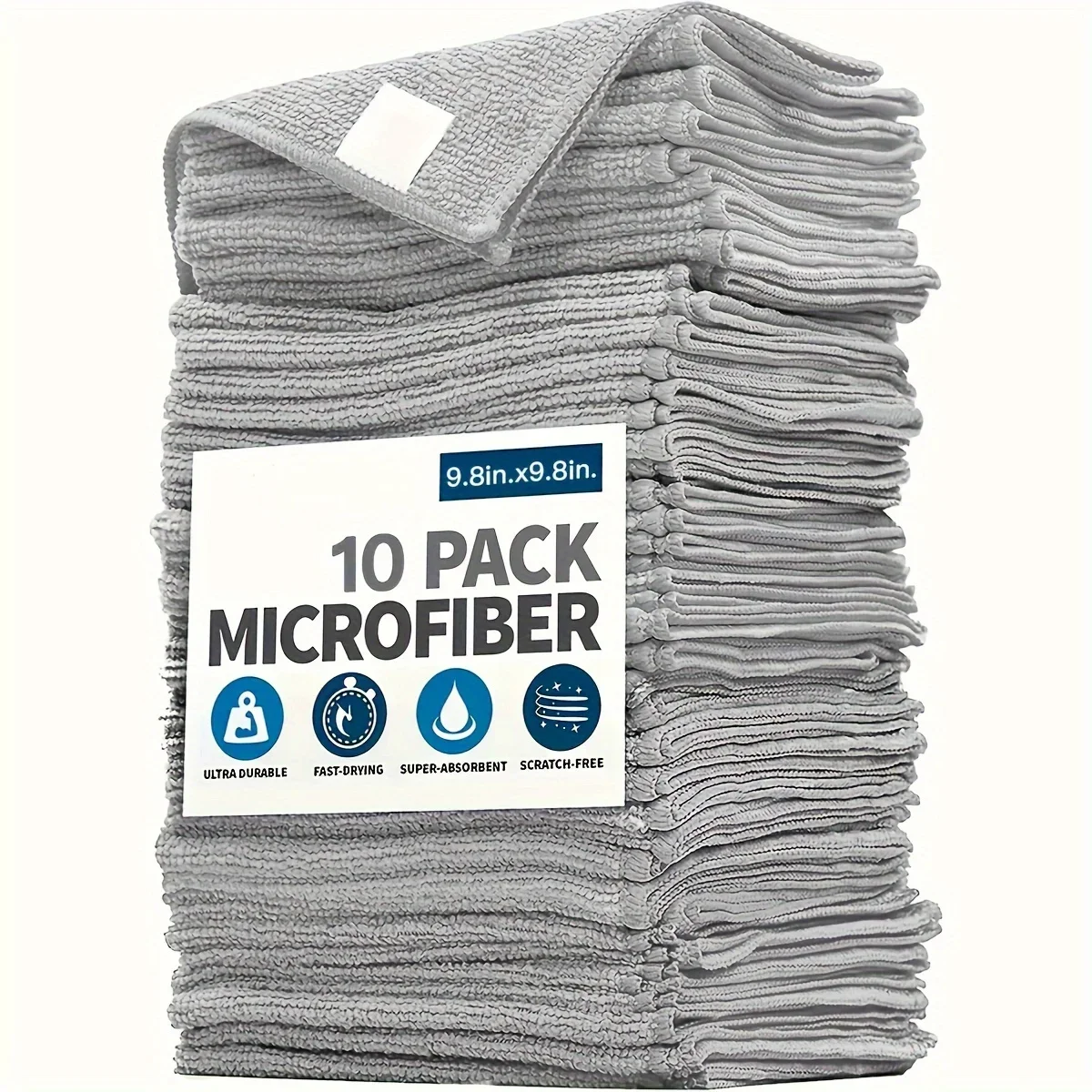
If you are still reaching for disposable paper towels every time you wipe down a counter or dry a dish, it is time to switch to something smarter. The ultra-fine fiber kitchen towel has become a staple in modern kitchens for good reason: it absorbs more liquid, cleans better, and lasts through hundreds of wash cycles. Whether you buy a 5-pack, 10-pack, or 20-pack, this reusable cleaning cloth delivers performance that paper towels simply cannot match. In this guide, we break down exactly what ultra-fine fiber technology is, how to use these towels effectively, and why they should be part of every home and even your import product lineup.
What Is an Ultra-Fine Fiber Kitchen Towel?
An ultra-fine fiber kitchen towel is made from specially engineered microfiber composed of polyester and polyamide split fibres. The “ultra-fine” label refers to the denier count — typically below 0.3 denier per filament. For comparison, a human hair is roughly 20 denier, and standard cotton fibres are around 1.5 denier. This extreme fineness creates millions of microscopic gaps between the fibres that trap dirt, grease, and moisture through capillary action rather than simply pushing them around.
The best kitchen towels use a 70/30 or 80/20 blend of polyester to polyamide. Polyester provides the scrubbing power and durability, while polyamide (nylon) adds absorbency and a soft feel. Most budget cloths skip the polyamide altogether, which reduces absorbency significantly. A genuine ultra-fine fiber towel should specify its blend ratio on the label.
Why Switch to Ultra-Fine Fiber Kitchen Towels?
Still using paper towels? Here is why an ultra-fine fiber kitchen towel outperforms them in every metric:
- Absorbency: Microfiber can absorb up to 7 times its own weight in water. A single 30 × 30 cm cloth holds as much liquid as 5–6 sheets of paper towel.
- Reusability: Each cloth lasts 300–500 washes. A 10-pack replaces approximately 10,000 paper towel sheets over its lifetime.
- Chemical-free cleaning: The split-fibre structure traps grease and dirt without detergent. A damp microfiber cloth cleans most surfaces as effectively as a spray cleaner.
- Lint-free finish: Unlike cotton cloths, microfiber leaves zero lint behind — critical for drying glassware, mirrors, and stainless steel.
- Cost savings: At roughly EUR 0.20–0.50 per cloth (depending on pack size), the per-use cost drops to fractions of a cent after 10 washes, compared to 1–3 cents per paper towel sheet.
How to Choose the Right Kitchen Towel Set
When selecting a microfiber kitchen towel set, consider these factors to match the cloth to your needs:
- Grammage (GSM): Look for 200–300 GSM for general kitchen use. Below 180 GSM feels flimsy and wears out quickly. Above 350 GSM becomes too thick for drying glassware.
- Blend ratio: 80% polyester / 20% polyamide is the sweet spot for balance of scrubbing power and absorbency. 100% polyester cloths are cheaper but noticeably less absorbent.
- Edge finish: Machine-stitched edges prevent fraying. Laser-cut edges are the premium alternative — they do not fray at all and look cleaner over time.
- Colour coding: Buy multi-colour packs so you can assign colours by use (blue for glassware, green for counters, red for heavy grease) to avoid cross-contamination.
- Pack size: A 10-pack is ideal for most households — enough to rotate through the week between laundry loads. A 20-pack suits larger families or light commercial use.

Smart AI Translation Bluetooth Earphones With LCD Display Noise Reduce New Wireless Digital Long Battery Life Display Headphone

Ai Translator Earbud Device Real Time 2-Way Translations Supporting 150+ Languages For Travelling Learning Shopping Business

TV98 ATV X9 Smart TV Stick Android14 Allwinner H313 OTA 8GB 128GB Support 8K 4K Media Player 4G 5G Wifi6 HDR10 Voice Remote iptv
Specifications: What Sets This Ultra-Fine Fiber Towel Apart
| Material | Ultra-fine microfiber (80% polyester / 20% polyamide) |
| Denier | Below 0.3 denier per filament |
| Grammage | 250 GSM |
| Dimensions | 30 × 30 cm (approx. 12 × 12 inches) |
| Colour | Light Gray (also available in multi-colour bundles) |
| Pack sizes | 5 pieces, 10 pieces, 20 pieces |
| Absorbency | Up to 7× its own weight in water |
| Washable | Machine washable up to 300+ cycles (60°C max, no fabric softener) |
| Lint factor | Zero lint — safe for glass and electronics |
| Drying time | Air dries in 2–3 hours; tumble dry low |
| Certifications | OEKO-TEX Standard 100 (free from harmful chemicals) |
| Price | SGD 1.98 (50% OFF original SGD 3.97) |
The 250 GSM weight hits the sweet spot — thick enough to hold significant moisture without being bulky. The OEKO-TEX certification is a meaningful guarantee that no harmful chemicals are used in the dyeing or finishing process, especially important for kitchen items that contact food-preparation surfaces.
Care Instructions: Making Your Towels Last 300+ Washes
The number-one complaint about microfiber towels is that they eventually lose absorbency or start smelling. In almost every case, the problem is incorrect care, not the towel quality. Follow these rules:
- No fabric softener or dryer sheets. Fabric softener coats the microfibres with a waxy residue that blocks their absorbent gaps. Once coated, the towel cannot trap moisture effectively. If you have used softener, a hot wash with a teaspoon of white vinegar can partially restore function.
- Wash separately or with other microfiber only. Cotton lint from terry cloth towels clogs microfiber. Wash microfiber together in a dedicated load.
- Max temperature 60°C. Higher temperatures can melt the polyamide component, causing the fibres to fuse and lose their split structure.
- No bleach. Bleach degrades the polyamide fibres and causes yellowing.
- Air dry or tumble dry low. High heat damages the fibres. If using a dryer, skip the dryer sheet.
Everyday Uses: Beyond Kitchen Cleaning
While marketed as kitchen towels, ultra-fine fiber cloths excel in many areas of the home:
- Glass and mirror drying: The lint-free finish means zero streaks on windows, mirrors, or crystal glassware. One wipe dry with a dry microfiber cloth is usually enough.
- Stainless steel polishing: Dampen slightly and wipe with the grain. The cloth lifts fingerprints and grease without needing polish.
- Electronics dusting: Dry microfiber is safe for screens, keyboards, and camera lenses. The electrostatic charge attracts dust particles.
- Car interior: Excellent for dashboard dusting and window cleaning. Keep a dedicated set for automotive use.
- Bathroom: Use one cloth for sink and counter cleaning, another for mirror drying. Colour code to avoid mixing with kitchen cloths.
Eco-Friendly Benefits: Why Microfiber Beats Paper and Cotton
From an environmental perspective, the switch to reusable microfiber kitchen towels is one of the easiest sustainable swaps you can make. Here is the data:
- Paper towel waste: The average household uses 2,500–3,000 paper towel sheets per year. That equates to roughly 13 kg of paper waste that ends up in landfills. Paper towels cannot be recycled because the fibres are too short after the manufacturing process.
- Carbon footprint: Manufacturing a single ultra-fine fiber towel emits approximately 100–150 g CO₂-equivalent. After 10 washes, the per-use carbon cost drops below paper towels. After 100 washes, microfiber has a roughly 90% lower carbon footprint than paper towels for the same task.
- Water usage: Producing one paper towel sheet requires approximately 0.5 litres of water. A 20-pack of microfiber cloths requires roughly the same water in manufacturing as 15 paper towel rolls. Over a year of use, the microfiber cloths save thousands of litres of water vs. paper towels.
- Cotton comparison: Cotton is highly absorbent but requires massive water input (2,700 litres per kg of cotton) and often uses pesticide-intensive farming. Microfiber’s polyester/polyamide base uses synthetic fibres produced in controlled factory environments with far less land and water impact per functional use.
The key to making microfiber truly sustainable is longevity. A cloth that lasts 300 washes is an environmental win. A cloth that falls apart after 20 washes is not. This is why buying quality 250+ GSM cloths with proper edge stitching matters — cheap 100% polyester cloths shed microplastics into the wash water and need replacing far sooner.
Microfiber vs. Other Kitchen Towel Materials: Head-to-Head
| Material | Absorbency | Lint-Free | Wash Cycles | Cost Per Use |
| Paper Towel | 2× weight | Yes (some lint) | 1 | 1–3 cents |
| Cotton Dish Cloth | 3× weight | Slight lint | 50–100 | 0.5–1 cent |
| 100% Polyester Microfiber | 4× weight | Yes | 100–200 | 0.1–0.3 cent |
| Ultra-Fine Fiber (80/20) | 7× weight | Yes (zero lint) | 300–500 | 0.02–0.05 cent |
| Bamboo Fiber | 3× weight | Partial | 100–200 | 0.3–0.8 cent |
The ultra-fine 80/20 blend leads in every meaningful category. Bamboo fibre is a good natural alternative if you prefer plant-based materials, but it does not match microfiber on absorbency, lint-free performance, or durability in the washing machine.
Buying Tips for Importers and Resellers
If you are considering importing microfiber kitchen towels for resale, there are a few nuances to understand:
- Weight-based shipping: Microfiber is lightweight but bulky. One 20-pack weighs roughly 200–250 grams. Shipping from China via ePacket or AliExpress Standard Shipping costs approximately USD 3–5 per kg, making these affordable to ship individually.
- Margin analysis: At bulk wholesale (from Alibaba), microfiber cloths cost as low as USD 0.10–0.30 per piece. Packaged as 10-packs with private-label branding, retail prices of USD 6–12 are common — a 10–20× markup.
- Quality tiers: There are three tiers — economy (100% polyester, 150 GSM, no certification), mid-range (80/20 blend, 200–250 GSM), and premium (split-fibre, 300+ GSM, OEKO-TEX). Most Amazon best-sellers sit in the mid-range tier.
- Customisation: Screen-printed logos add USD 0.03–0.08 per piece. Custom packaging (boxes with your brand) adds another USD 0.10–0.30 per pack. Minimum order quantities on custom packaging typically start at 500–1,000 packs.
- Seasonal demand: Kitchen towel sales peak in spring (spring cleaning) and December (holiday hosting). Time your inventory orders 60–90 days ahead of these peaks.
Frequently Asked Questions
Q1: How many times can I wash an ultra-fine fiber kitchen towel before replacing it?
Most premium microfiber towels retain full performance for 300–500 wash cycles. After that, absorbency gradually declines as the split fibres wear down. Replace them when they stop absorbing water quickly or start leaving streaks.
Q2: Can I use these towels with cleaning chemicals?
Yes, but you generally do not need to. Microfiber’s split fibres physically lift and trap grease without chemical assistance. If you use spray cleaners, test on a hidden area first — some industrial degreasers can degrade the fibre structure over time.
Q3: Why do my microfiber towels smell musty after a few uses?
This happens when towels are left damp in a closed hamper or washer. Microfiber dries much faster than cotton but still needs airflow. Hang towels to dry between uses, and never leave wet microfiber in a pile for more than a few hours. If musty odour persists, wash with a cup of white vinegar on a hot cycle.
Q4: Are ultra-fine fiber towels safe for non-stick pans?
Yes, they are generally safe. Unlike scouring pads or steel wool, microfiber will not scratch non-stick coatings. Use a dedicated, non-greasy towel to avoid transferring oil residues to the pan surface.
Q5: Can I use these towels for cleaning my car’s paint?
Only if you use the two-bucket method and the towel is perfectly clean. Microfiber trapped with grit or sand will scratch clear coat. Dedicate separate towels for paint, wheels, and interior to avoid cross-contamination.
Related Articles
- From Random Products to Reliable Sales: A Sourcing Plan That Delivers Profit — Learn how to systematically source winning household products like microfiber towels.
- How to Find Reliable Suppliers for Your Small Business — Find factories that produce quality microfiber textiles at wholesale prices.
- The Importer’s Cost Calculation Workbook — Calculate your true landed cost when importing kitchen textiles from overseas suppliers.


