








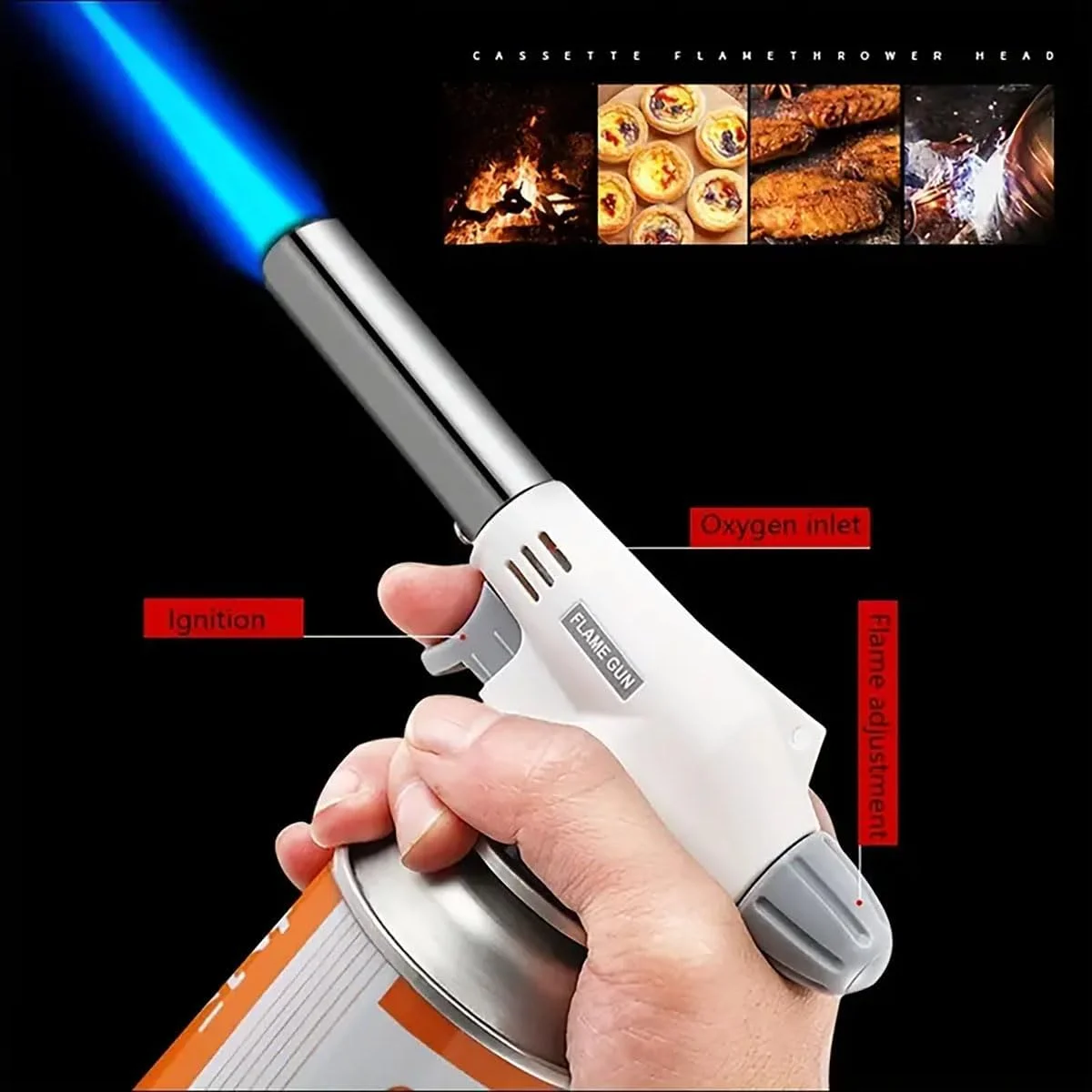
Gas torch lighters occupy a unique position in the import product landscape — they serve practical needs across cooking, camping, and DIY markets simultaneously. This built-in market diversification makes them one of the safer product categories for new importers: even if one market segment slows down, the others continue generating demand. Whether you are a backyard chef perfecting crème brûlée, a camper needing reliable fire starters, or a handyman soldering copper pipes, the butane gas torch lighter is an indispensable tool. In this comprehensive guide, we cover everything from market trends and product features to supplier selection and sales strategy.
Understanding the Gas Torch Lighter Market in 2026
The global gas lighter and torch market is valued at USD 3.2 billion and grows at 4.5 percent annually. The butane torch segment specifically accounts for approximately USD 680 million, with online sales representing 38 percent of the total and growing at 12 percent per year. Amazon is the largest online marketplace for this category, capturing 45 percent of e-commerce sales. The top three brands (Bernzomatic, Sondiko, and Blazer) control roughly 60 percent of the premium market, leaving substantial room for new entrants in the value segment.
The Camping Gas Torch Lighter with adjustable flame, safety lock, and refillable butane design represents the current market standard. At a wholesale price of USD 1.00-2.50 per unit and a retail range of USD 10-18, this product offers a healthy margin structure while remaining accessible to budget-conscious consumers across all three target segments. The COVID-19 pandemic permanently boosted home cooking and outdoor recreation trends, and these habits have solidified into sustained demand for gas torch lighters. Search volume for “butane torch lighter” has grown 28 percent year-over-year on Amazon, with peak demand during grilling season (May-August) and holiday cooking months (November-December).
Consumer preferences are shifting toward refillable torches over disposable models, driven by environmental awareness and long-term cost savings. Products featuring transparent butane tanks, adjustable flame controls, and safety lock mechanisms consistently outperform basic models in conversion rates. According to marketplace analytics, listings highlighting refillable and adjustable flame features achieve 2.3 times the average conversion rate of basic models. The refillable feature alone increases conversion by 35 percent compared to disposable models.
Types of Gas Torch Lighters: Choosing the Right Product
Not all gas torch lighters are created equal. Understanding the different types will help you choose the right product for your target market:
Culinary Torches — Designed for kitchen use in caramelizing sugar (crème brûlée), searing meats, melting cheese, and roasting vegetables. These typically feature a smaller, more precise flame and a stable base for countertop use. The ideal flame temperature for culinary use is 1300-1700°C. Look for ergonomic handles and a trigger-style ignition for comfortable extended use. Kitchen torches are the highest-volume subcategory on Amazon, with over 3,000 SKUs competing.
Camping and Outdoor Torches — Rugged, portable designs optimized for outdoor conditions. Features include wind-resistant jet nozzles, larger fuel tanks (30-60 minutes continuous burn), and durable ABS or metal construction. These are ideal for campfire lighting, starting charcoal grills, and emergency preparedness kits. Many include a wide base or removable stand for stability on uneven terrain. Outdoor torches are the fastest-growing segment, seeing 18 percent year-over-year growth.
DIY and Soldering Torches — Precision tools for electronics repair, jewelry making, heat-shrink tubing, and light metalwork. These require finer flame control and specialized nozzle attachments. Flame temperatures should reach 1800-2000°C for effective soldering. Interchangeable tips and continuous flame lock are important features for this segment. While a smaller market (approximately 15 percent of total torch sales), DIY torches command higher average selling prices of USD 18-35.
Multi-Purpose Torches — The best-selling category combines features from all segments. An adjustable flame ranging from 1cm (precision) to 5cm+ (high-output), a safety lock mechanism, and a refillable transparent tank cover the needs of cooks, campers, and DIYers alike. The Camping Gas Torch Lighter falls into this versatile category, making it the safest inventory bet for new importers.

Ai Translator Earbud Device Real Time 2-Way Translations Supporting 150+ Languages For Travelling Learning Shopping Business

Smart AI Translation Bluetooth Earphones With LCD Display Noise Reduce New Wireless Digital Long Battery Life Display Headphone

TV98 ATV X9 Smart TV Stick Android14 Allwinner H313 OTA 8GB 128GB Support 8K 4K Media Player 4G 5G Wifi6 HDR10 Voice Remote iptv
Product Features That Drive Reviews and Sales
Whether you are sourcing or buying a gas torch lighter, these features determine customer satisfaction and return rates:
Flame Adjustment — Continuous dial adjustment from precision (approximately 1cm) to high-output (5cm+) flame is the single most requested feature. Look for mechanisms that provide smooth, incremental control rather than limited preset positions. A flame lock button that keeps the torch lit without holding the trigger is a major convenience feature.
Safety Lock — Two-step ignition (lock + trigger) prevents accidental activation, which is critical for kitchen environments and for shipping compliance. Children-safety mechanisms are increasingly required by marketplace policies. The safety lock should be intuitive enough not to frustrate users while remaining secure.
Refillable Tank — A clear butane level window helps users see remaining fuel at a glance. The fill valve should be compatible with standard butane canisters (threaded or puncture-type). Translucent or transparent tanks are preferred by 73 percent of buyers according to survey data. Tank capacity should enable at least 30 minutes of continuous burn time on the high setting.
Wind Resistance — Jet-nozzle design that maintains a stable flame in light to moderate wind conditions separates quality torches from cheap alternatives. Wind-resistant models retain 80-90 percent of their heat output in 15-20 kph winds, compared to 40-50 percent for basic nozzle designs. This is a critical differentiator for outdoor-focused listings.
Included Accessories — A filling adapter for standard butane cans, spare flints, a storage pouch or stand, and a user manual add perceived value at minimal cost to the importer. Kits with 3-5 accessories generate 22 percent more positive reviews than bare-torch listings.
Supplier Selection Criteria for Gas Torch Lighters
When evaluating Chinese gas torch suppliers, prioritize those with ISO 9001 certification (quality management), specific gas lighter manufacturing experience (not general metal fabrication), and willingness to provide gas fill consistency test reports. Request samples from at least three suppliers and test: flame consistency across the full adjustment range, safety lock durability (minimum 500 cycles without failure), and gas valve seal integrity (zero leaks after 30 days of storage).
Key supplier questions to ask: Do you offer custom packaging and branding? What certifications do you hold (CE, RoHS, REACH, ASTM)? Can you provide documentation showing gas fill consistency from batch to batch? What is your defect rate policy (typically 1-2 percent is acceptable)? How do you handle warranty claims for end customers? Reliable suppliers will provide written answers and sample test reports without hesitation.
Typical order parameters: Minimum order quantities range from 200 to 500 units. Pricing is USD 1.00-2.20 per unit depending on quantity and feature set. Production lead time is 25-40 days, plus 20-30 days for ocean freight. Order at least 10 weeks before your target sales date. Air freight (7-10 days) is an option for urgent restocks but triples shipping costs.
For a complete framework on verifying suppliers, see our guide on how to find reliable suppliers for your small business in under two weeks.
Amazon Listing Compliance and Safety Regulations
To list gas torch lighters on Amazon, you must comply with several regulations. Non-compliance can result in listing removal, account suspension, or even legal liability. Here is what you need:
ASTM F2201-14 Safety Standard — This is the primary safety standard for gas torch lighters sold in the United States. It covers ignition safety, flame stability, fuel leakage, and user instructions. Your product must pass ASTM testing through a certified third-party lab.
Listing Content Requirements — Amazon requires safety warnings in the title and description. Product images must clearly show the safety lock mechanism. Bullet points should include safety information and compliance certifications. Avoid exaggerated claims (flameproof, indestructible) that can trigger listing review.
General Certificate of Conformity (GCC) — For imports into the United States, you must have a GCC document available in Amazon Seller Central. This certifies that your product complies with all applicable consumer safety rules. The GCC must reference the specific ASTM standard and include the importer or manufacturer details.
Hazmat Compliance for FBA — Butane-filled torches are classified as hazardous materials (Class 2.1 flammable gas). FBA requires specialized hazmat carriers, which significantly increase shipping costs. Most importers ship empty torches and include clear instructions for end-user filling, avoiding hazmat classification entirely.
Sales Channel Strategy for Gas Torch Lighters
Amazon FBA is the primary sales channel, typically accounting for 50 percent of total revenue. However, starting with FBM (Fulfilled by Merchant) is strategic for gas torches. FBM allows you to build 20-30 reviews and demonstrate compliance before applying for FBA approval. Amazon often restricts new FBA listings in the lighter category until you have established sales history.
eBay has a strong market for value-priced torch lighters under USD 12. The platform’s lower fees (13 percent vs. Amazon’s 15 percent plus fulfillment) make it attractive for high-volume, lower-margin sales. eBay buyers in this category are less brand-sensitive and more price-sensitive, making it ideal for clearing inventory or testing new products.
TikTok Shop is emerging as a powerful channel for BBQ and camping content. Videos demonstrating the perfect burger sear or campfire-lighting technique generate strong engagement, often driving impulse purchases. The short-form video format rewards products with visually satisfying results, and gas torches deliver exactly that. Consider creating a TikTok affiliate program with a 10-15 percent commission to incentivize creator content.
Etsy works well for culinary torch lighters marketed to home chefs and food content creators. Etsy buyers search for curated kitchen tools and are willing to pay premium prices (USD 20-35) for aesthetically designed products with good packaging. Product photography and listing quality matter more on Etsy than on any other platform.
For a detailed comparison of marketplace strategies, read our guide: eBay vs Amazon vs Etsy: Which Online Marketplace Selling Strategy Wins for Small Importers.
Butane Torch Safety Guide for End Users
Educating your customers on safe butane torch use reduces return rates and liability risk. Include the following guidelines in your product packaging and listing content:
Refueling Safety — Always use triple-refined butane (like Vector, Newport, or Colibri). Cheaper butane contains impurities that leave residue inside the valve mechanism, causing it to fail after 10-20 refills. Refill only in a well-ventilated area away from open flames. Hold the torch upside down and press the fill valve firmly for 5-10 seconds. Wait 2 minutes for the gas to stabilize before igniting.
Storage Guidelines — Store torches away from direct sunlight and heat sources. Do not store in a car during summer (temperatures can exceed 60°C / 140°F). Keep out of reach of children. Depressurize the tank before long-term storage (over 3 months) by burning off remaining butane in a safe outdoor area.
Usage Tips — Never leave a lit torch unattended. Keep flammable materials at least 30cm away from the flame. Do not touch the nozzle immediately after use — it remains hot for several minutes. If the flame sputters or exhibits yellow/orange color, the butane may be low-quality or the nozzle may need cleaning with compressed air.
Frequently Asked Questions about Gas Torch Lighters
Q1: What butane should I recommend for refilling?
A1: Triple-refined butane (such as Vector, Newport, or Colibri) produces the cleanest burn and longest torch life. Cheaper butane leaves internal residue that degrades the valve seal after 10-20 refills, leading to leaks and inconsistent flame. Always recommend premium butane to your customers — it costs slightly more but significantly reduces warranty claims.
Q2: How long does a full tank last?
A2: On continuous use, a standard 15ml butane tank provides 30-60 minutes on the high setting and 60-120 minutes on the low setting. With intermittent use (typical for BBQ and camping scenarios), expect 3-6 months of normal usage per refill. The transparent tank window lets users monitor fuel level and refill before running out mid-task.
Q3: Can I ship these to Amazon FBA?
A3: Yes, but only through FBA-approved hazmat carriers for filled units, or standard carriers for empty units. Most importers ship empty and provide clear filling instructions to avoid hazmat classification entirely. Check Amazon’s current hazmat policy before ordering inventory, as regulations change periodically. FBM is a safer starting point for new sellers in this category.
Q4: What is the best price point for a new listing?
A4: Launch at USD 12.99-14.99 to undercut established competitors and attract early reviews. After accumulating 15-20 positive reviews, increase to USD 15.99-17.99. Premium features (adjustable flame, safety lock, transparent tank, and included accessories) justify the higher price point. Price testing between USD 14.99 and USD 19.99 typically reveals that conversion is relatively flat within this band.
Q5: Do I need a patent or trademark to sell gas torches?
A5: No patent is required to sell generic gas torches. However, check for active design patents on specific shapes or mechanisms. Generic jet-torch designs are widely manufactured and functional elements are typically in the public domain. For branding, a registered trademark for your brand name is recommended but not mandatory for initial sales. Amazon Brand Registry (requires an active trademark) provides listing protection and A+ Content access, which can be valuable once you have established sales volume.
Related Articles
Related: From Random Products to Reliable Sales: A Small-Items Sourcing Plan That Delivers Profit | The Importer’s Cost Calculation Workbook: 7 Hidden Traps That Inflate Your Landed Costs | The Small Importer’s Customs Clearance Playbook: Documents, Deadlines, and Drop-Dead Dates



