








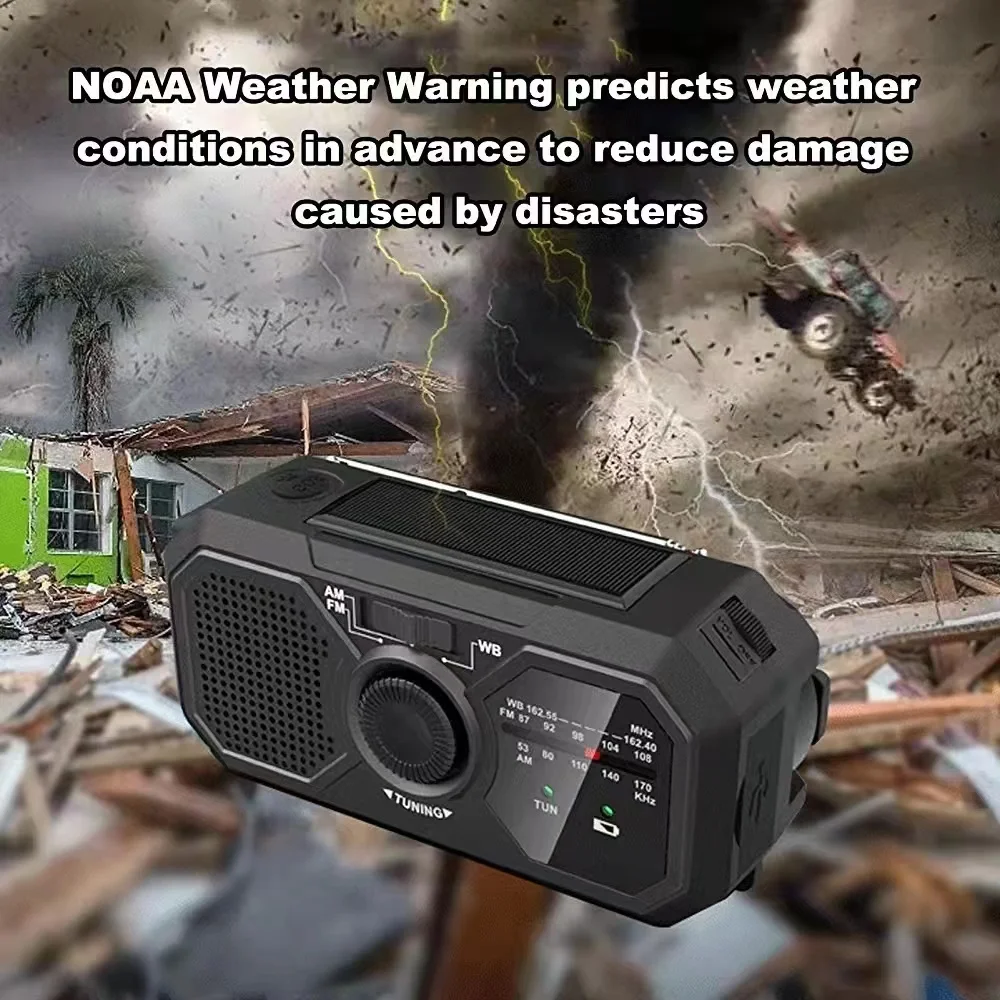
The emergency and survival gear market is experiencing explosive growth, projected to reach $68 billion globally by 2030. Driven by increasing awareness of natural disasters, power outages, outdoor recreation trends, and global instability, consumers are investing in preparedness products at unprecedented rates. For small importers, this category offers stable year-round demand, premium pricing power, and customer segments that prioritize quality over the lowest price. Portable solar radios like the Emergency K-Series exemplify the winning product formula: multi-functional, self-powered, compact, and genuinely useful in emergencies.
Emergency preparedness products have unique advantages over other consumer electronics categories. They sell to motivated buyers (people who are proactively preparing for emergencies), have low return rates (customers don’t return emergency gear), benefit from recurring purchase cycles (replacing batteries, upgrading kits), and command premium pricing due to their functional importance. A product that costs $8-12 landed can sell for $29.99-39.99 — margins that few other electronics categories can match. This guide covers everything you need to know about importing emergency and survival gear profitably.
The Emergency and Survival Gear Market Opportunity
The emergency preparedness market is not a single category but a spectrum of products serving different customer segments. Understanding how these segments overlap and where the best opportunities lie is essential for importers.
Survivalist/Prepper segment: The most dedicated preparedness buyers. They invest in high-end gear (solar generators, water filtration, long-term food storage) and have high lifetime value. Products in this segment command premium prices but require higher quality standards. Typical customer spends $200-500 annually on preparedness gear.
Everyday Preparedness segment: The mainstream market. These customers buy portable solar radios, emergency kits, flashlights, power banks, and multi-tools. They’re motivated by news events (hurricanes, wildfires, blackouts) and outdoor activities. This is the largest and most accessible segment for importers. Products priced $19.99-49.99 sell best. Purchase frequency is 2-3 times per year, driven by updating existing kits or adding new capabilities.
Outdoor Recreation crossover: Campers, hikers, RV owners, and off-grid enthusiasts buy many of the same products as the preparedness market. Portable solar radios, hand-crank chargers, and emergency blankets are equally useful for a weekend camping trip as they are for emergency preparedness. This segment expands your total addressable market by another 50 million consumers in the US alone.
Geographic demand is concentrated in regions prone to natural disasters: US hurricane zones (Florida, Gulf Coast, East Coast), earthquake regions (California, Pacific Northwest, Japan, Taiwan, Turkey), and areas with extreme weather (Midwest tornado alley, northern regions with winter storm risk). Australia and New Zealand have strong demand due to remote populations and bushfire risk. Understanding these geographic patterns helps in targeting PPC ads and FBA inventory placement.
When allocating FBA inventory, place at least 30% of your stock in fulfillment centers serving hurricane-prone regions (Florida, Texas, Carolinas) and 20% in earthquake regions (California). The remaining 50% distributed across the network serves the outdoor recreation crossover market and general preparedness demand. This geographic targeting reduces shipping costs and delivery times during emergency demand spikes — Amazon’s algorithm also favors in-region inventory for quick delivery.
Product Design and Feature Prioritization
When working with OEM suppliers on emergency products, feature prioritization directly affects cost structure and customer appeal. Understanding which features add genuine value versus which just add cost is crucial for competitive pricing.
Must-have features (do not compromise): AM/FM radio with good reception, NOAA weather band, hand-crank generator, solar panel (even small), LED flashlight, USB output for phone charging, and a battery that holds charge for at least 3 months in storage. These features cover the core value proposition of emergency communication and power.
Nice-to-have features (add differentiation): Digital display, Bluetooth speaker, multiple light modes (strobe, reading lamp, SOS beacon), headphone jack, additional USB-C input, weather alert automatic activation, and compass. These features add $1-3 to cost but can justify $5-10 higher retail price if presented effectively in listings.
Low-value features (skip to save cost): Phone charging case (adds $4-6 cost with minimal value), smartphone app integration (software maintenance burden), outdated micro-USB ports (customers penalize this heavily), and non-standard charger connectors. Avoid features that create support burden or customer confusion.
The ideal product balance is: all must-have features, 2-3 nice-to-have features that differentiate your product from competitors, and zero low-value features. This keeps landed cost at $10-15 while supporting a $29.99-34.99 retail price point with strong differentiation.

TV98 ATV X9 Smart TV Stick Android14 Allwinner H313 OTA 8GB 128GB Support 8K 4K Media Player 4G 5G Wifi6 HDR10 Voice Remote iptv

Ai Translator Earbud Device Real Time 2-Way Translations Supporting 150+ Languages For Travelling Learning Shopping Business

Smart AI Translation Bluetooth Earphones With LCD Display Noise Reduce New Wireless Digital Long Battery Life Display Headphone
Portable Solar Radios: The Core Product Category
Portable solar-powered radios are the anchor product of any emergency preparedness import line. These devices combine multiple essential functions: AM/FM/NOAA weather radio reception, solar charging, hand-crank generator, LED flashlight, USB power bank for charging phones, and often SOS alarm/siren. The Emergency K-Series portable solar radio is a typical example — a compact, rugged device that provides information, light, and communication during power outages.
Key specifications to evaluate when sourcing portable solar radios:
- Radio bands: AM/FM/NOAA Weather Alert is the minimum for US market. NOAA Weather Alert with automatic alerting (SAME technology) is a strong differentiator that justifies premium pricing.
- Power sources: Solar panel (minimum 200mAh solar cell), hand-crank generator, and USB-C charging. Triple power redundancy is the standard. Hand-crank should generate usable power within 1-2 minutes of cranking for an emergency call.
- Battery capacity: 2000-4000mAh for power bank function. Enough to charge a smartphone to 50-100%. Higher capacities add significant weight and cost.
- LED flashlight: Minimum 100 lumens. Multiple modes (high, low, strobe, SOS) are expected. Side panel light or reading lamp is a nice addition.
- Durability: IPX3+ water resistance, drop test from 1 meter, and operating temperature range of -10°C to 50°C.
- Additional features: Digital display (battery level, signal strength), headphone jack, Bluetooth speaker (modern addition), SOS alarm, compass, and storage compartment for cables.
Landed cost for a well-featured portable solar radio: $8-15 per unit at MOQ 200-500. Shipping (sea freight): $1-2 per unit. Retail price: $24.99-39.99. Gross margin: 45-60%. Return rates: 2-4% — among the lowest in consumer electronics because customers are satisfied as long as the device works when tested.
Expanding Your Emergency Gear Product Line
Once you’ve established a base product like the portable solar radio, expanding the product line increases customer lifetime value and cross-selling opportunities. Complementary emergency and survival products that importers should consider:
- Emergency hand-crank power banks: 5000-20000mAh with solar panel, flashlight, and wireless charging. Landed cost $10-18. Retail $24.99-39.99.
- Emergency kits: Pre-assembled kits with radio, flashlight, first aid, whistle, survival blanket, multi-tool, and carrying case. These have high perceived value and gift-buying demand. Landed cost $12-25. Retail $34.99-59.99.
- Solar panel chargers: Foldable 20W-100W solar panels for camping and off-grid use. Landed cost $15-35. Retail $39.99-89.99. Growing demand for larger portable solar solutions.
- Emergency LED lanterns: Collapsible, solar-rechargeable, with multiple light modes. Landed cost $4-8. Retail $12.99-19.99. Easy add-on at checkout.
- Weather alert radios: Desktop units with SAME technology, larger displays, and better speakers. Landed cost $12-20. Retail $29.99-49.99. Higher price point and more margin.
- Survival tools: Multi-tools, emergency whistles, fire starters, paracord bracelets. Low cost ($1-5), good add-on items, high perceived value.
Supplier Sourcing for Emergency Gear
Emergency preparedness products have a more dispersed supply chain than consumer electronics. Key sourcing hubs:
- Shenzhen/Guangzhou, China: Primary hub for electronics-based emergency products (solar radios, power banks, LED lights). Search Alibaba for “emergency solar radio,” “weather alert radio OEM,” “hand crank radio wholesale.”
- Yiwu, China: Best source for physical emergency products (multi-tools, emergency blankets, first aid kits, survival kits). Lower quality but also lower cost. Good for bundling into kits.
- Taiwan: Higher quality solar panel and battery manufacturing. Premium positioning.
- Vietnam: Emerging source for textile-based emergency products (tents, sleeping bags, emergency blankets).
When evaluating suppliers, prioritize those who already understand emergency preparedness standards. A supplier who has experience with FCC Part 15 (radio) and NOAA weather alert certification requirements will save you months of compliance headache. Request samples and test: radio reception sensitivity (compare with a known good unit), solar charging efficiency under different light conditions, hand-crank power generation (how many minutes to get a useful charge), and battery durability after multiple charge cycles.
Certifications and Compliance for Emergency Electronics
Emergency radios have specific certification requirements that differ from general consumer electronics:
- FCC Part 15 (US): Required for any device with radio reception or transmission capability. Including AM/FM/NOAA reception.
- NOAA Weather Alert (US): If your radio advertises “NOAA Weather Alert,” it must meet specific standards for SAME (Specific Area Message Encoding) alert reception. Consumer Reports and Amazon increasingly enforce accurate NOAA compliance claims.
- CE/RED (EU): Required for European market. Includes radio performance, EMC, and safety testing.
- UN 38.3: Required for lithium battery air shipment. Essential for importing with battery included.
- FCC Part 15B: For unintentional radiators (digital devices). Required if the device has a digital display or microcontroller.
One important compliance note: some cheap imported solar radios claim “NOAA Weather Alert” but don’t actually implement the SAME alert protocol — they just receive NOAA broadcasts without the automatic alerting feature. This is a common customer complaint that generates negative reviews. Verify this feature on samples before ordering in bulk.
Marketing and Selling Emergency Preparedness Products
Emergency preparedness products require a different marketing approach than general electronics. The customer is motivated by fear (of emergencies) and desire for security (peace of mind). Effective marketing angles include: “be prepared for anything,” “protect your family during emergencies,” “survive power outages with confidence,” “your emergency communication lifeline,” and “never be without power and information.”
Seasonal selling patterns are important to understand. Peak demand periods: hurricane season (June-November in US Atlantic/Gulf regions), winter storm season (December-February), “Preparedness Month” (September, promoted by FEMA), and after major natural disasters (demand spikes 3-5x for 2-4 weeks following a widely covered disaster event). Plan inventory to peak before hurricane season begins in June, and have additional stock available for disaster-response demand spikes.
Top-selling Amazon keywords for this category: “emergency radio,” “solar weather radio,” “NOAA weather radio,” “hand crank radio,” “emergency solar radio,” “portable weather radio,” “survival radio,” “emergency kit,” “power outage essentials.” CPCs range from $0.50-1.20, with conversion rates of 10-15% for well-optimized listings — excellent metrics compared to general electronics.
Frequently Asked Questions
Q: Is importing emergency and survival gear profitable compared to general electronics?
Yes, emergency gear typically offers 45-60% gross margins — significantly higher than general consumer electronics (25-40%). The combination of lower competition, motivated buyers, and low return rates (2-4%) makes this category one of the most profitable for small importers. A portable solar radio landed at $12 and sold at $34.99 generates $22.99 gross profit per unit.
Q: What certifications do I need to import emergency solar radios?
For the US market, you need FCC Part 15 certification. If your radio advertises NOAA Weather Alert with SAME technology, verify compliance. For EU markets, you need CE/RED certification. UN 38.3 battery certification is required for air shipment. Many Chinese OEM suppliers offer pre-certified radios — request their certification documents before ordering.
Q: How do I verify that a solar radio actually works for emergencies?
Test the radio reception in a suburban/indoor location (many cheap radios only work with excellent signal). Test solar charging: expose the panel to indirect sunlight for 4 hours and measure battery charge increase. Test hand-crank: 2 minutes of cranking should provide 5-10 minutes of light or 2-3 minutes of radio. Test the flashlight brightness in a dark room. Test the USB power bank function with a phone. Document all results so you can describe the product accurately.
Q: When is the best time to launch emergency products?
Launch in early spring (March-April) to build rankings and reviews before hurricane season begins in June. This gives you 2-3 months to establish organic rankings before demand spikes. If you’re launching a product late in the season, consider targeting winter preparedness (October-November launch) for the winter storm season. Year-round demand from the outdoor/camping crossover segment keeps sales stable even outside peak seasons.
Q: What emergency products should I start with as a new importer?
Start with a portable solar radio with NOAA weather alert, hand-crank generator, and USB charging — this is the highest-volume, best-margin entry point. At a landed cost of $8-15 and retail of $29.99-39.99, it requires $3,000-6,000 initial investment for 200-400 units. After proving the market, expand to emergency kits (higher AOV and gift-buying demand) and solar power banks (cross-sell to existing customers).
Related: How to Find Reliable Suppliers for Your Small Business | From Random Products to Reliable Sales: A Small Items Sourcing Plan | The Importer’s Cost Calculation Workbook: 7 Hidden Traps





