

TikTok and Instagram are reshaping how cross-border ecommerce sellers find winning products. In the past, sellers relied on search data — Google Trends, Amazon bestseller lists. Today, more and more hit products come from viral social media exposure. A product nobody knew about yesterday can sell out today thanks to a single TikTok video. This article breaks down a complete methodology for discovering and validating viral products using social media in 2026.
The core advantage of social media product selection is simple: you’re not seeing “search data” (what people actively look for) — you’re seeing “purchase impulse” (what products trigger buying desire). The latter is far more predictive for cross-border product selection. TikTok Shop’s global GMV surpassed $50 billion in 2025, and Instagram Shopping has over 130 million monthly active users. Social commerce is now an essential channel for cross-border sellers.
The Golden Rule of Social Media Product Selection: The “3-Second Hook” — if a product can’t grab attention in the first 3 seconds of a video, it will never go viral. The R20 Ceramic Smart Ring demonstrates this perfectly: a simple shot of tapping the ring against an access card reader immediately conveys the product’s value. Similarly, Xiaomi TV Box S videos open with a 3-second shot of an old TV transforming into a smart TV — high visual impact, high completion rate.
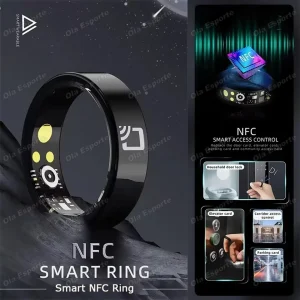
R20 Ceramic Smart Ring 2026 NFC Access Control Health Monitoring
Top-rated product for cross-border ecommerce sellers
🛒 Buy Now
Xiaomi TV Box S 3rd Gen 4K UHD Android TV Box with Google Assistant
Top-rated product for cross-border ecommerce sellers
🛒 Buy Now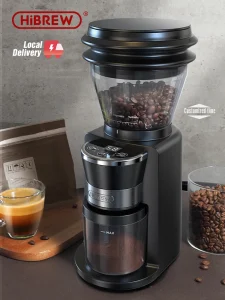
HiBREW Coffee Mill Automatic Electric Grinder 31 Gears Espresso American Pour Over Visual Bean Storage G3
Top-rated product for cross-border ecommerce sellers
🛒 Buy Now🔍 Step 1: Social Media Trend Mining
The first step to finding potential products is spotting trend signals. Here are the most effective methods:
- TikTok Creative Center — TikTok’s official trend data tool. See trending videos, music, hashtags, and product categories. Focus on the #TikTokMadeMeBuyIt tag.
- Instagram Reels Explore — Browse Reels to spot growing product categories. Pay attention to products appearing in videos with 100K+ likes.
- Pinterest Trends — Pinterest users are natural “planters” and collectors — a great early-warning system for product demand.
- Facebook Groups — Join interest-based groups (e.g., “Smart Home Gadgets,” “Travel Gear”) and observe products members share and recommend organically.
🎯 Step 2: Validate Product Potential
Once you’ve spotted a potential product, run it through a systematic validation checklist:
- AliExpress search volume — confirm the product already has search volume, indicating a mature supply chain
- Google Trends curve — is search interest trending up? Any seasonality?
- Amazon competition analysis — check competitor count, price ranges, and ratings
- Social media engagement — are likes, comments, and shares growing around related content?
- KOL collaboration feasibility — are there suitable micro-influencers who could promote this product?
📱 Step 3: Content Marketing Strategy
After validating a product, amplify it through content marketing:
- Unboxing / review videos — authentic user experience builds trust
- Scenario-based showcases — demonstrate the product in real-world use (like the HiBREW Coffee Mill grinding beans in slow motion)
- Comparison videos — old vs new, with vs without
- User-Generated Content (UGC) — incentivize buyers to share their own videos with discounts or cashback
🔥 Traits of Social Media Viral Products
- Strong visual impact — viewers immediately understand “what it is” and “why it’s cool”
- Clear use case — viewers instantly imagine themselves using it
- Surprise factor — a “wow” moment (smart ring tapping a door, coffee beans being ground)
- Price under €30 — TikTok users’ impulse purchase sweet spot is €5–30
In the era of social commerce, product selection is no longer about “guessing demand” — it’s about “watching trends.” Master social media data, and you can position yourself before demand explodes.
Found any viral products on TikTok recently? Share your stories in the comments!





