








Why AI Smart Glasses Are the Dark Horse Niche of 2026
The wearable technology market is undergoing a seismic shift. While smartwatches and fitness bands have dominated for years, a new category is quietly exploding: AI-powered smart glasses. In 2026, these devices are no longer science fiction — they are affordable, feature-rich, and gaining massive traction among early adopters worldwide.
For cross-border ecommerce sellers, AI smart glasses represent a high-margin, low-competition opportunity. Unlike saturated markets like phone cases or charging cables, smart glasses offer healthy profit margins — often 40-60% — with a growing base of tech-savvy consumers actively searching for the latest wearable innovations.
Market Trends Driving the Smart Glasses Boom
Several factors are converging to make 2026 the breakout year for AI smart glasses:

Ai Translator Earbud Device Real Time 2-Way Translations Supporting 150+ Languages For Travelling Learning Shopping Business

TV98 ATV X9 Smart TV Stick Android14 Allwinner H313 OTA 8GB 128GB Support 8K 4K Media Player 4G 5G Wifi6 HDR10 Voice Remote iptv

Smart AI Translation Bluetooth Earphones With LCD Display Noise Reduce New Wireless Digital Long Battery Life Display Headphone
- AI integration: Built-in AI assistants, real-time translation, and voice control are becoming standard features at under-$50 price points.
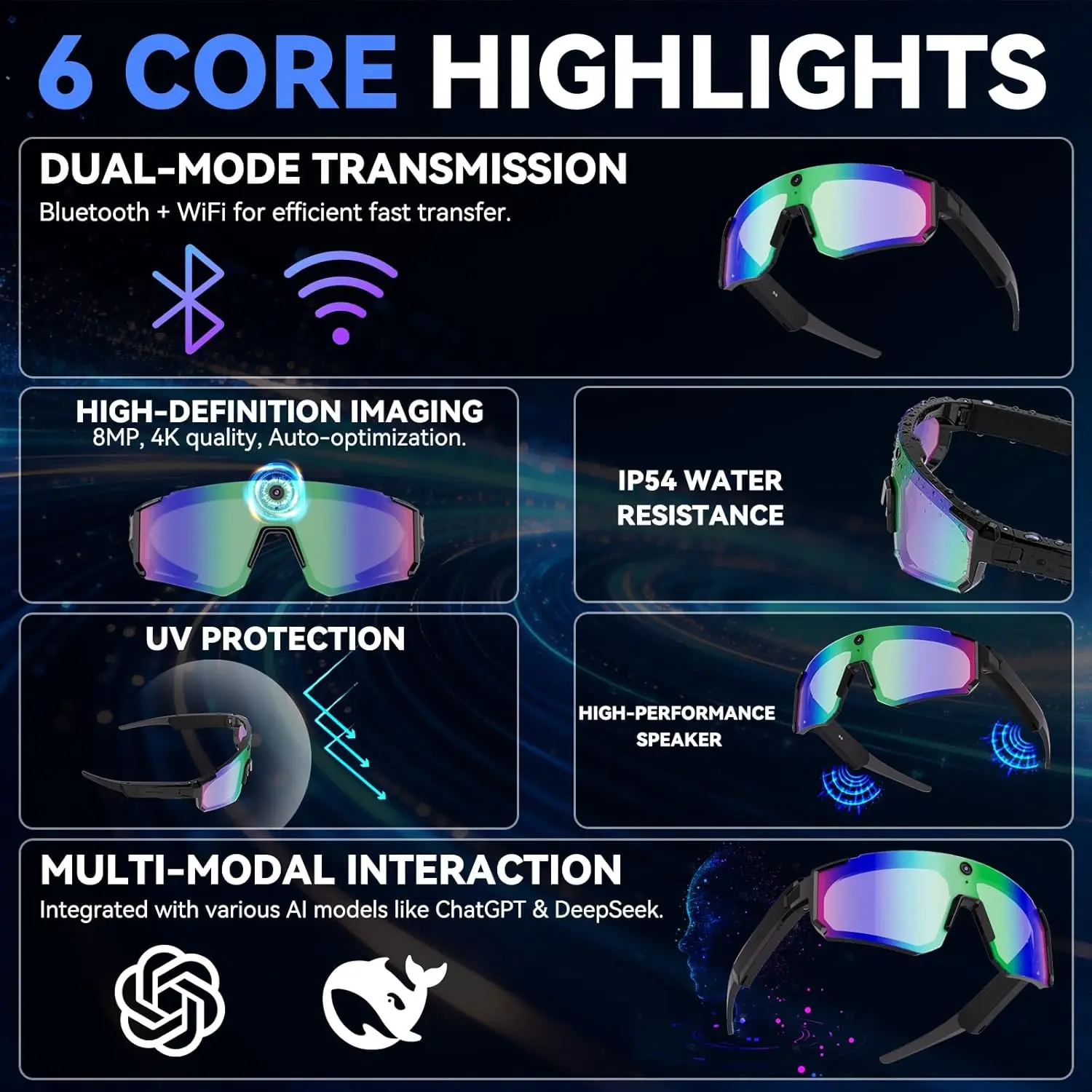
- Camera technology: HD photo and video capture (800W to 8MP) allows hands-free recording — perfect for content creators, travelers, and professionals.
- Affordable pricing: Once a premium category above $200, smart glasses now start as low as $15-30, opening up mass-market adoption.
- TikTok & Instagram virality: Smart glasses are a natural fit for short-form video content, driving organic discovery and social proof.
Top AI Smart Glasses Products for Cross-Border Sellers
Key Features to Look for When Sourcing Smart Glasses
Camera Quality & Recording Capability
The most in-demand smart glasses feature built-in cameras with at least 800W pixel resolution, capable of 1080P HD video recording. Look for models with loop recording, anti-shake technology, and hands-free voice activation — these features command premium pricing and higher conversion rates.
AI Translation & Voice Assistant
Real-time language translation is a killer app for smart glasses. Models with built-in AI translation support for 100+ languages are trending strongly on platforms like AliExpress and Amazon. This feature alone can justify a 2-3x price premium over basic camera glasses.
Design & Comfort
Design matters. Sporty wraparound styles sell well for active users, while sleek minimalist frames appeal to professionals. Bluetooth connectivity, touch-sensitive controls, and electrochromic dimming lenses are premium add-ons that boost average order value.
Sourcing Tips for Smart Glasses
When sourcing AI smart glasses for your cross-border store:
- MOQ flexibility: Many suppliers offer low MOQs (10-50 units) for dropshipping, making this an accessible niche for new sellers.
- Shipping considerations: Smart glasses are lightweight (30-60g) and compact, making them ideal for ePacket and YunExpress shipping with $3-5 delivery costs.
- Certification: Check for CE, FCC, and RoHS certifications, especially when selling to EU and US markets.
- After-sales support: Look for suppliers offering 30-60 day return policies and warranty support for at least 12 months.
SEO Keywords for Smart Glasses (2026-2027)
Target these high-volume keywords in your product listings and content marketing: AI smart glasses, camera glasses 2026, Bluetooth smart glasses, translation glasses, smart shooting glasses, wearable AI camera, voice control glasses, smart glasses for travel, hands-free recording glasses, smart eyewear 2026.
Final Verdict: Should You Enter the Smart Glasses Niche?
Yes — with strategy. The smart glasses market is projected to grow at a CAGR of 27% through 2030, making it one of the fastest-growing wearable categories. Early movers who build authority with SEO-optimized content, social proof (video reviews), and competitive pricing stand to capture significant market share before the category becomes saturated.
Start with 2-3 SKUs, test with paid ads on Facebook and TikTok, and scale based on what converts. Smart glasses are not a fad — they are the next evolution of wearable technology, and cross-border sellers who act now will reap the rewards.
Frequently Asked Questions
Q: Do I need an import license to start my import business?
Most small-scale e-commerce importers don't need a general import license. However, regulated products like electronics, food items, cosmetics, and children's products may require special permits or certifications. Check your country's customs authority website.
Q: What are the risks of non-compliance with import regulations?
Non-compliance can result in shipment seizures, customs fines (10-50% of goods value), delayed deliveries, legal penalties, and reputational damage. In severe cases, repeat violations can lead to import bans and criminal charges.
Q: What product safety standards do I need to meet?
Requirements vary by country. The EU requires CE marking for electronics and toys. The US needs FCC certification for wireless devices and CPSC compliance for children's products. Always verify destination country requirements before importing.
Q: What labeling requirements apply to imported products?
Labeling laws typically require country of origin marking, manufacturer information, product ingredients/materials, safety warnings, and care instructions in the local language. Some countries require specific font sizes and permanent labels on products.
Q: How often do trade regulations change?
Import regulations can change multiple times per year due to trade agreements, tariff adjustments, and safety standard updates. Subscribe to customs authority newsletters and work with a customs broker to stay updated on regulation changes.
BEST SELLING

CarlinKit 5.0 Mini Ultra Wireless Adapter Wireless CarPlay Android Auto For OEM Car Plug and Play WiFi Bluetooth Auto Connection
CarlinKit 5.0 Mini Ultra Wireless Adapter Wireless CarPlay Android Auto For OEM Car Plug and Play WiFi Bluetooth Auto Connection
Buy Now
Light Luxury Bathroom Shower Filter Showerhead Beauty High Pressure Shower Head Water Sav
Light Luxury Bathroom Shower Filter Showerhead Beauty High Pressure Shower Head Water Sav
Buy Now
NFC Smart Ring 2026 Real-Time Heart Rate Sleep Health Monitoring NFC Smart Access Control IP68&5ATM Waterproof Sports Smartring
NFC Smart Ring 2026 Real-Time Heart Rate Sleep Health Monitoring NFC Smart Access Control IP68&5ATM Waterproof Sports Smartring
Buy Now
Electric Cervical Massager Neck Stretcher Pulse Traction Heating Pain Relif Chiropractic Traction Head Acupoint Massage Pillow
Electric Cervical Massager Neck Stretcher Pulse Traction Heating Pain Relif Chiropractic Traction Head Acupoint Massage Pillow
Buy Now
Ortizan X8 Pro Bluetooth Speaker Portable with 40W Stereo Sound,Rich Bass,IPX7 Waterproof, 30H Playtime, Mixed Color Lights,3 EQ
Ortizan X8 Pro Bluetooth Speaker Portable with 40W Stereo Sound,Rich Bass,IPX7 Waterproof, 30H Playtime, Mixed Color Lights,3 EQ
Buy Now
Magnetic Wireless Charger Mount Vacuum Suction Cup Car Phone Holder Stand For iPhone 17 16 15 14 13 12 Pro Max Fast Charging
Magnetic Wireless Charger Mount Vacuum Suction Cup Car Phone Holder Stand For iPhone 17 16 15 14 13 12 Pro…
Buy Now