








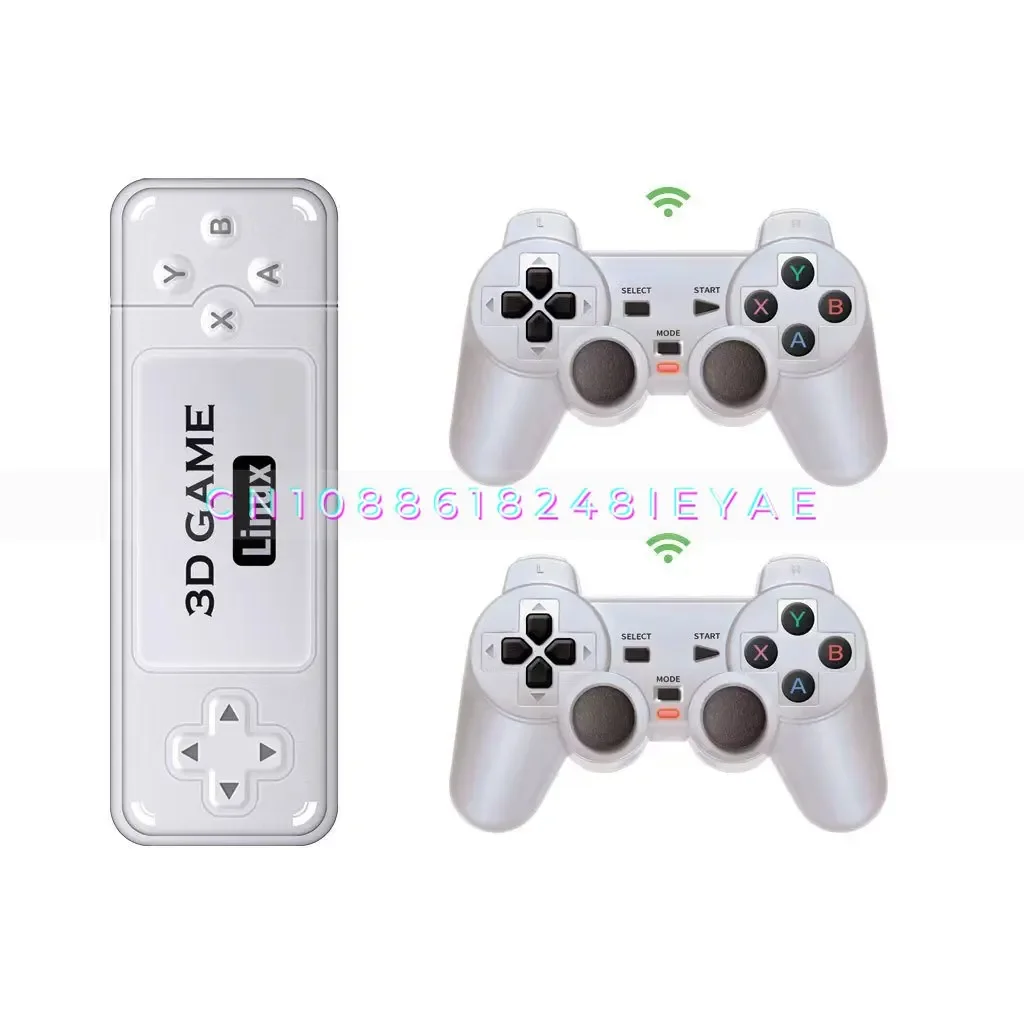
The retro gaming market has experienced a remarkable revival over the past five years, and sourcing retro game consoles for import represents a growing opportunity for cross-border e-commerce sellers in 2026. Modern retro arcade boxes like the Y6 and Y9 models combine hundreds of classic games with high-definition HDMI output, 2.4G wireless controllers, and compact form factors that connect directly to any modern TV. These devices appeal to a broad demographic — older millennials and Gen X consumers who grew up with arcade and NES-era games, families seeking affordable multiplayer entertainment, and collectors building dedicated retro gaming setups. For small importers, retro game consoles offer several advantages: they are lightweight and compact for economical shipping, carry strong impulse-buy appeal at price points of $25-$60, and benefit from the enduring popularity of classic gaming IP. This guide covers everything you need to know about sourcing, verifying, and selling retro game consoles profitably.
Why Retro Game Consoles Are a Strong Import Category in 2026
The retro gaming hardware market has grown consistently, reaching an estimated $2.5 billion globally in 2025. Several factors drive this sustained demand. Nostalgia marketing is exceptionally powerful for the 30-50 age demographic, who have significant disposable income and fond memories of classic gaming. Parents who grew up playing Pac-Man, Super Mario, and Street Fighter actively seek retro consoles as a way to share their childhood experiences with their own children. The product category also benefits from strong gift-giving dynamics — retro game consoles are popular birthday, holiday, and Father’s Day gifts at price points that are affordable enough for impulse purchases but substantial enough to feel like a meaningful present. The COVID-era boom in home entertainment established durable habits, with consumers continuing to invest in home gaming options even as out-of-home entertainment normalized.
For importers, retro game consoles present favorable unit economics. Factory pricing ranges from $8-$15 for basic models (200-500 games, 720p output) to $18-$35 for advanced models (1000-5000+ games, 1080p/4K output, wireless controllers, save state support). MOQs range from 500-2000 units. The devices are exceptionally compact — most measure 4-6 inches wide and weigh under 1 pound — making them among the most shipping-cost-efficient products in consumer electronics. The product category also benefits from low technical support requirements: if the console boots and displays games, it works. Return rates for retro game consoles typically run 3-6%, well below the electronics average. The category is evergreen — there is no risk of a new console generation making existing units obsolete, as the appeal is specifically in the classic games that remain culturally relevant across decades.
Key Specifications to Evaluate When Sourcing Retro Game Consoles
When evaluating retro game consoles for import, the game library size and quality are the most important specifications visible to consumers, but several behind-the-scenes factors determine product quality. Emulator quality is the most critical technical factor — the device’s System-on-Chip (SoC) must run established emulators (NES, SNES, Sega Genesis, Game Boy, PlayStation 1, arcade MAME) with accurate timing, correct color palettes, and stable frame rates. Budget consoles using low-performance chips will exhibit audio crackling, frame skipping, and input lag that savvy buyers quickly identify and complain about in reviews. Look for SoCs from Allwinner (particularly the H3, H5, H6 series), Rockchip (RK3128, RK3326), or Amlogic (S905 series), which have well-established custom firmware support and proven emulator performance. The chip should include hardware-accelerated graphics decoding for smooth 2D emulation.
Video output quality is another key differentiation point. Retro consoles should output at the native aspect ratio (4:3 for most classic games) with proper scanline options for authentic CRT display emulation. HDMI output at 720p or 1080p is standard, with some newer models supporting 4K upscaling. Wireless controller quality directly impacts the user experience — 2.4G wireless controllers offer lower latency (under 10ms) compared to Bluetooth (15-30ms), which matters for fast-paced games like fighting and platform games. Controller ergonomics, button feel, and D-pad accuracy are often weak points on budget consoles, so pay close attention to sample controller quality. Save state functionality (the ability to save and load game progress at any point) is a modern convenience that significantly increases perceived value — many retro gamers appreciate being able to save progress in games that originally lacked save features.

Smart AI Translation Bluetooth Earphones With LCD Display Noise Reduce New Wireless Digital Long Battery Life Display Headphone

TV98 ATV X9 Smart TV Stick Android14 Allwinner H313 OTA 8GB 128GB Support 8K 4K Media Player 4G 5G Wifi6 HDR10 Voice Remote iptv

Ai Translator Earbud Device Real Time 2-Way Translations Supporting 150+ Languages For Travelling Learning Shopping Business
How to Source Retro Game Consoles from Reliable Suppliers
Sourcing retro game consoles requires finding manufacturers that combine consumer electronics assembly expertise with embedded Linux system integration and licensed game content. The primary manufacturing region is Shenzhen, China, where a dense ecosystem of chip suppliers, PCB manufacturers, and system integrators supports this category. Start your search on Alibaba using keywords like “retro game console,” “arcade box,” “TV game console,” “HDMI retro gaming,” “classic game console,” and “wireless game stick.” Filter for suppliers with verified factory audits, experience in the gaming electronics sector, and positive buyer feedback specifically for game consoles rather than general electronics. Request samples from 3-5 shortlisted suppliers and test game emulation across multiple console systems (NES, SNES, Genesis, PlayStation), measure input lag using a high-speed camera setup, evaluate audio quality for distortion in games with complex soundtracks, and test wireless controller range and battery life.
Game content licensing is a critical legal consideration in this category. Most retro game consoles sold through cross-border e-commerce include unlicensed ROM images, placing the product in a legal gray area. While enforcement against small sellers is rare, the risk exists particularly on Amazon where Nintendo aggressively defends its IP. Some suppliers now offer consoles with licensed game content or with built-in emulators that support user-loaded ROMs without pre-installing any copyrighted games — these “bring your own games” models are legally safer. For thorough supplier vetting including legal risk assessment, read our guide on how to find reliable suppliers for your small business in under two weeks and our supplier verification and factory audit guide.
Emulator Performance and Game Library Quality
The game library is the headline feature that drives purchases, and the way suppliers configure it directly impacts customer satisfaction. Most budget retro consoles include 500-5000 pre-loaded games, but quantity does not equal quality. A 500-game console that includes 400 unique, well-curated, playable titles from the NES/SNES era is infinitely better than a 5000-game console padded with 4000+ obscure titles, language variants, and broken ROM hacks. When evaluating samples, count the number of genuinely playable, popular games versus filler titles. The game list should include recognizable classics sorted by console type with an intuitive user interface that supports search, favorites, and recent play features. The boot time from power-on to gameplay should be under 15 seconds, and the menu navigation should be responsive with smooth transitions. Some consoles now include wireless connectivity for multiplayer gaming and online leaderboard functionality, though these features are still emerging at budget price points.
The ongoing debate between hardware emulation (FPGA-based consoles like the MiSTer) and software emulation (ARM-based consoles like the Y6/Y9) affects your market positioning. Software emulation on ARM chips has matured significantly, with most NES, SNES, Genesis, and PlayStation 1 games running at full speed on $10 SoCs. The key advantage of software emulation is cost and availability — these consoles can be mass-produced for under $20, making them accessible to the mass market. The limitation is that some arcade games and PlayStation titles may have emulation glitches, audio issues, or performance drops. For importers, the practical approach is to test your game list thoroughly and be transparent about any compatibility limitations in your product listings, managing expectations while emphasizing the value proposition of hundreds of playable games at a fraction of the cost of original hardware and cartridges.
Pricing Strategy and Profit Margins for Retro Console Importers
Understanding your landed cost is essential for pricing retro game consoles profitably. Factory pricing ranges from $8-$14 for basic 500-game consoles (720p, single wired controller) to $20-$35 for premium models (3000+ games, 1080p, dual 2.4G wireless controllers, save states). MOQs typically range from 500-2000 units. Shipping at $2-$5 per unit via sea freight or $4-$8 via air freight keeps logistics costs low. Customs duties for video game consoles classified under HS code 9504.90 (video game equipment) range from 0-6% depending on destination. Platform fees take 8-15%. After full cost accounting, target retail prices of $25-$60 to achieve 45-60% gross margins — among the healthiest margins in consumer electronics — yielding 18-28% net margins.
Market positioning in the retro console category rewards clear differentiation. The entry-level market ($20-$35) is highly price-competitive with hundreds of generic unbranded consoles. To avoid margin compression, differentiate through game library curation, superior controller quality, or unique packaging. The mid-range market ($35-$50) offers the best margin-to-volume ratio — this is where products with 1080p output, dual wireless controllers, and 2000+ quality games perform best. The premium market ($50-$80) is for consoles with 4K upscaling, metal construction, premium controllers with analog sticks and vibration feedback, and curated game lists of 3000+ titles. Bundling accessories like HDMI cables, USB power adapters, additional controllers, and branded game library lists increases average order value without increasing product complexity. For complete cost analysis, use our importer’s cost calculation workbook. For marketplace strategy, read our comparison of eBay vs Amazon vs Etsy selling strategies.
Compliance and Legal Considerations for Retro Game Consoles
Retro game consoles face unique legal and regulatory considerations beyond standard electronics compliance. For the US market, FCC Part 15 certification for wireless devices (the 2.4G wireless controller transmitter) and digital device emissions is mandatory. The console itself must comply with FCC Part 15 for conducted and radiated emissions. UL certification is recommended. For the EU, CE marking requires EMC Directive (2014/30/EU), Radio Equipment Directive (2014/53/EU) for the wireless controllers, RoHS Directive (2011/65/EU), and the Low Voltage Directive (2014/35/EU). UKCA marking applies for the UK. Australia requires RCM marking with applicable AS/NZS standards. The wireless controllers specifically require additional testing for radio frequency emissions and coexistence with other 2.4G devices including Wi-Fi and Bluetooth.
Intellectual property risks require careful consideration. Most budget retro game consoles include unlicensed game ROMs, which technically infringe on Nintendo, Sega, Capcom, and other game publishers’ copyrights. While enforcement actions primarily target large-scale infringers, Amazon has been known to delist consoles in response to IP complaints. Strategies to mitigate IP risk include: sourcing consoles that play user-loaded ROMs from an SD card rather than pre-loading copyrighted games; using consoles that include only open-source or public-domain games; registering your brand and establishing legitimate game licensing agreements; and selling through platforms with lower IP enforcement intensity. For comprehensive customs clearance guidance including correct HS code classification, refer to our small importer’s customs clearance playbook.
Marketing Tips for Selling Retro Game Consoles Online
Retro game console marketing should emphasize the nostalgia factor and the value proposition of hundreds of games for the price of a single modern game. Professional product photography showing the console connected to a modern TV with classic games displayed on screen, alongside the wireless controllers, creates strong visual appeal. Include a game list in your product description and marketing materials — many buyers specifically search for consoles that include particular games or franchises. Target keywords including “retro game console,” “arcade box,” “classic TV games,” “NES console HDMI,” “plug and play game console,” “wireless retro gaming,” and “birthday gift for dad.” Video content demonstrating the console booting up, navigating the game menu, and playing a few iconic games is highly effective for conversion. The emotional trigger of seeing a familiar game from childhood is powerful — use it in your marketing.
Customer reviews and user-generated content drive success in this category. Encourage buyers to share photos of their console setup and favorite games. Consider creating a social media presence (Instagram, TikTok, YouTube) featuring short gameplay clips from classic games running on your console. A simple website with downloadable game lists organized by genre and system helps buyers understand the value before purchasing. For broader product sourcing strategy, read our small items sourcing plan to identify complementary gaming accessories to bundle with your console.
Frequently Asked Questions About Importing Retro Game Consoles
Q1: What is the typical MOQ for retro game consoles from Chinese manufacturers?
Most factories require MOQs of 500-2000 units. Custom branding (logo printing on console and controllers, custom packaging) typically requires MOQs of 1000+. Sample orders of 5-20 units are usually available for testing.
Q2: How do I verify game emulation quality on a sample console?
Test specific demanding games: Super Mario World (SNES timing), Sonic the Hedgehog (Genesis scrolling), Street Fighter II (arcade input latency), and Castlevania: Symphony of the Night (PlayStation audio). Check for audio crackling, frame drops, and input lag. Record and compare against original hardware if possible.
Q3: Are retro game consoles legal to import and sell?
The hardware itself is legal. The pre-loaded game ROMs may infringe copyrights depending on licensing. Consoles that play user-loaded games from SD cards without pre-loaded ROMs are legally safest. Consult an IP attorney for your specific product configuration.
Q4: What are the top-selling retro game console form factors?
HDMI stick consoles (similar to a streaming stick) are the most portable and popular, followed by small box form factors with separate controllers, and larger arcade cabinet replicas for the premium market. Stick and box formats account for 80%+ of total sales.
Q5: What is the average profit margin for retro game consoles?
Gross margins of 45-60% are achievable with proper sourcing and pricing. Net margins after all costs typically range from 18-28%, making this one of the most profitable consumer electronics categories for small importers due to low shipping costs and strong perceived value.
Related Articles
How to Find Reliable Suppliers for Your Small Business in Under Two Weeks
From Random Products to Reliable Sales: A Small Items Sourcing Plan That Delivers Profit
eBay vs Amazon vs Etsy: Which Online Marketplace Selling Strategy Wins for Small Importers



